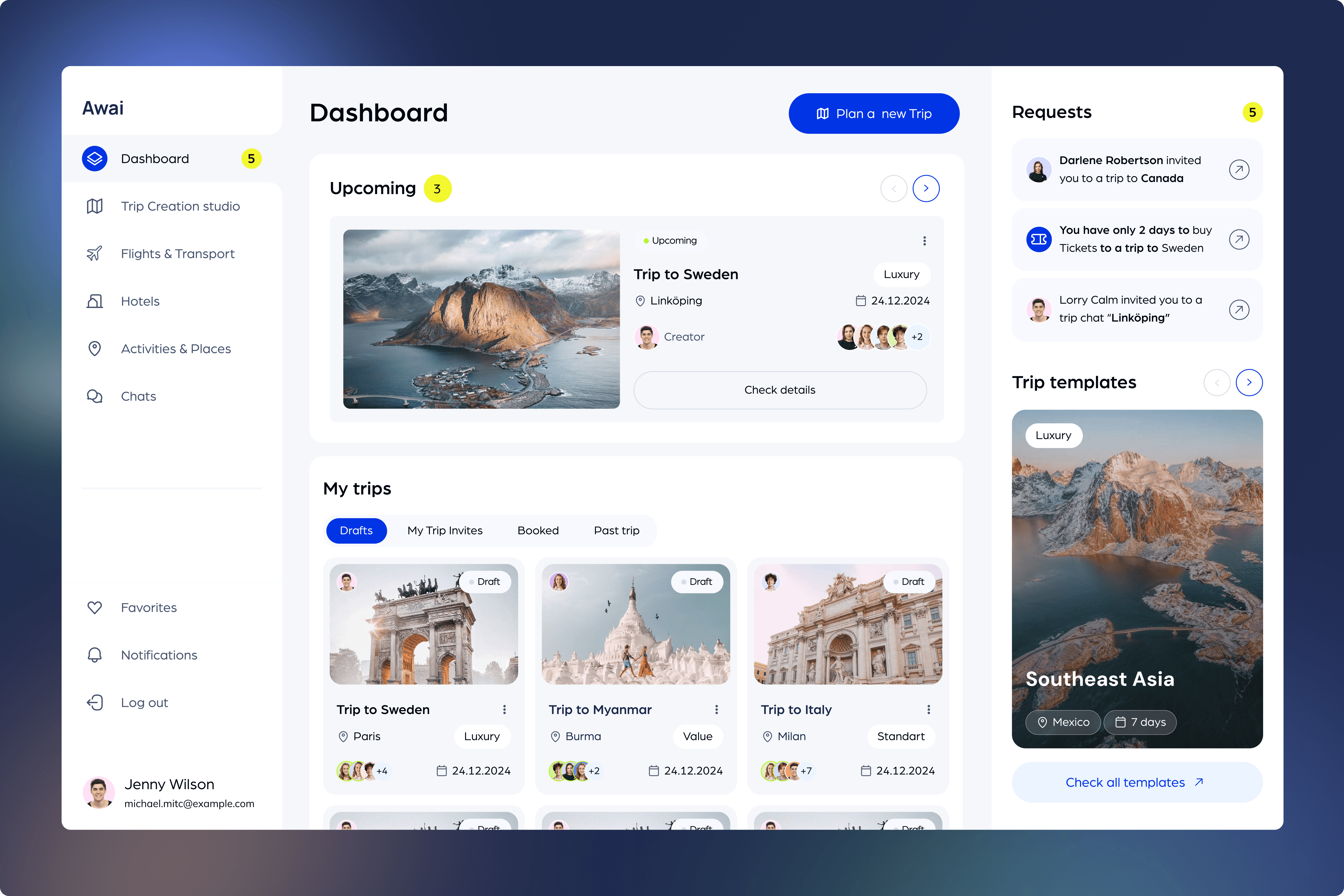
Awai Travel — AI-Driven Group Travel Planning
Awai Travel (Sweden) approached us with a mission: remove the chaos from planning group trips.
Before Awai, people relied on scattered tools — spreadsheets, countless chats, and manual coordination — making it hard to organize travel with friends and family.
We designed a unified platform that lets creators plan and manage trips end-to-end, invite others, coordinate schedules, track budgets, and communicate in one place — with optional AI-powered trip creation.
Travel Tech
Web App
SaaS
Services
UX/UI Design, Product Design
Category
Travel · SaaS · Consumer Platform
Client
Awai Travel, Sweden
Scope
Full design of the Web MVP: foundational research, persona development, IA design, user flows, AI-assisted trip creation concepting, wireframes, two UI concepts, final visual system, and developer handoff.
Frame work
Double Diamond · Design Thinking · Lean UX
Duration
7–8 months (MVP)
Focus
Delivering a scalable MVP that simplifies group travel planning, streamlines communication, supports collaborative trip management, and introduces AI for instant itinerary generation
Design Approach & Objectives
Overview
The design process for Awai Travel followed a structured, research-driven approach to build a scalable MVP that simplifies group travel planning. Group trips were previously fragmented — scattered spreadsheets, uncoordinated chats, inconsistent budgets, and missed updates made planning stressful for creators and travelers.
Using Double Diamond, Lean UX, and continuous validation, we defined a unified web platform where travel creators can build and manage trips end-to-end, invite friends and family, coordinate flights and hotels, track expenses, schedule activities, and communicate together — with AI support for fast trip creation.
The result was a validated MVP foundation ready for expansion into integrated booking automation, real-time updates, mobile companion experience, and advanced AI-driven planning tools.
Process Phases
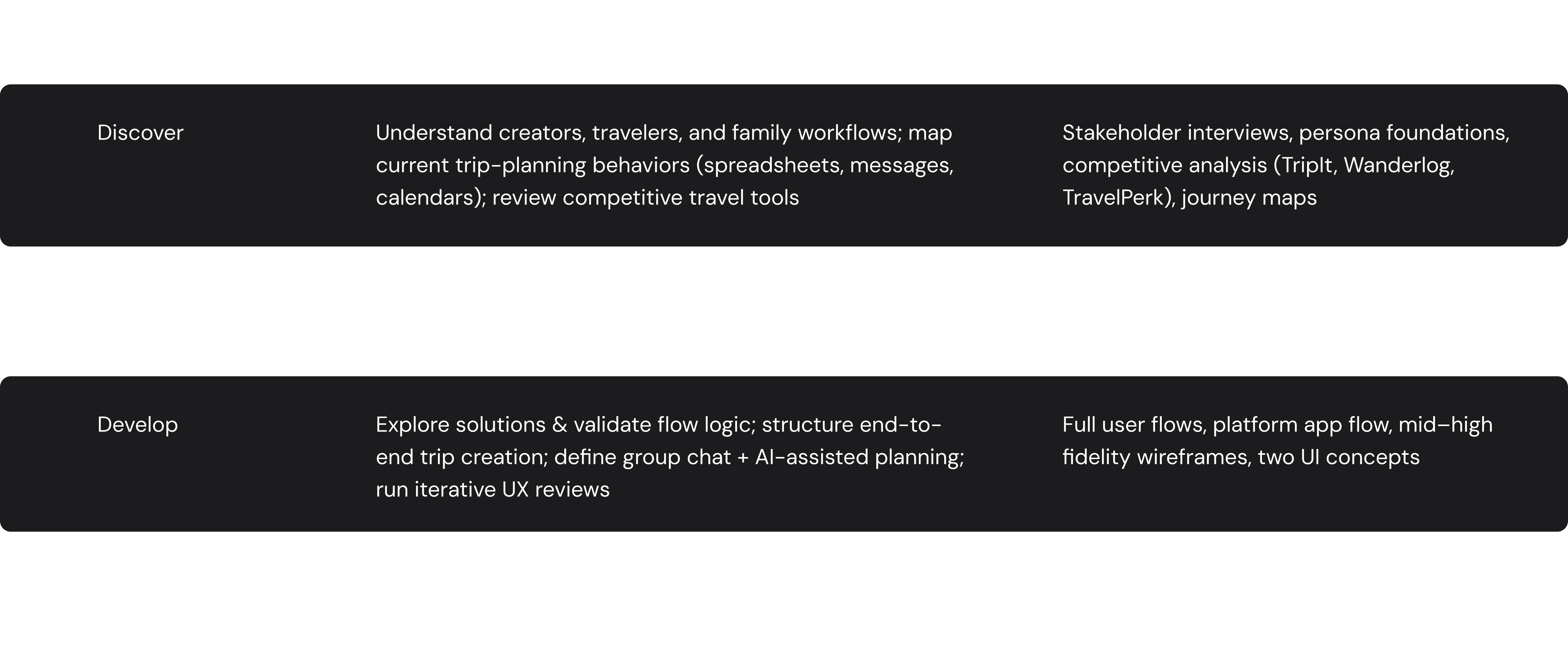
The design process unfolded across four structured phases — balancing discovery, concept definition, solution exploration, and delivery of the MVP.
The design process unfolded through four structured phases — balancing discovery, validation, iteration, and delivery.


Business Objectives
Awai Travel needed a scalable web platform that simplifies group travel — from initial planning to budget tracking and activity scheduling — while reducing the organizational burden on trip creators.
The solution needed to support:
Trip creators managing end-to-end planning
Travelers joining and collaborating easily
Families with children (parent–child accounts)
Group coordination across multiple locations and devices
AI-assisted trip generation for fast planning
Key Objectives
Simplify group trip planning with a clear, guided workflow
Reduce dependency on spreadsheets, email chains, and scattered tools
Enable AI-assisted trip creation for faster setup
Improve transparency around schedules, budgets, and shared decisions
Build a unified platform for communication (group chat & DMs)
Provide a scalable foundation for automated bookings (flights/hotels/activities)
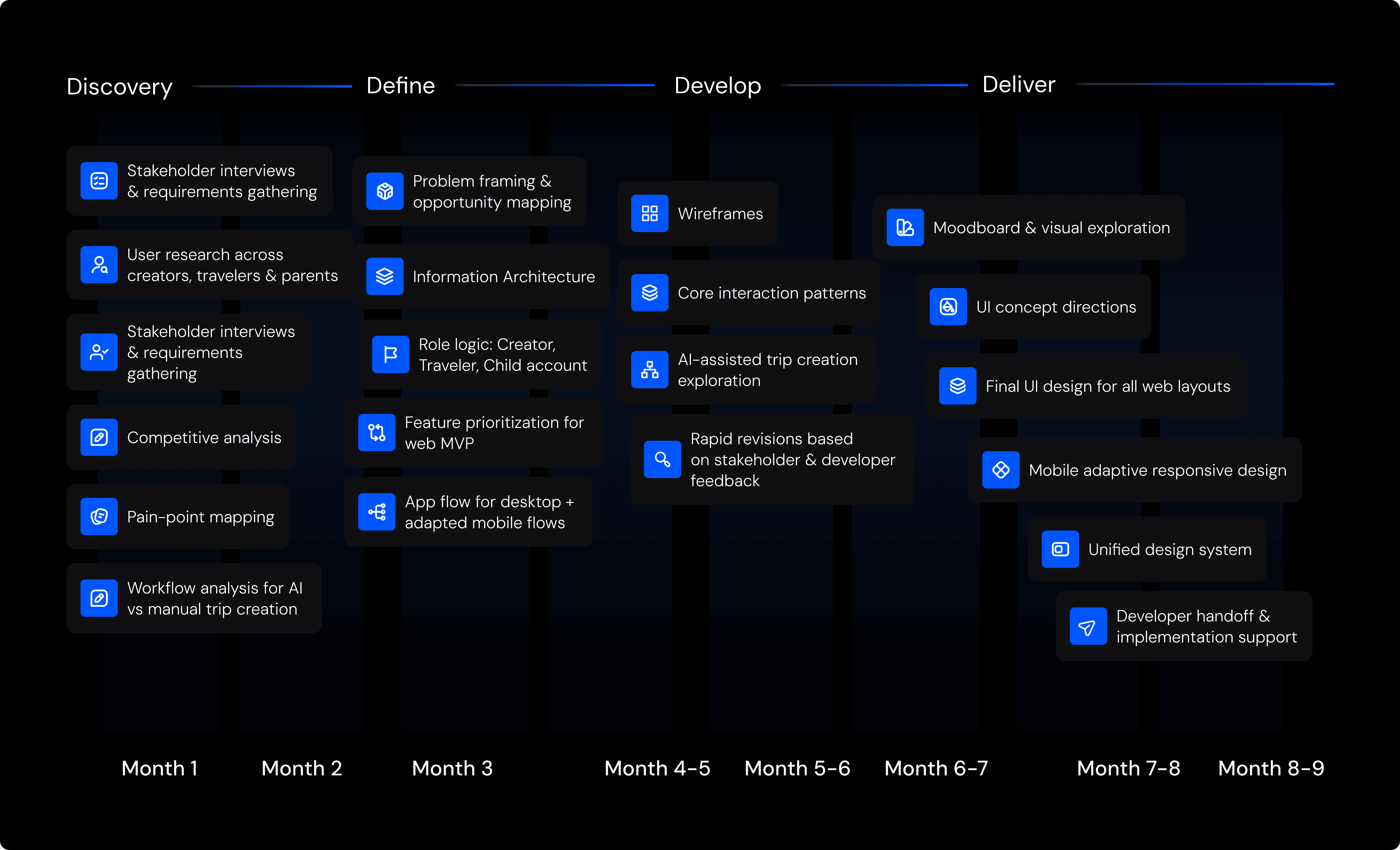
The 8-9 month design process moved from research to a fully validated web MVP — ensuring every decision was user-centered, technically feasible, and aligned with real group-travel behaviors. The result is a scalable foundation ready for mobile expansion and deeper AI-powered features.
Validation & Outcome
Validation ran continuously across flows, prototypes, and UI concepts, helping refine navigation, trip-creation logic, budgeting, and collaboration features.
The final Web MVP is:
• intuitive for creators and travelers
• optimized for AI-assisted and manual trip planning
• responsive across desktop + mobile
• aligned with development constraints
The outcome is a user-ready platform that simplifies group travel planning, reduces coordination friction, and provides a strong foundation for future feature growth.
Discovery — Research & Context
Overview
The Discovery phase established a clear understanding of how creators, travelers, and families plan group trips today. Scattered tools — spreadsheets, chats, documents, and separate booking platforms — created confusion, lost details, and heavy coordination work for trip creators.
Through user interviews, competitor analysis, and workflow studies (AI vs manual planning), we identified the core pain points and opportunities for a unified trip-management experience
Aligning Product Vision & Success Metrics
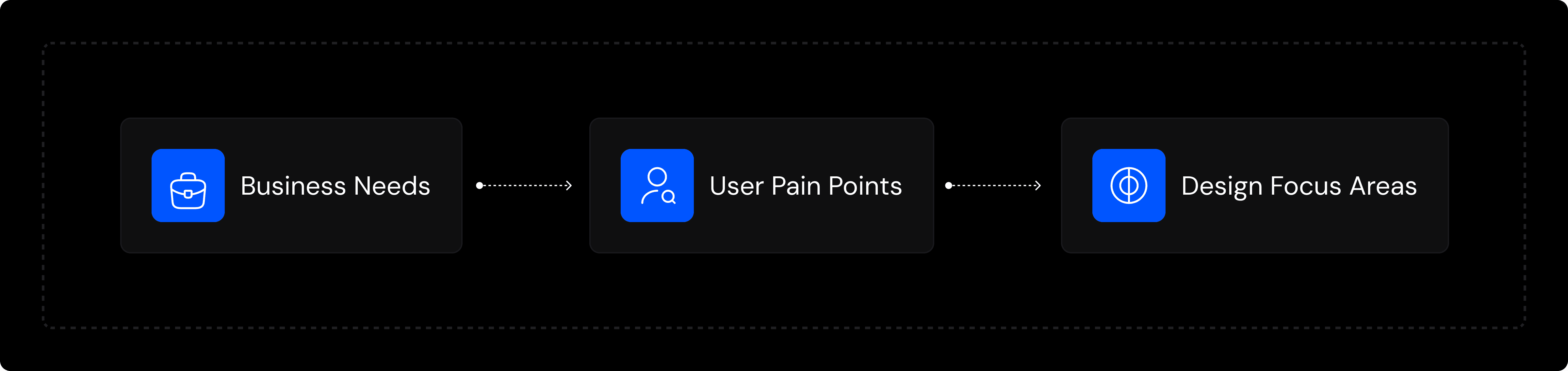
Workshops with founders and future users helped clarify the MVP’s goals, define the needs of key user roles (Creator, Traveler, Child), and set clear expectations for scheduling, budgeting, communication, and AI-assisted planning.
Focus Outcomes
Clear MVP scope and user roles
Shared understanding of coordination challenges
Prioritized features for the first release
Early alignment on AI-assisted vs manual trip creation
Foundation for a unified, end-to-end planning workflow
Competitor Landscape
To understand how users currently plan and manage group trips, we analyzed leading travel-planning apps and collaboration tools. The goal was to identify gaps, strengths, and opportunities that would guide Awai’s MVP strategy.
Competitors Reviewed
TripIt
Wanderlog
Pilot
TravelSpend
Travefy
Google Trips (legacy behavior)
Third-party booking tools (Viator, Duffel, airline apps)
This analysis focused on feature depth, collaboration experience, budgeting tools, sharing flows, itinerary usability, and AI-assisted planning.
Key Insights
AI planning is underused — most competitors do not integrate meaningful AI assistance within the trip-building flow.
Group collaboration is inconsistent — users struggle to share plans, coordinate roles, and keep everyone aligned.
Multi-city planning varies widely — only some platforms allow flexible routing or complex itineraries.
Budgets are poorly integrated — few competitors allow setting a budget, suggesting activities/hotels based on that budget, or tracking shared expenses.
Visual timelines are uncommon — many apps present itineraries as lists, not intuitive timelines.
Mobile presence is expected — nearly all competitors offer mobile versions for quick access on the go.
Offline access is rare but valuable — especially when traveling internationally or without stable internet.
Booking workflows depend heavily on external services — many platforms redirect users off-platform to complete flight, hotel, or activity bookings.
Design Opportunities for Awai
Introduce AI-assisted trip creation to speed up planning and reduce decision fatigue.
Enable seamless plan-sharing and roles for Creators, Travelers, and Child accounts.
Support multi-city itineraries and flexible routing as a core feature.
Use a clear timeline view for trips with dense schedules.
Build budget-aware recommendations for activities and hotels.
Include group-expense tracking for shared costs during the trip.
Prioritize mobile access for viewing trips, addresses, and schedules on the go.
Offer offline viewing of itineraries and essential trip info.
Keep bookings simple by leveraging external providers while maintaining context inside Awai.
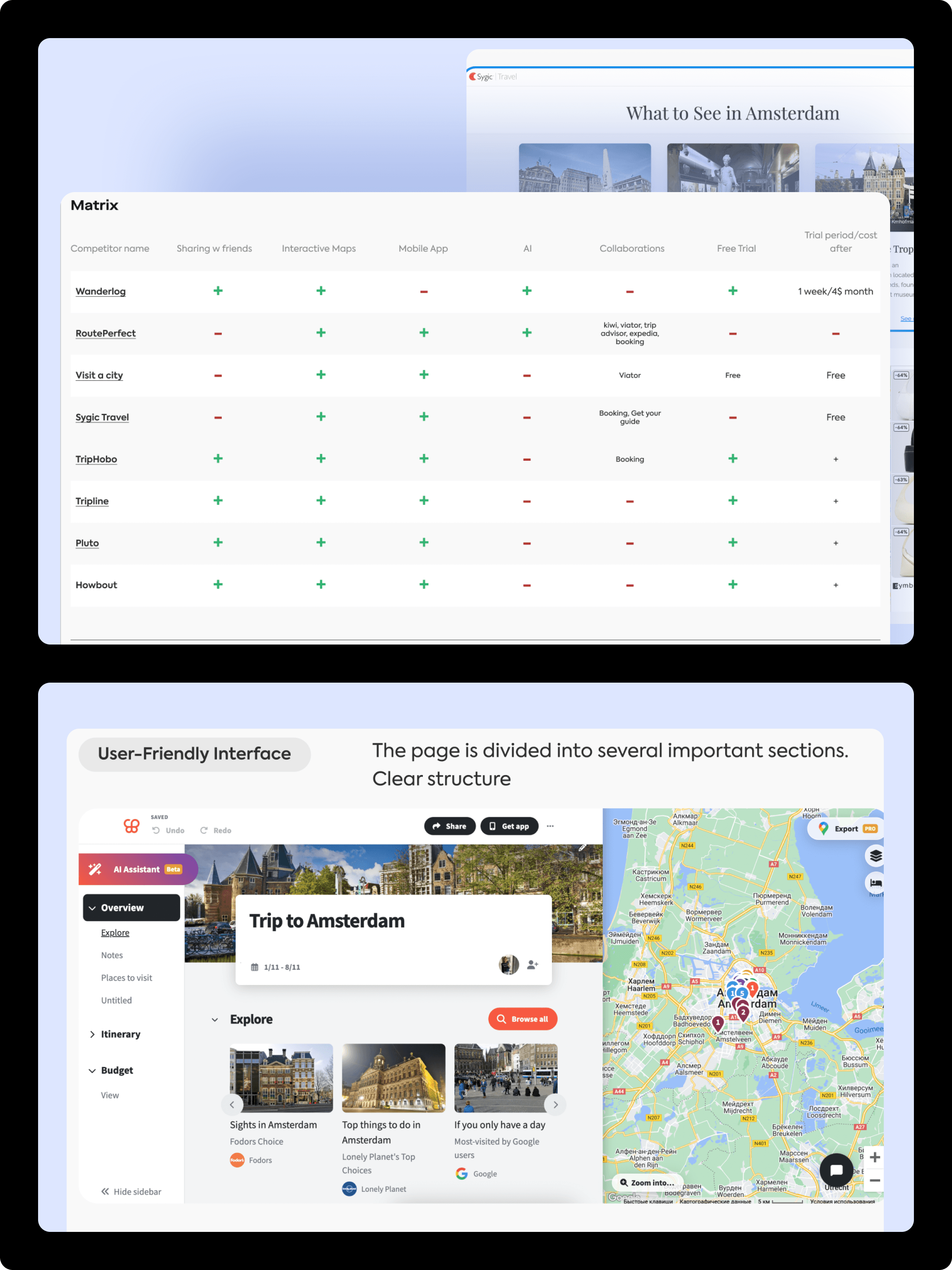
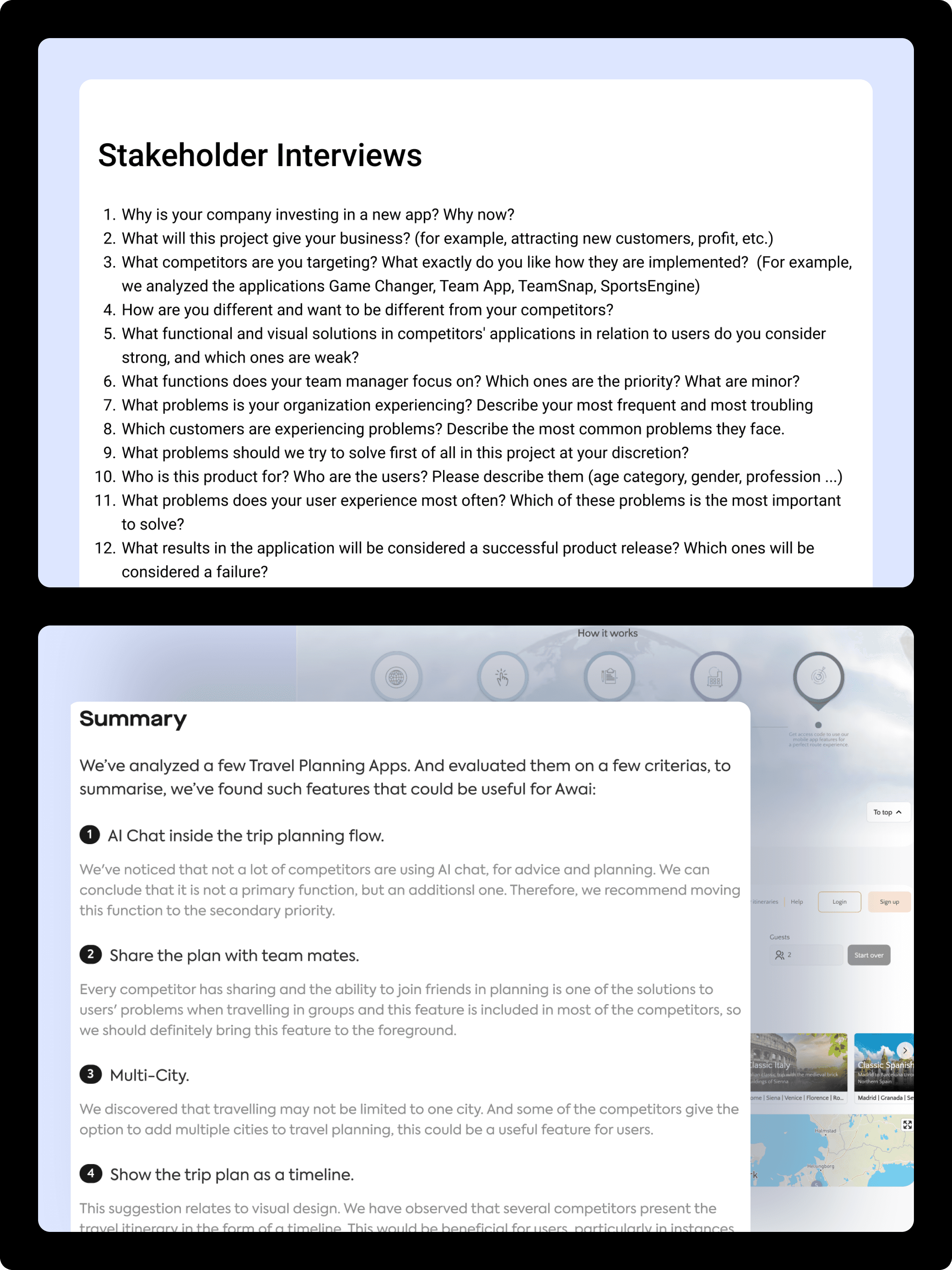
Our competitor research highlighted major gaps in group coordination, AI-powered planning, multi-city flexibility, budgeting, and intuitive trip visualization. These insights positioned Awai to deliver a more intelligent, collaborative, and end-to-end trip-management experience than existing tools — especially for family and group travel.
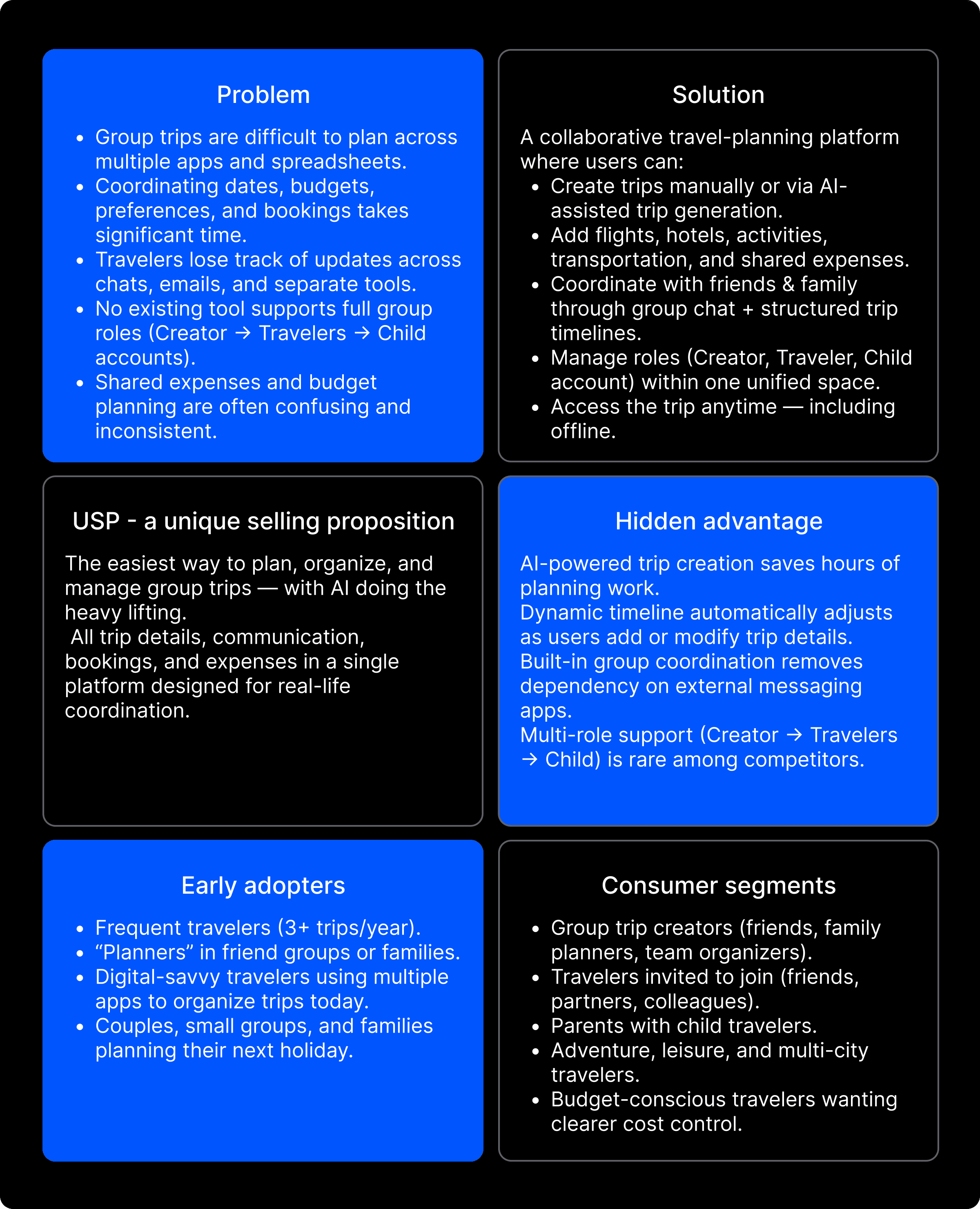
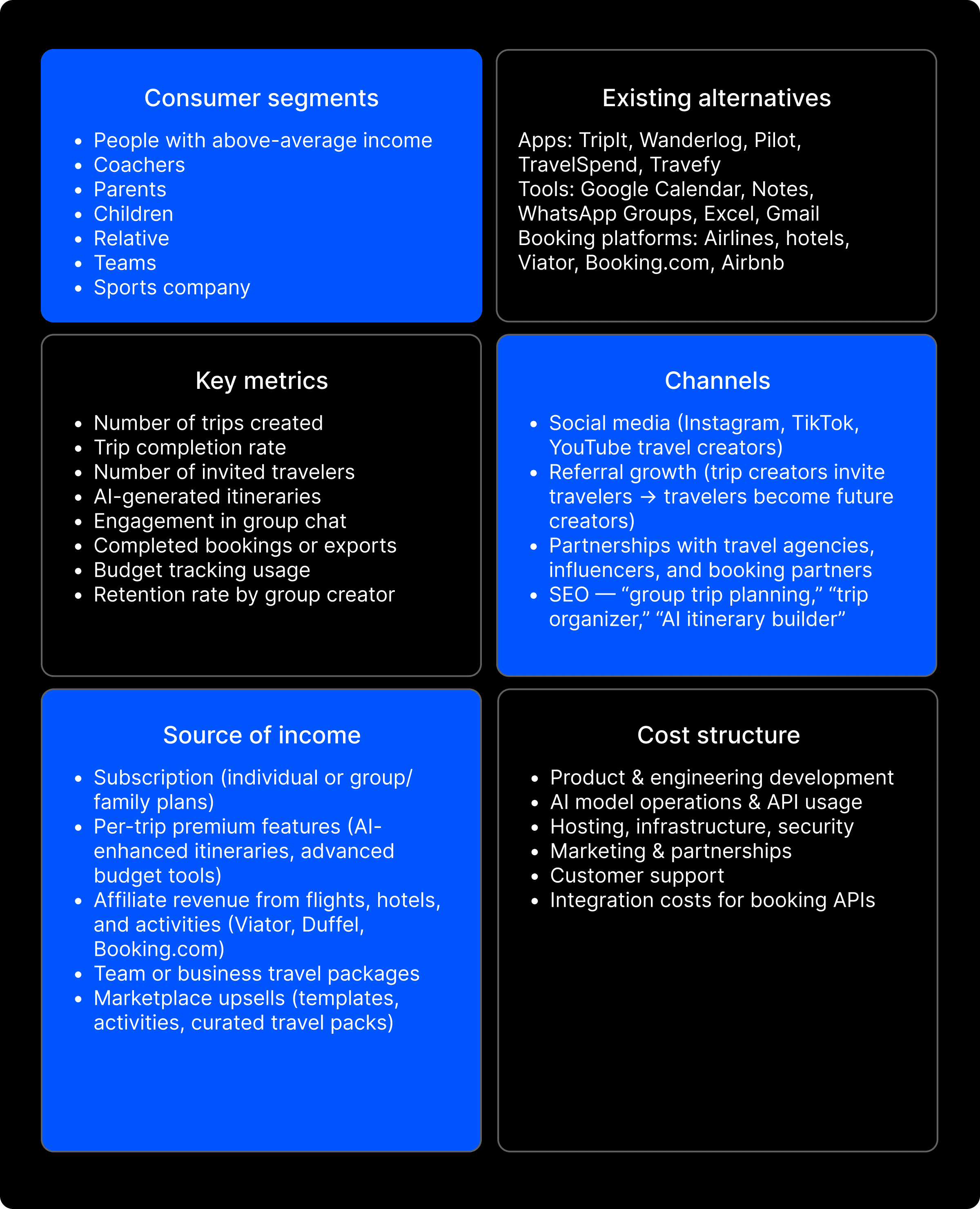
Lean Canvas — Defining the MVP Strategy for Awai
To align the team on a clear vision and ensure we solved the right problems, I created a Lean Canvas summarizing the business model, customer segments, core problems, value proposition, and key assumptions.
This helped clarify what mattered most for the MVP: enabling intuitive group trip planning, centralizing communication, supporting multi-role travel coordination, and introducing AI to streamline trip creation.
Conclusion — Key Insights That Shaped the MVP
The Lean Canvas revealed several insights that directly influenced Awai’s direction:
Users struggle with fragmented planning — trips rely on spreadsheets, messaging apps, browser tabs, and scattered booking tools.
Group travel requires coordination, not just planning — aligning dates, budgets, roles, responsibilities, and preferences.
No competitor offers end-to-end group management (AI creation → planning → budgeting → collaboration → travel).
AI was an opportunity to remove planning friction and accelerate itinerary creation.
Families and friend groups need multi-role support (creator, traveler, child account).
A unified platform for schedules, flights, hotels, expenses, lists, and chat became a clear differentiator.
These insights formed the foundation for the MVP, prioritizing clarity, collaboration, reliability, and AI-assisted planning.
Synthesizing Research Into Actionable Opportunities
A cross-analysis of competitor research, Lean Canvas insights, and stakeholder interviews distilled the core pain points into clear design opportunities shaping the Awai MVP.
Design Opportunity
Insight
Aligning dates, budgets, and preferences across travelers takes too long →
Smart planning workflows with shared calendars, automated availability
checks, budget guidelines, and AI-assisted itinerary generation.
Travelers lose updates across chats, spreadsheets, booking apps →
Modern group communication system including channels per trip, media
sharing, reactions, pinned messages, and optional AI summaries.
Group coordination becomes chaotic as the trip evolves →
Clear role-based access (Creator, Traveler, Child) with permissions,
task assignments, shared expense tracking, and real-time status updates.
Key discovery insights translated into actionable design opportunities for a more reliable, parent-friendly team management experience.
Define — Problem Framing & Experience Direction
The Define phase transformed early research into a clear product strategy for the Awai Web MVP. Using insights from user interviews, competitor analysis, Lean Canvas findings, and workflow mapping, this phase focused on identifying the core coordination gaps preventing smooth group travel planning today.
Through “How Might We” ideation, early information architecture, and user/app flow planning, we shaped a coherent foundation for an intuitive, collaborative travel-planning experience powered by AI.
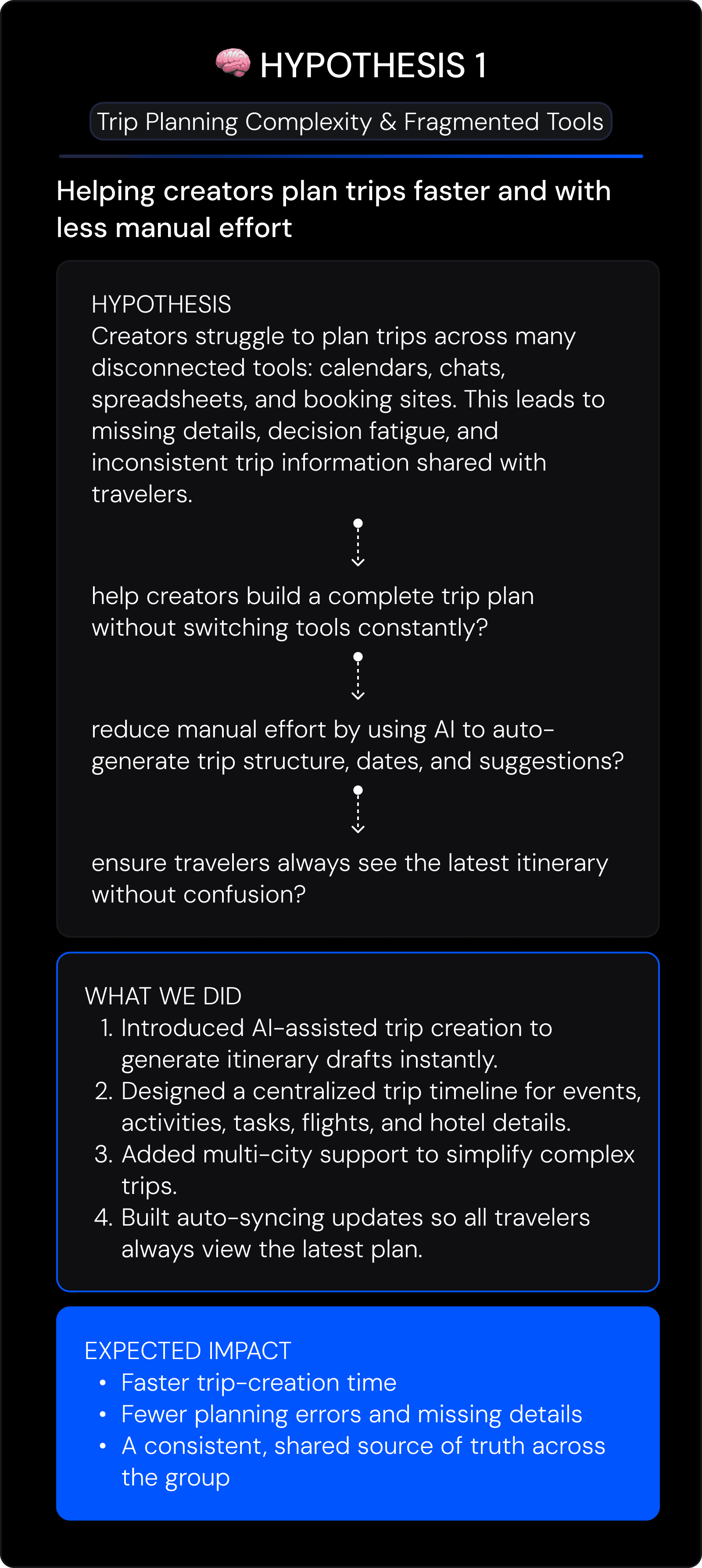
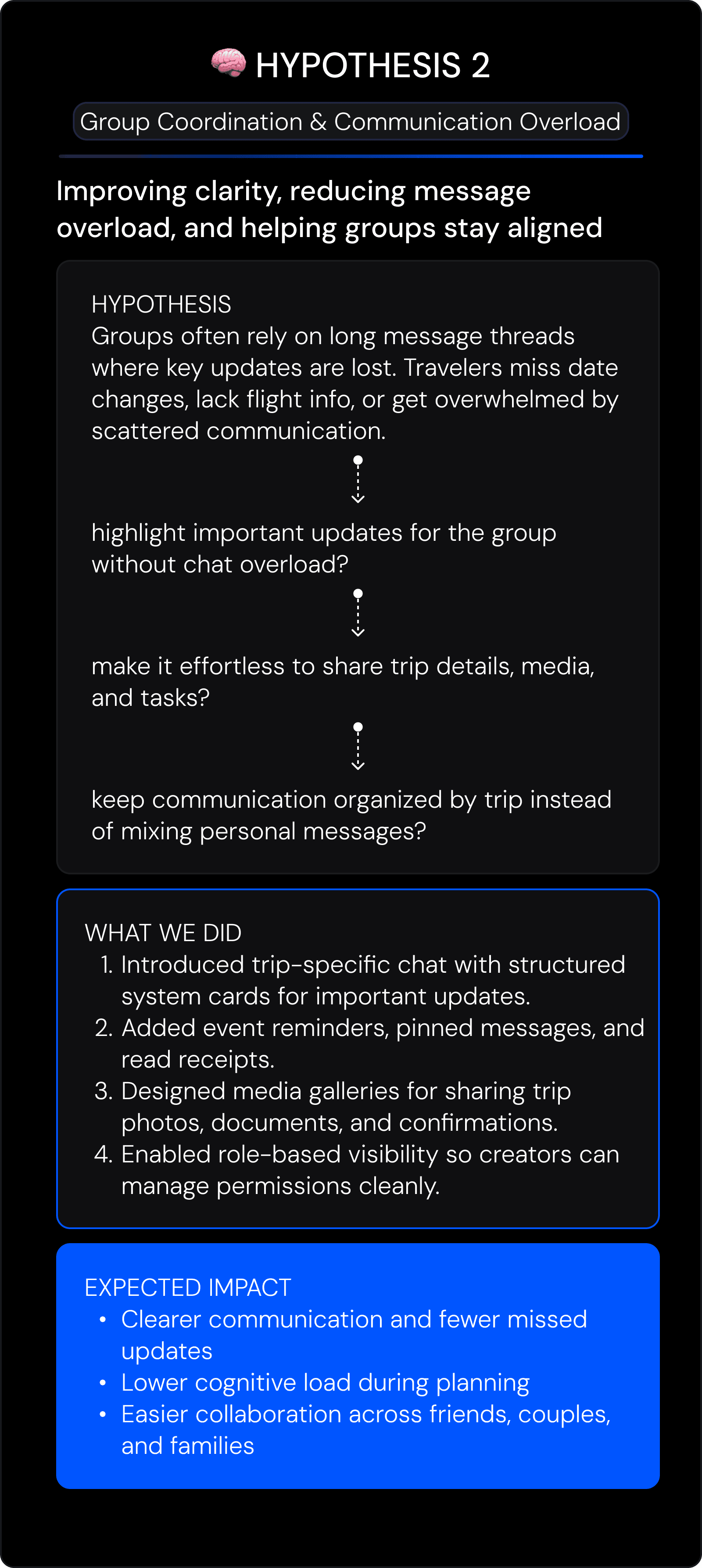
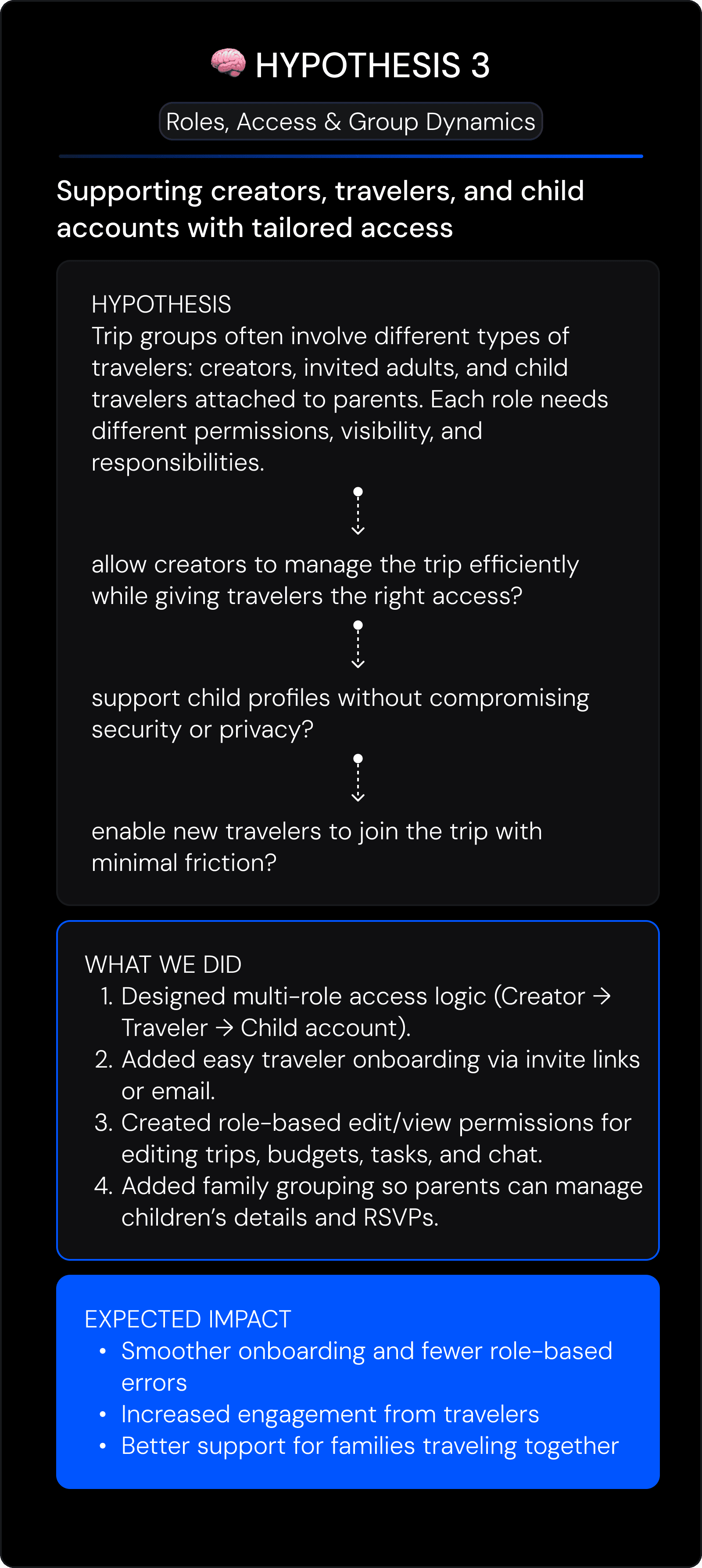
How Might We — Reframing Problems Into Opportunities
In this step, I translated research insights into actionable design challenges using the “How Might We” method. This helped convert user frustrations into clear experience opportunities that informed IA, feature prioritization, and early user flows.
Highlighting the most impactful HMW questions aligned the team around solving group coordination, budgeting, and trip-planning complexity for creators, travelers, and families.
User & App Flows — Structuring the MVP Experience
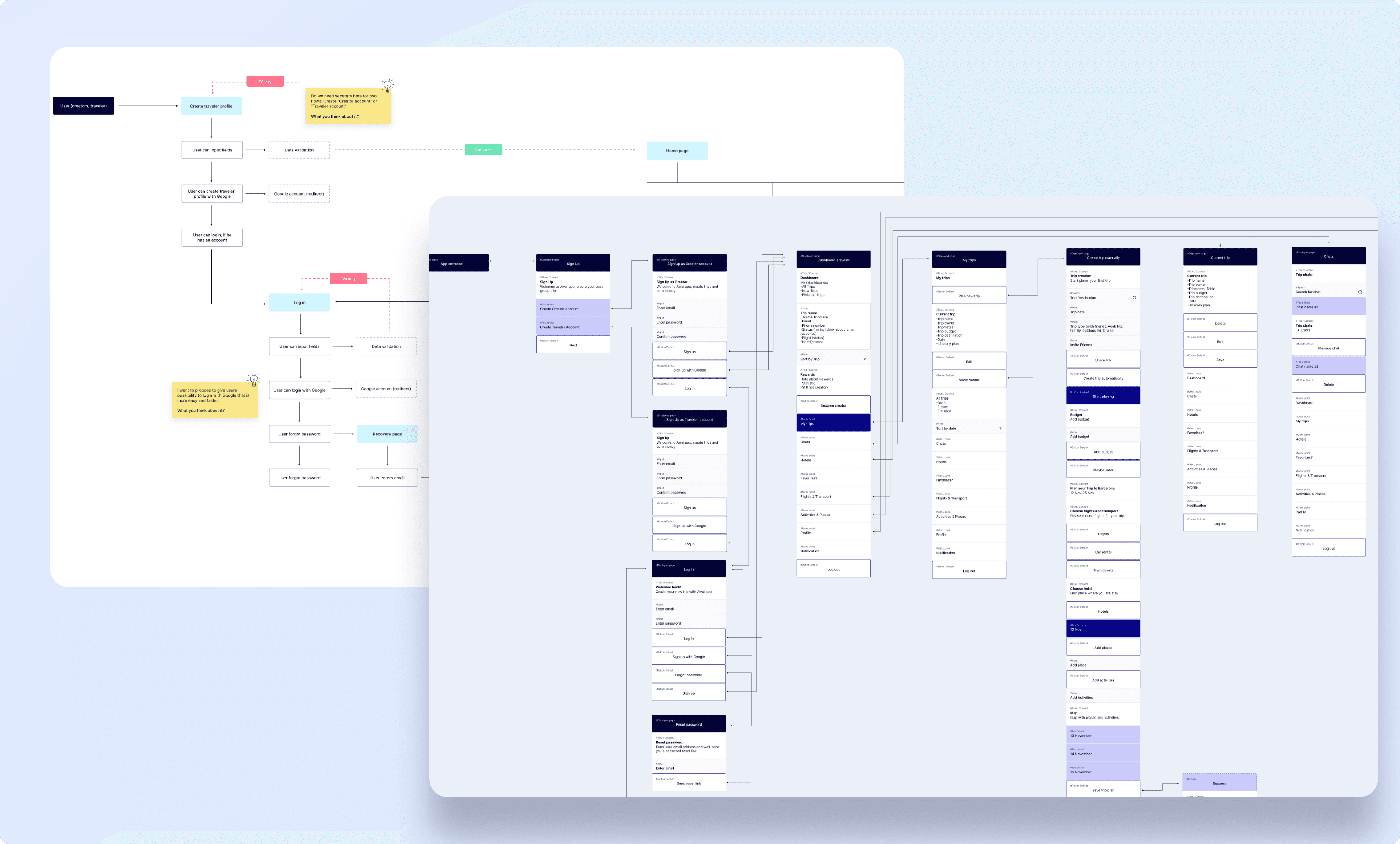
I translated early requirements and role logic into a functional product architecture by mapping how creators, travelers, and child accounts navigate Awai and collaborate on group trips.
These flows clarified the end-to-end experience — from AI trip creation to manual planning, traveler onboarding, budgeting, and group communication — ensuring the platform remained intuitive, scalable, and aligned with real travel behaviors.
What I Created
User flows for core tasks: creating trips manually or with AI, inviting travelers, managing roles (Creator / Traveler / Child), adding flights & hotels, planning activities, budgeting, exporting timelines, and managing group chat.
Full app flow for the web platform, including navigation logic, workspace structure, trip hierarchy (Trips → Days → Activities), and collaboration features across desktop + mobile adaptive views.
Outcome
A clear and robust information architecture that aligned the team on how the Awai platform should function, reduced ambiguity during design, and accelerated planning for both web and future mobile experiences.
Develop — Wireframing, Iteration & Design Refinement
The Develop phase translated research insights and early IA into tangible product screens.
I created detailed wireframes, validated core interactions, and iterated closely with stakeholders to ensure every layout supported real-world group travel workflows.
This phase established the structural foundation for Awai’s complex travel-planning experience — spanning AI-assisted trip creation, activity timelines, accommodation planning, group coordination, and shared expenses.
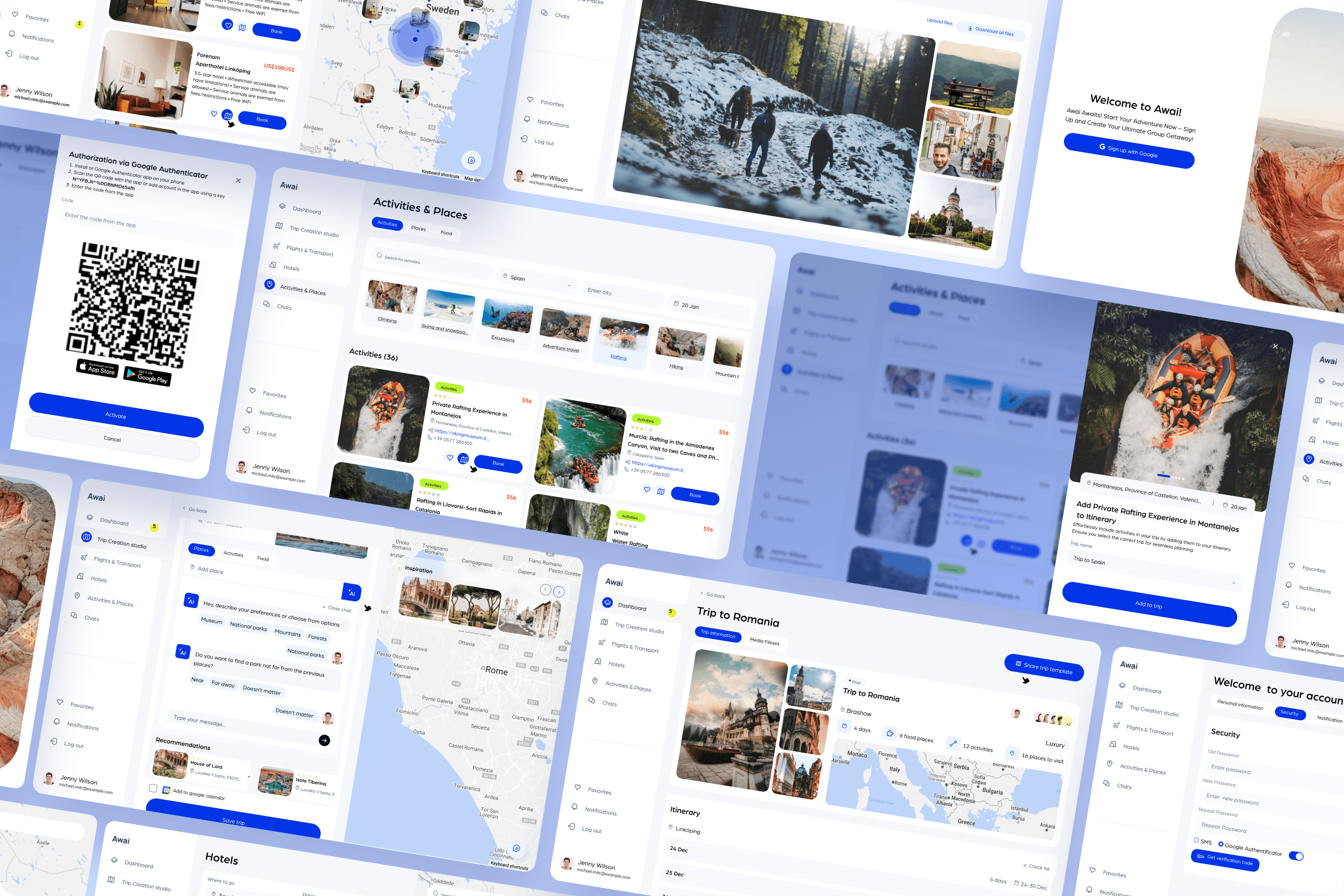
High-Fidelity Wireframes — Bringing Structure to Life
I transformed user journeys and IA into high-fidelity wireframes that covered:
AI-generated trip creation flow
Multi-city trip builder
Flight, hotel, and activity planning
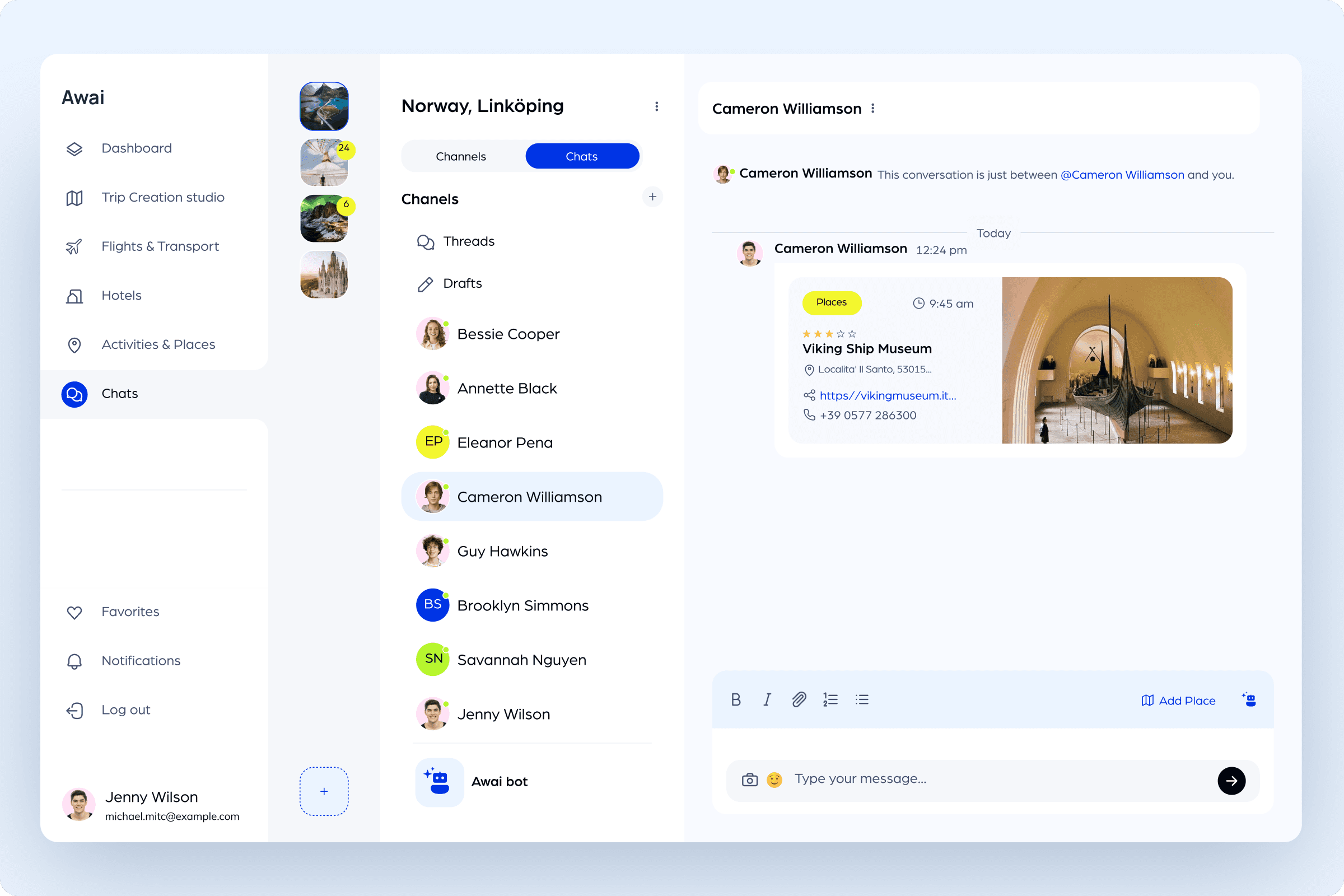
Group coordination tools (chat, roles, invites)
Shared budget & expense tracking
Desktop-first layouts with adapted mobile responsive patterns
These wireframes clarified layout hierarchy, interaction models, and component behavior for the full product, forming the blueprint for visual design and development.
Iterative Reviews & Usability Checkpoints
Throughout this phase, I ran continuous validation loops with stakeholders and test users to refine:
Navigation logic and content hierarchy
Timeline interactions and trip editing workflow
AI-assisted generation steps
Budget and expense visibility
Role-based access and collaboration behavior
Desktop → mobile responsive transitions
Early usability checkpoints allowed us to identify friction early, reduce redesign effort, and ensure the product felt intuitive for both planners and travelers.
Outcome
Clear and streamlined trip creation and editing workflows
Validated desktop layouts + adaptive mobile interactions
Strong alignment across design, product, and engineering
A stable design foundation that enabled confident UI exploration and scalable handoff
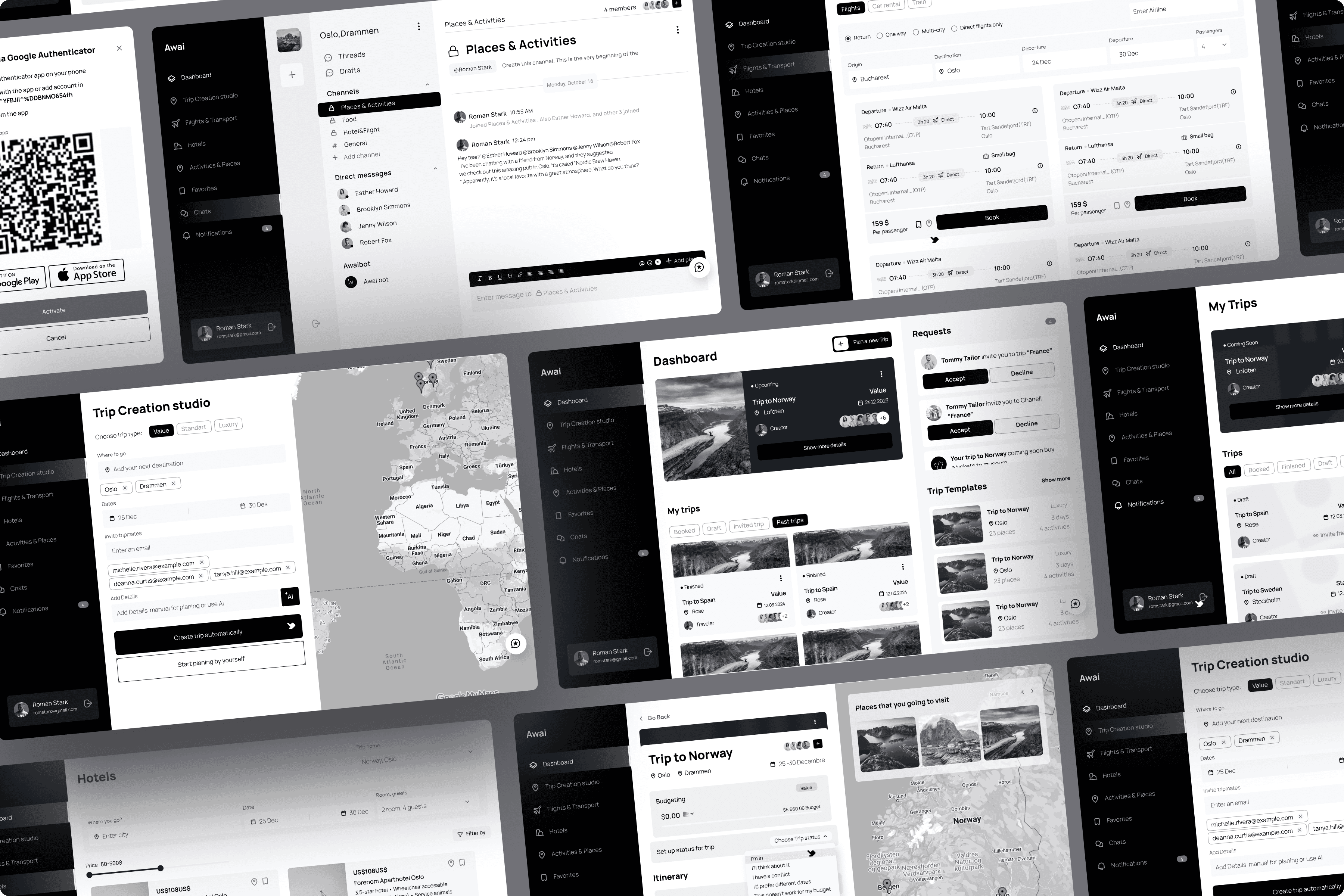
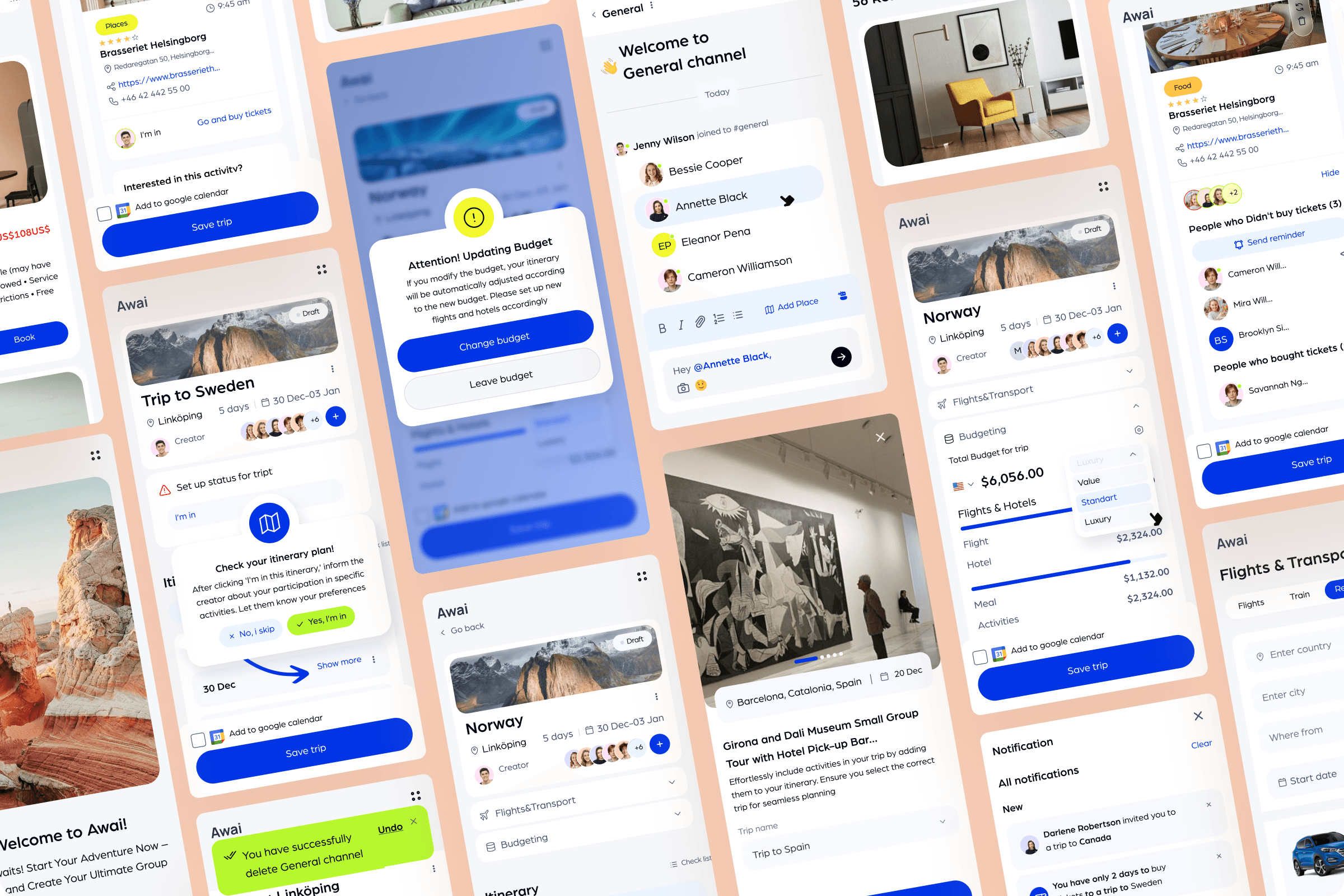
Below is a sample of the high-fidelity wireframes that shaped the foundation of the Awai MVP.
Deliver — Visual Direction, UI Concepts & Final Design
The Deliver phase transformed validated wireframes into a complete visual identity for the Awai Web MVP. This stage focused on defining the product’s aesthetic direction through moodboards, exploring two UI concept options, and preparing the foundation for a scalable, desktop-first design system with mobile adaptive layouts.
By the end of this phase, we established a cohesive, travel-centric visual language aligned with Awai’s values — clarity, collaboration, calmness, and modern simplicity.
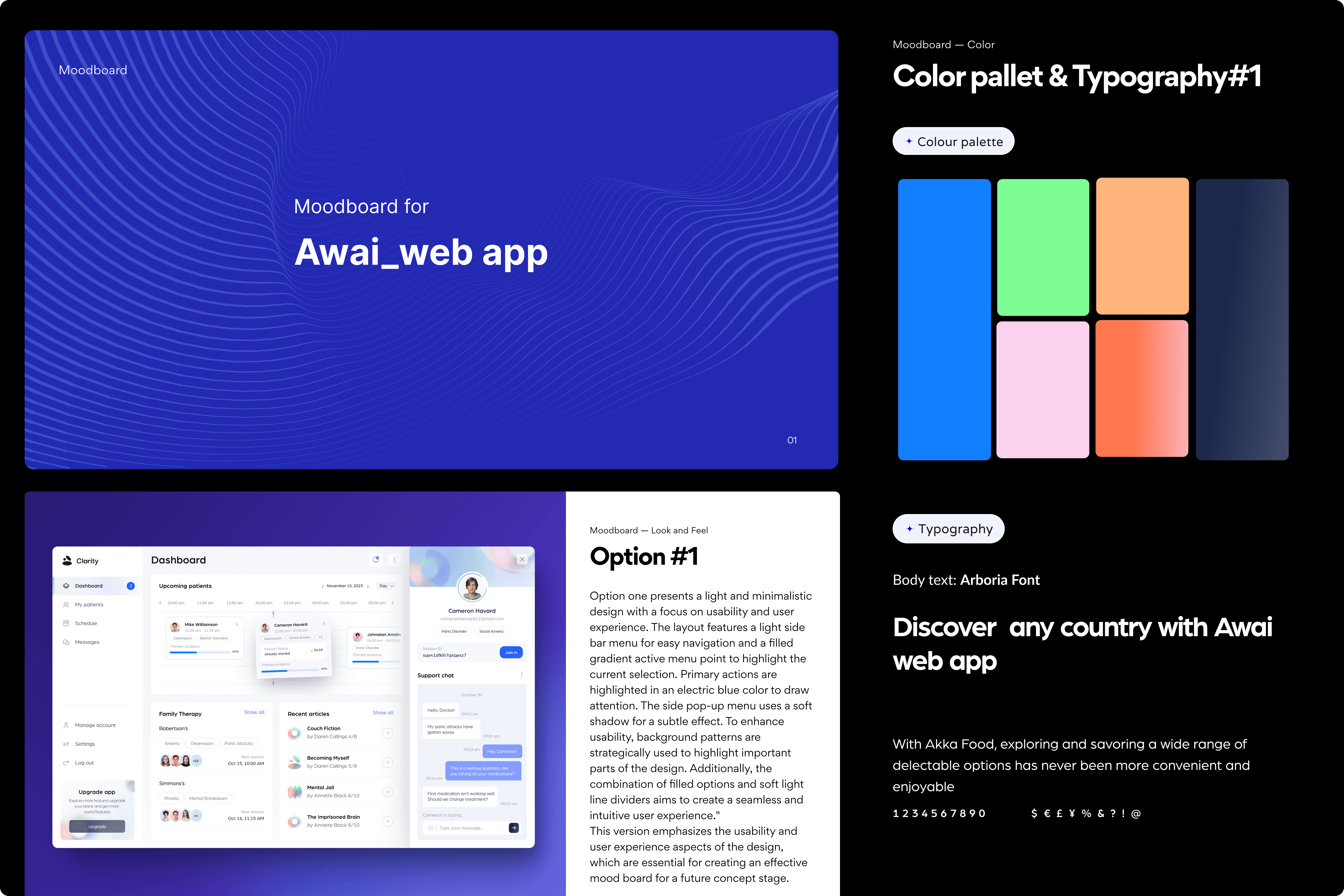
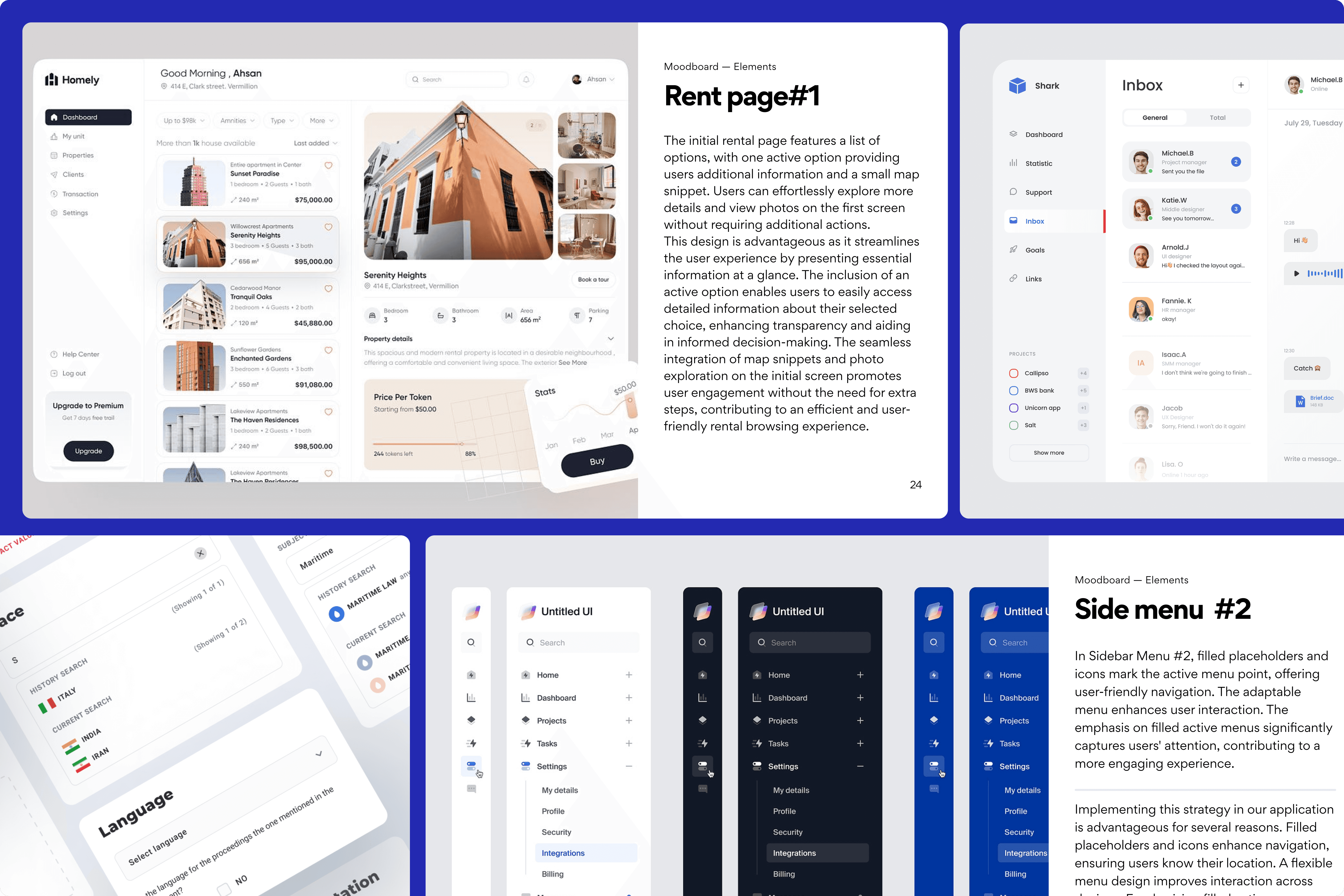
Moodboard & Visual Exploration
To set the creative direction, I developed a moodboard that explored:
Soft, modern travel-tech aesthetics
Light neutrals balanced with calm blue gradients
Friendly, collaborative tones suitable for multi-user trip planning
Clean typography emphasizing legibility
Card-based structures inspired by timeline and itinerary patterns
This step aligned the team on tone, color, and layout principles before moving into UI exploration.
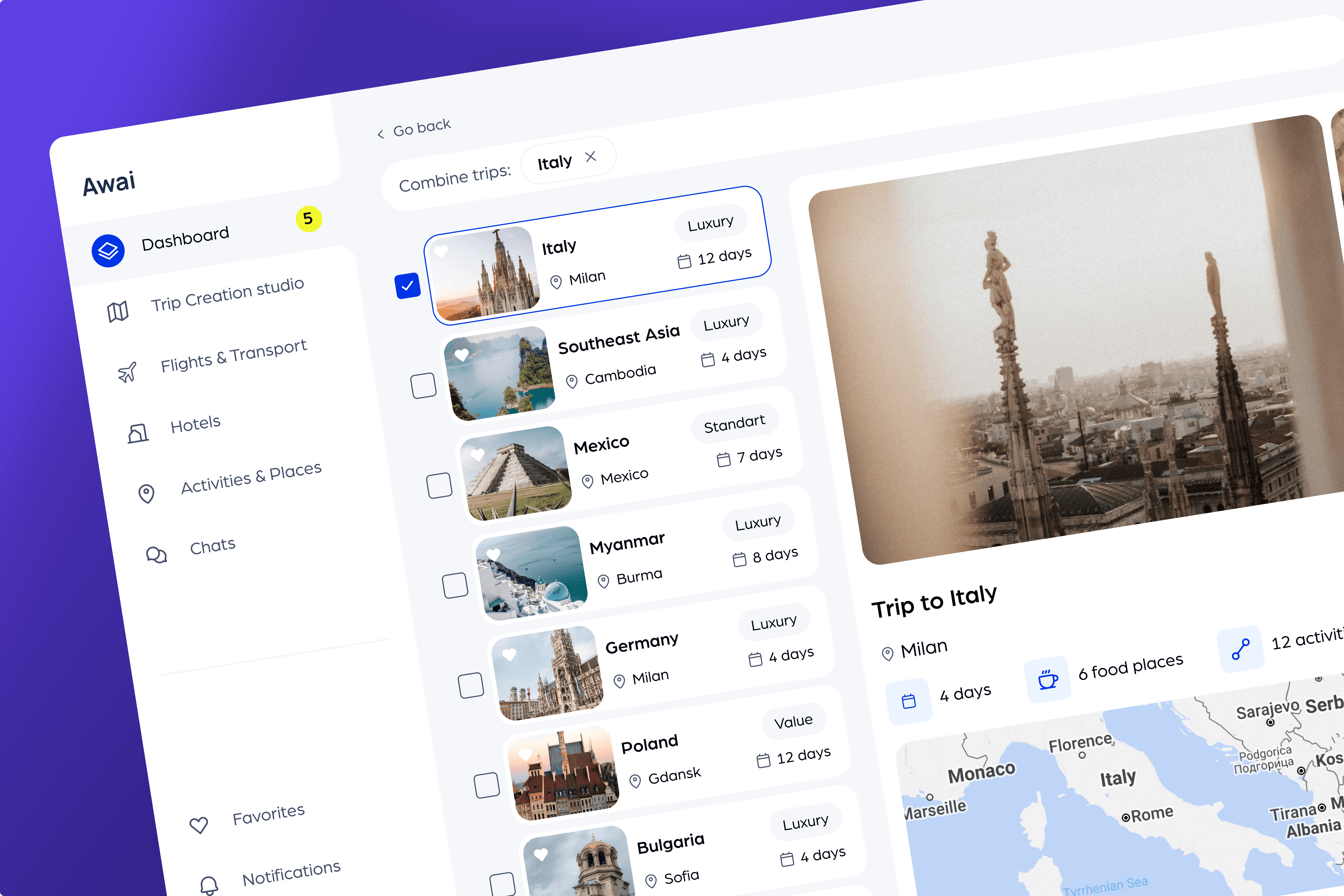
UI Concept Directions
I explored two visual directions for the MVP:
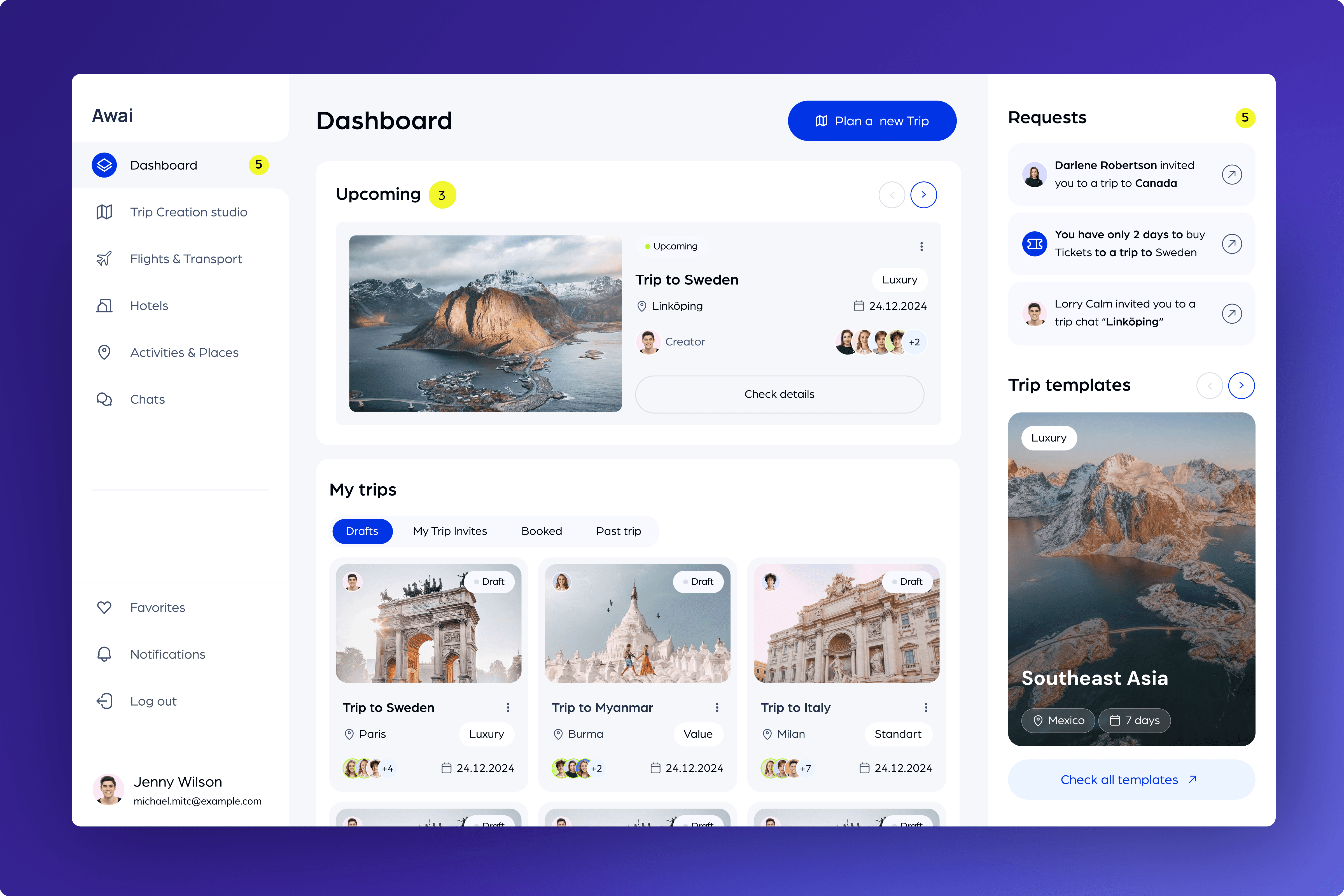
Option A — Structured & Action-Driven (Selected)
UI Concept Option #1 focuses on clarity and direct action:
Left-side menu for primary navigation with a bold, gradient active state
Page-level actions placed prominently at the top
Card components include built-in actions and visual indicators for upcoming trips
Requests feature secondary light-blue CTAs for quick response
Strong hierarchy supporting structured planning workflows
This direction emphasized usability through clearly defined actions and a predictable layout.
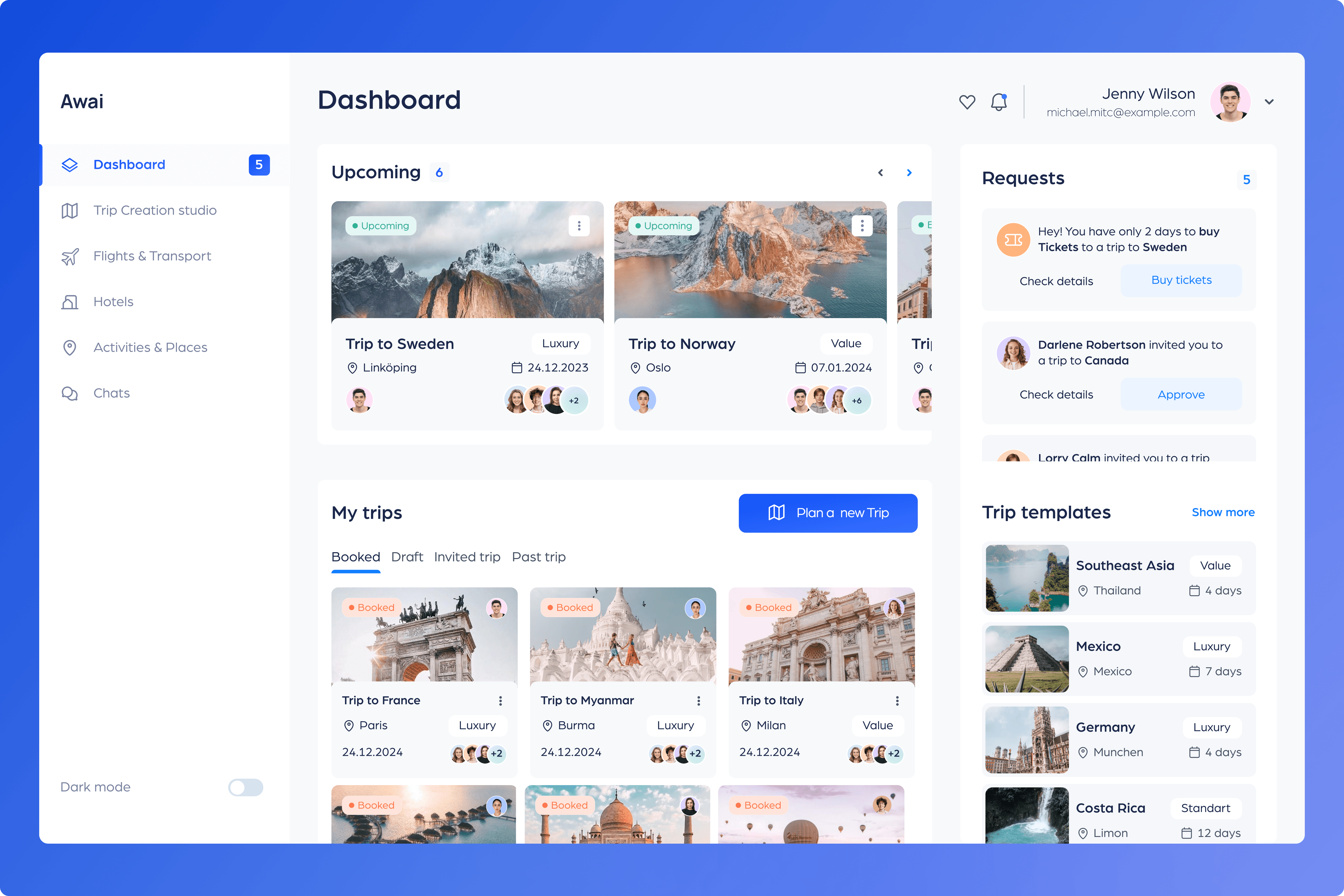
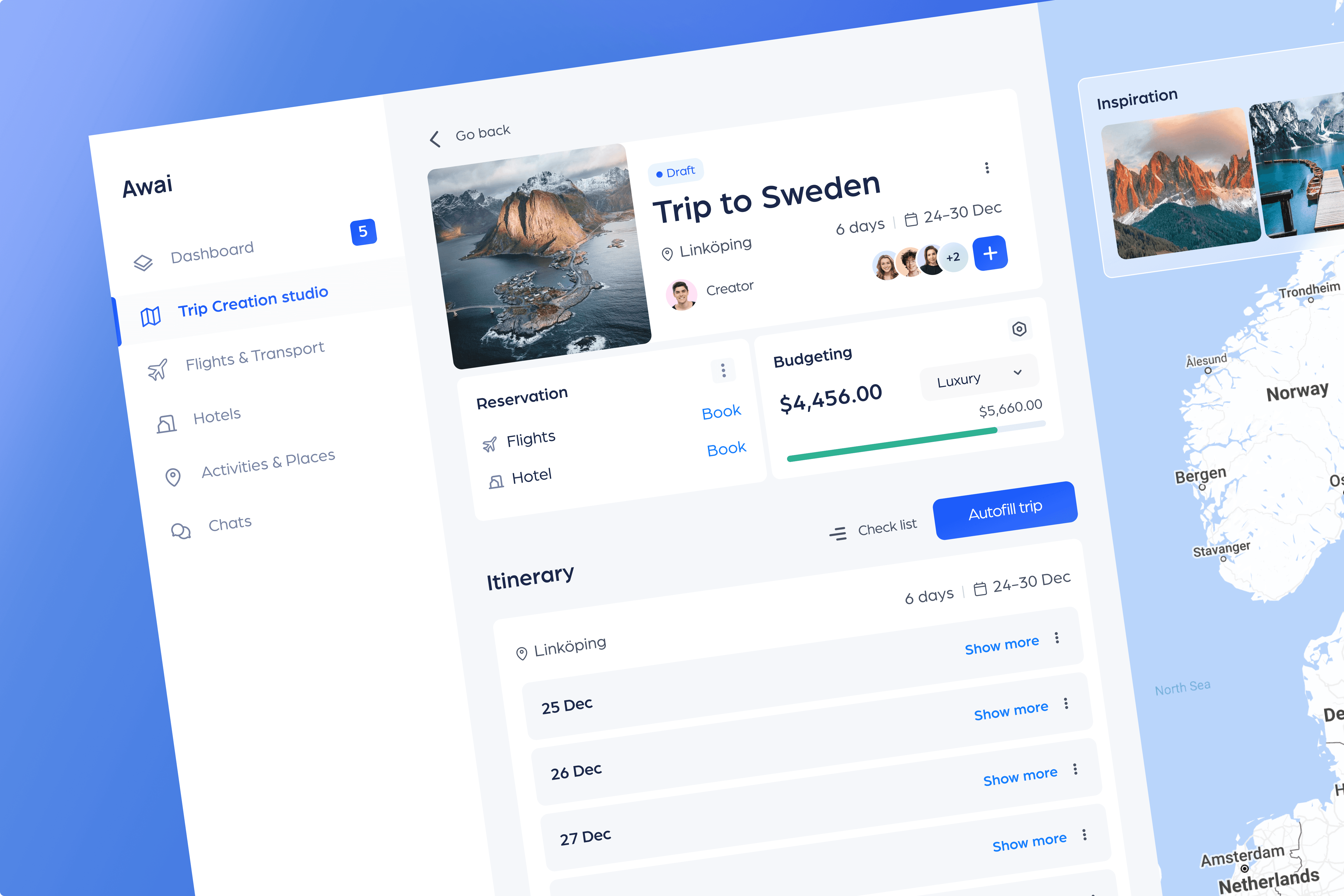
Option B — Minimal, Card-First Interaction
UI Concept Option #2 introduced a more flexible, content-focused approach:
Left-side navigation supported by an additional top bar for secondary options
Active state uses subtle grey highlight with colored text — softer, less intrusive
A clean card view without predefined action buttons, allowing users to open the card to act
Primary action placed at the bottom of the page, aligned with the “My Trip” section
Increased visual breathing room and smoother scanning of itinerary items
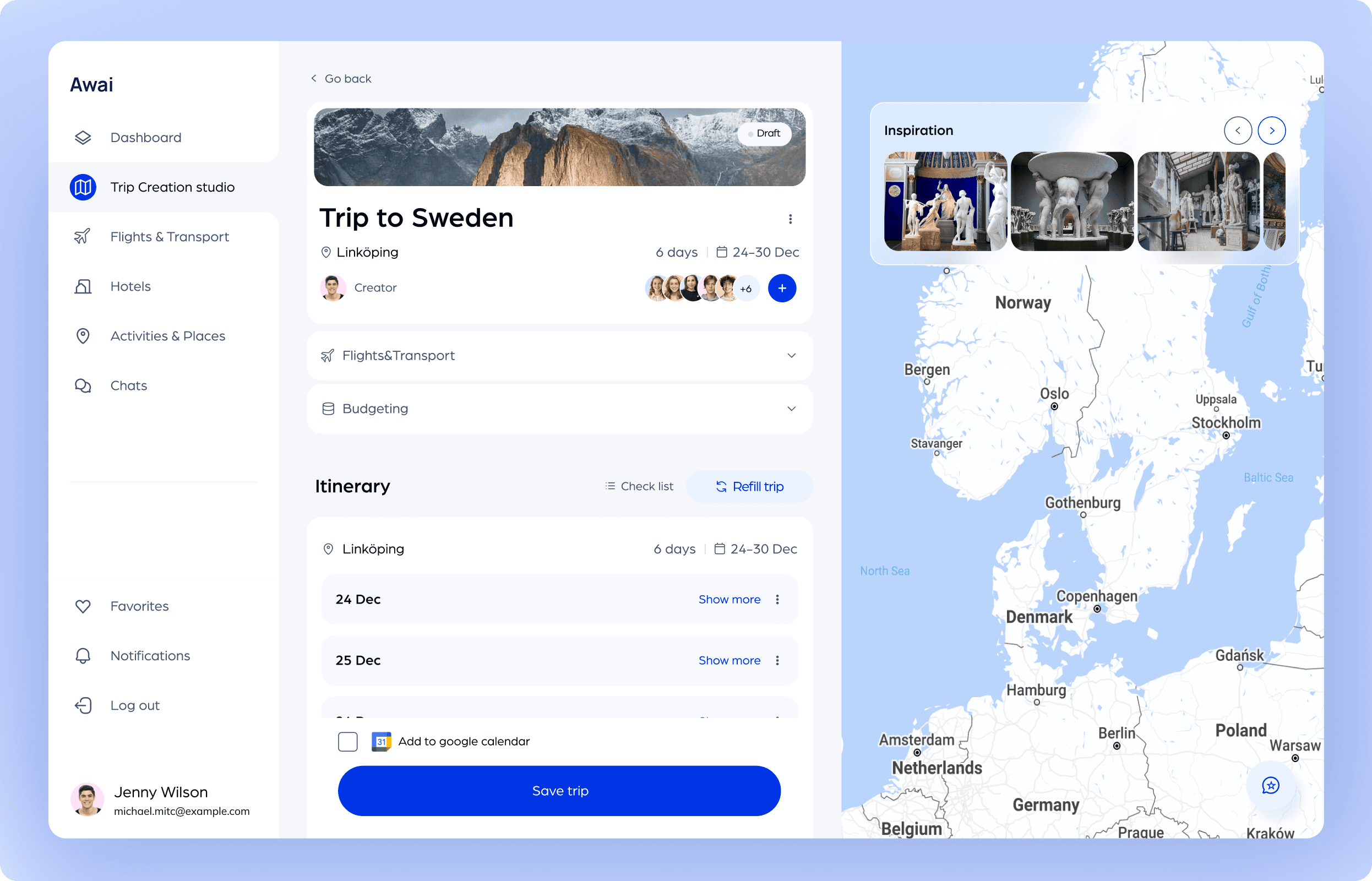
This direction was selected for its balance of simplicity, scalability, and intuitive scanning patterns — particularly suitable for dynamic trip details.
Final Summary
What I Delivered
I designed the complete Web MVP for Awai Travel — transforming fragmented trip planning across spreadsheets, chats, and external tools into one unified, intelligent platform for effortless group travel coordination.
Key Deliverables
End-to-end discovery: stakeholder interviews, competitor research, workflow analysis
Defined core problems, user journeys, IA, and feature prioritization for the MVP
Full platform flow for desktop + adapted mobile interactions
High-fidelity wireframes, interaction patterns, and clickable prototypes
AI-assisted trip-creation exploration
Two UI concept directions + final selected visual system
Fully responsive MVP UI design and developer-ready handoff
Impact
Streamlined group trip creation and planning
Faster coordination across friends, family, and teams
Clear visibility into schedules, budgets, and shared responsibilities
Reduced confusion caused by scattered tools
Stronger user engagement through intuitive navigation and AI-enhanced workflows
A scalable foundation for future automation and mobile expansion
Outcome
A modern, collaborative travel-planning platform that centralizes communication, simplifies trip management end-to-end, and introduces AI-powered assistance — giving groups a faster, clearer, and more organized way to plan trips together.
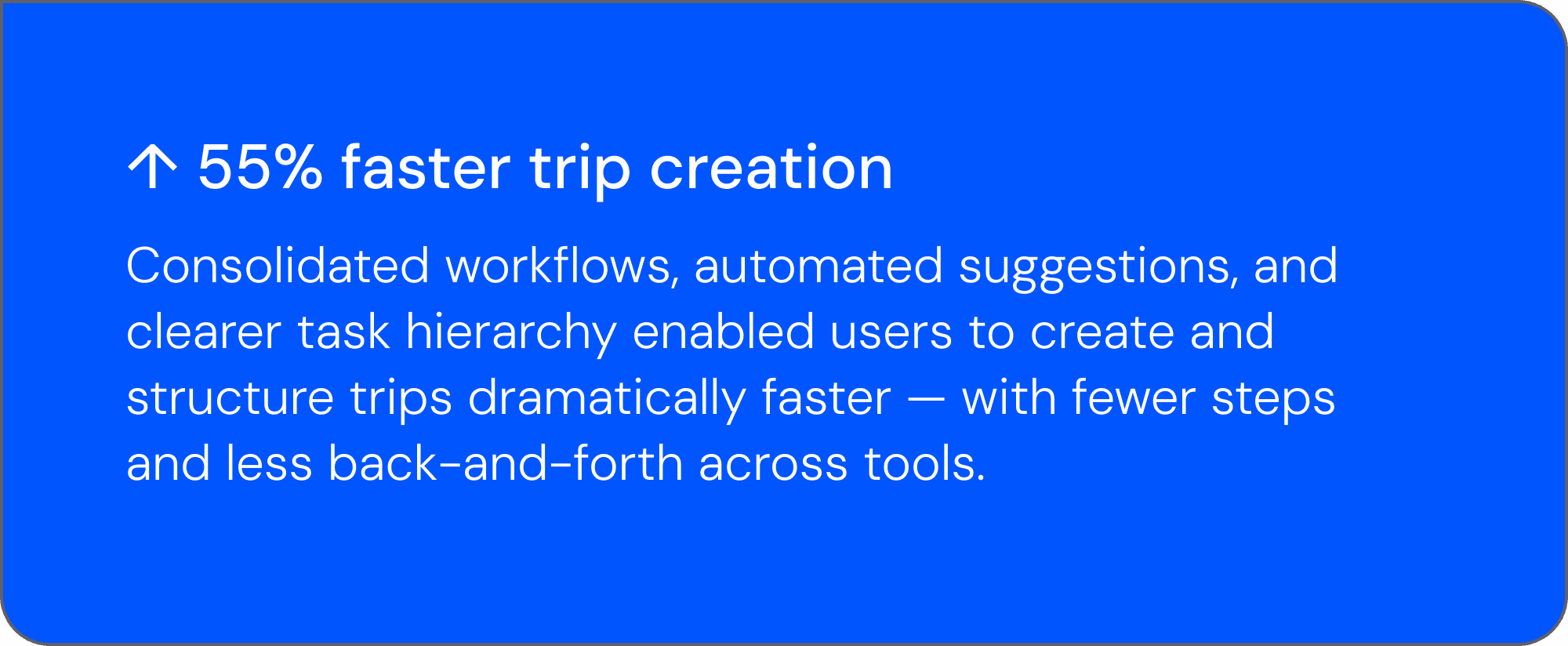
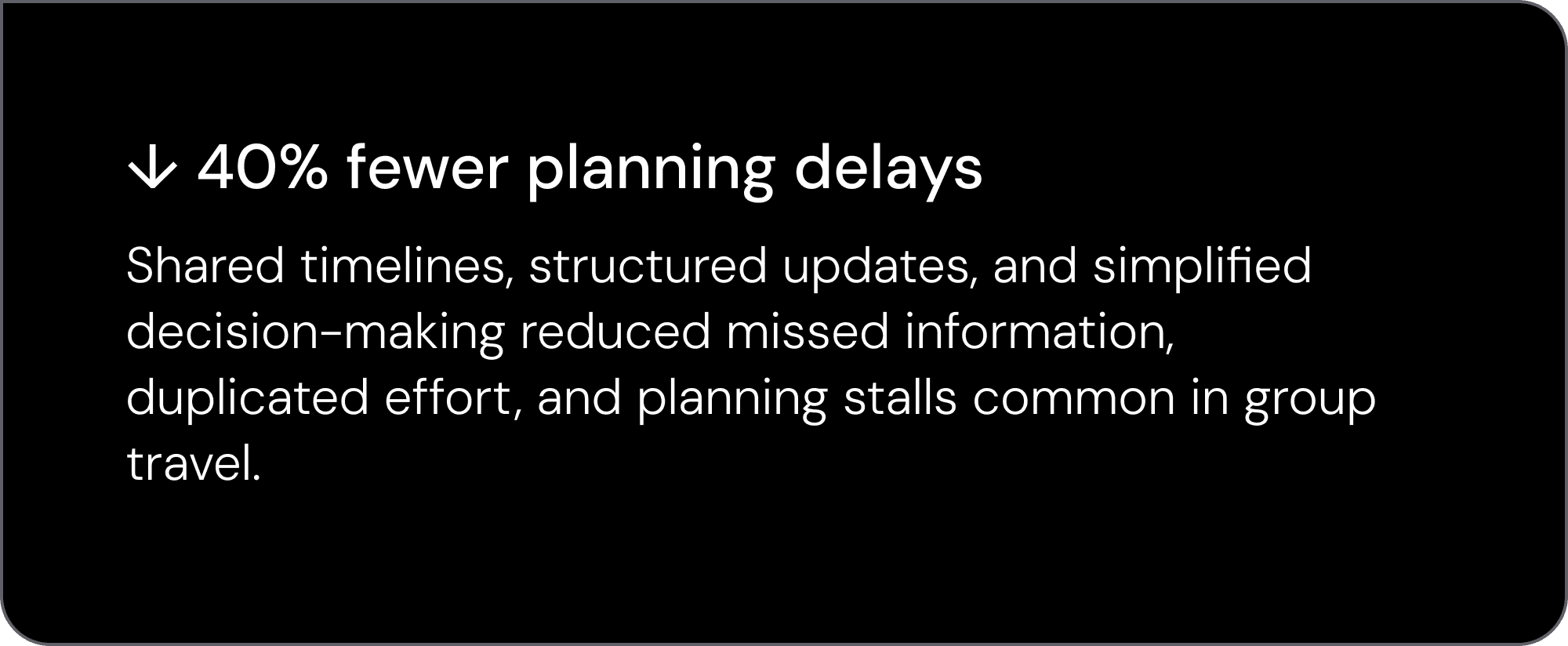
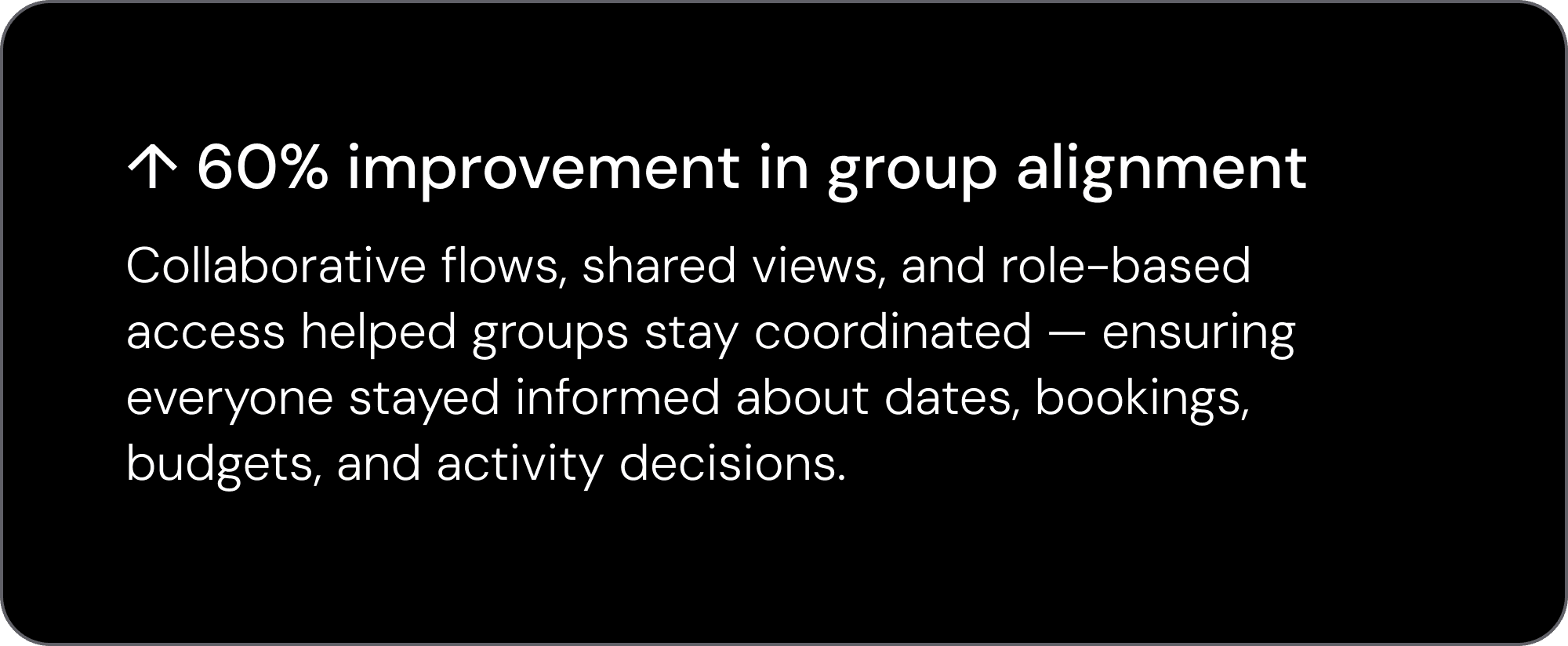
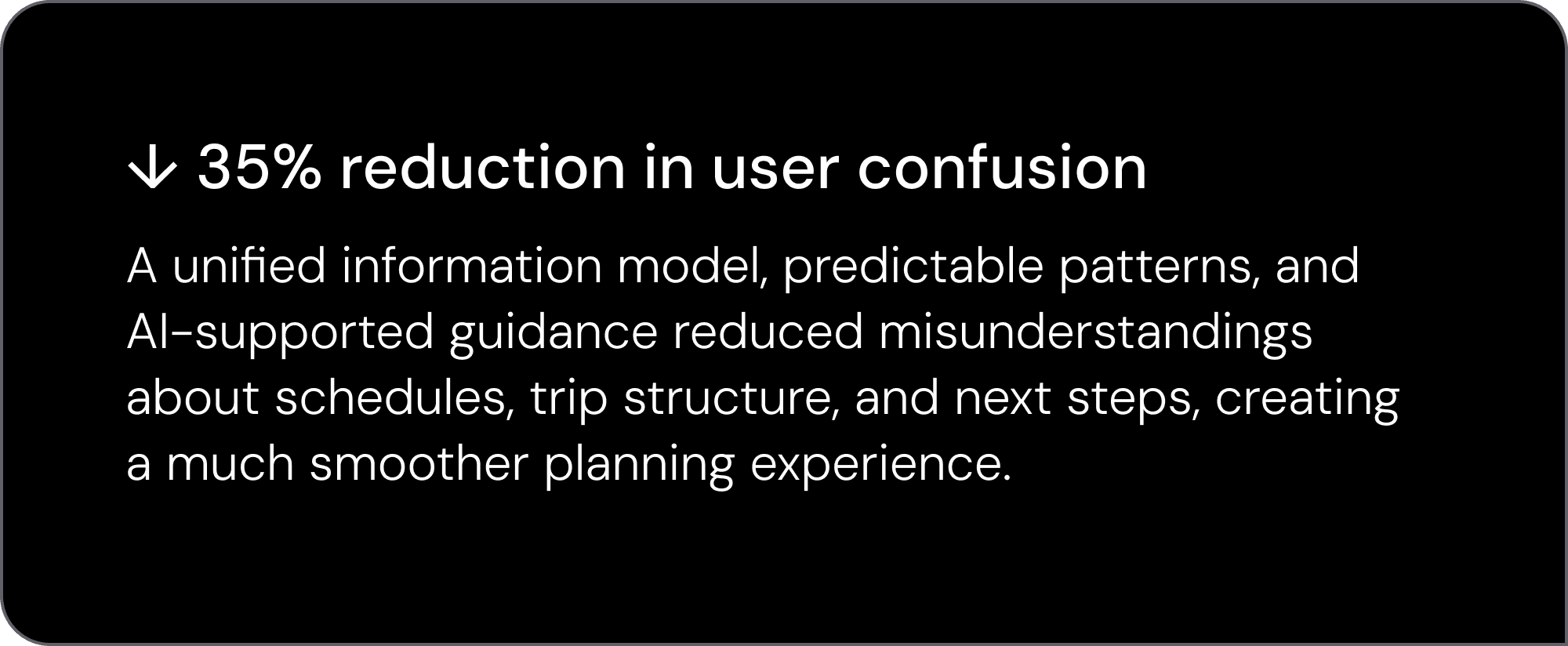
Results
This project delivered a more intuitive, predictable, and efficient trip-planning experience for Awai users — reducing coordination friction, improving planning speed, and strengthening collaboration across every stage of a trip.