Nashid Verify — Digital Onboarding & Identity Verification
We redesigned Nashid Verify into a fast, reliable identity verification product used by banks, telecoms, and enterprise partners. The new onboarding flow unifies document scanning, NFC chip reading, and biometric selfie checks into one seamless journey — supported by motion-based guidance, clearer instructions, and a modern, scalable UI ready for integration across B2B platforms.
Identity Verification
FinTech
B2B SaaS
Services
UX Research & Product Design
Category
FinTech / Digital Identity
Client
Nashid Verify
Scope
UX audit of existing onboarding flow, competitor research, user journey redesign, mobile app flow creation, UI/UX for verification steps, motion guidance, and instruction messaging.
Frame work
Double Diamond
Duration
3 months
Focus
Creating a seamless and intuitive mobile KYC onboarding experience with clear motion guidance, improved step-by-step instructions, and a scalable UI foundation for banks and telecom partners.
Design Approach & Objectives
Overview
Nashid Verify is a B2B digital identity verification solution used by banks, telecoms, and enterprise service providers. The goal of the redesign was to transform a fragmented, outdated onboarding experience into a fast, intuitive, and error-resistant verification flow.
The project included:
A full UX audit of the existing mobile app
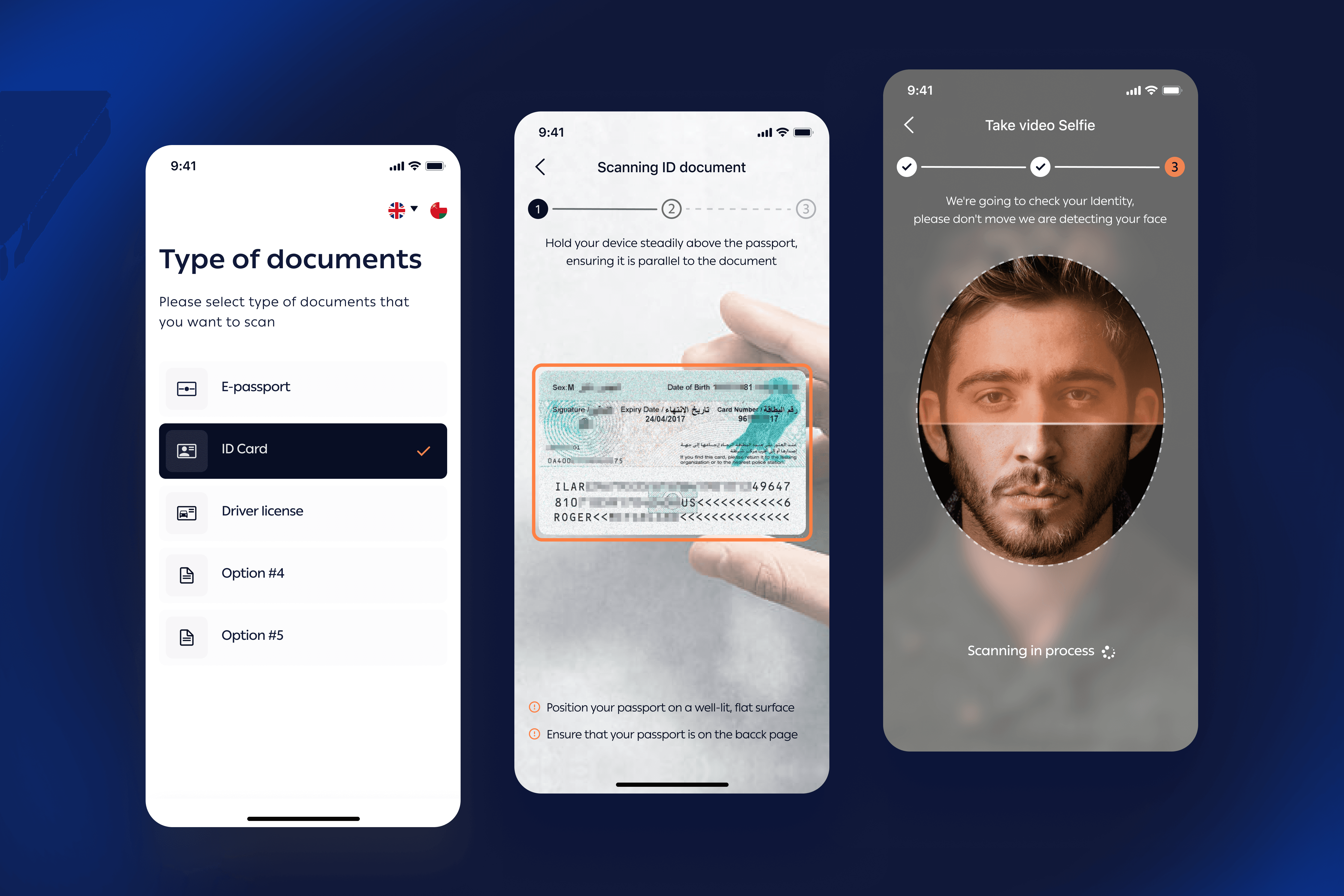
A re-architecture of the onboarding journey (ID scan → NFC read → liveness video)
Motion-based guidance concepts to improve task completion
A complete UI redesign to ensure clarity, trust, and compatibility with enterprise apps
Collaboration with a motion designer to create instructional animations
Competitor analysis across global identity verification tools
The outcome was a frictionless verification experience that reduces user errors, accelerates onboarding, and fits seamlessly into client apps across banking, telecom, and government services.
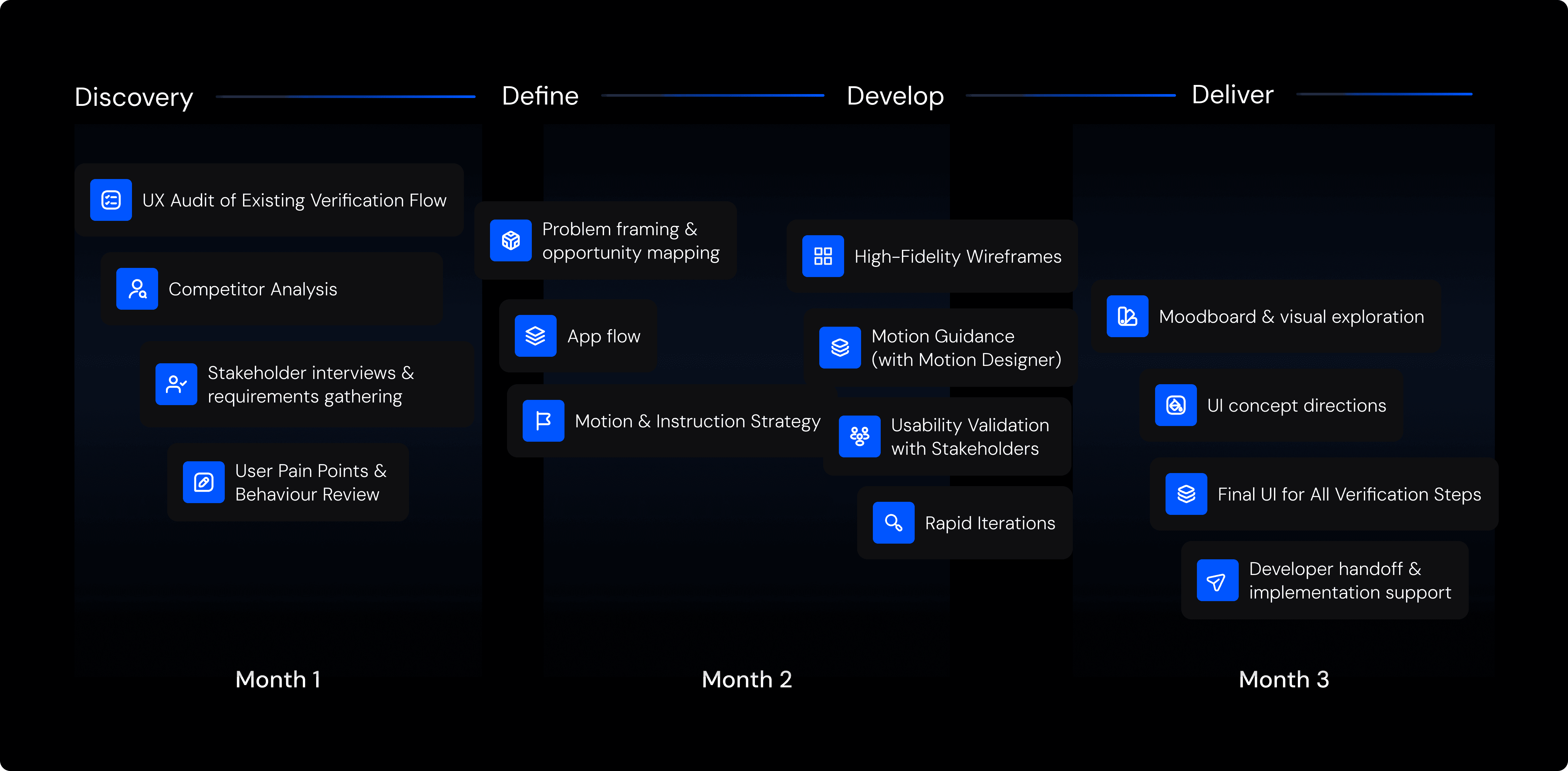
Process Phases
The design workflow followed a clear, iterative structure across four phases, ensuring alignment between research, problem framing, UX flow creation, motion interactions, and UI delivery.



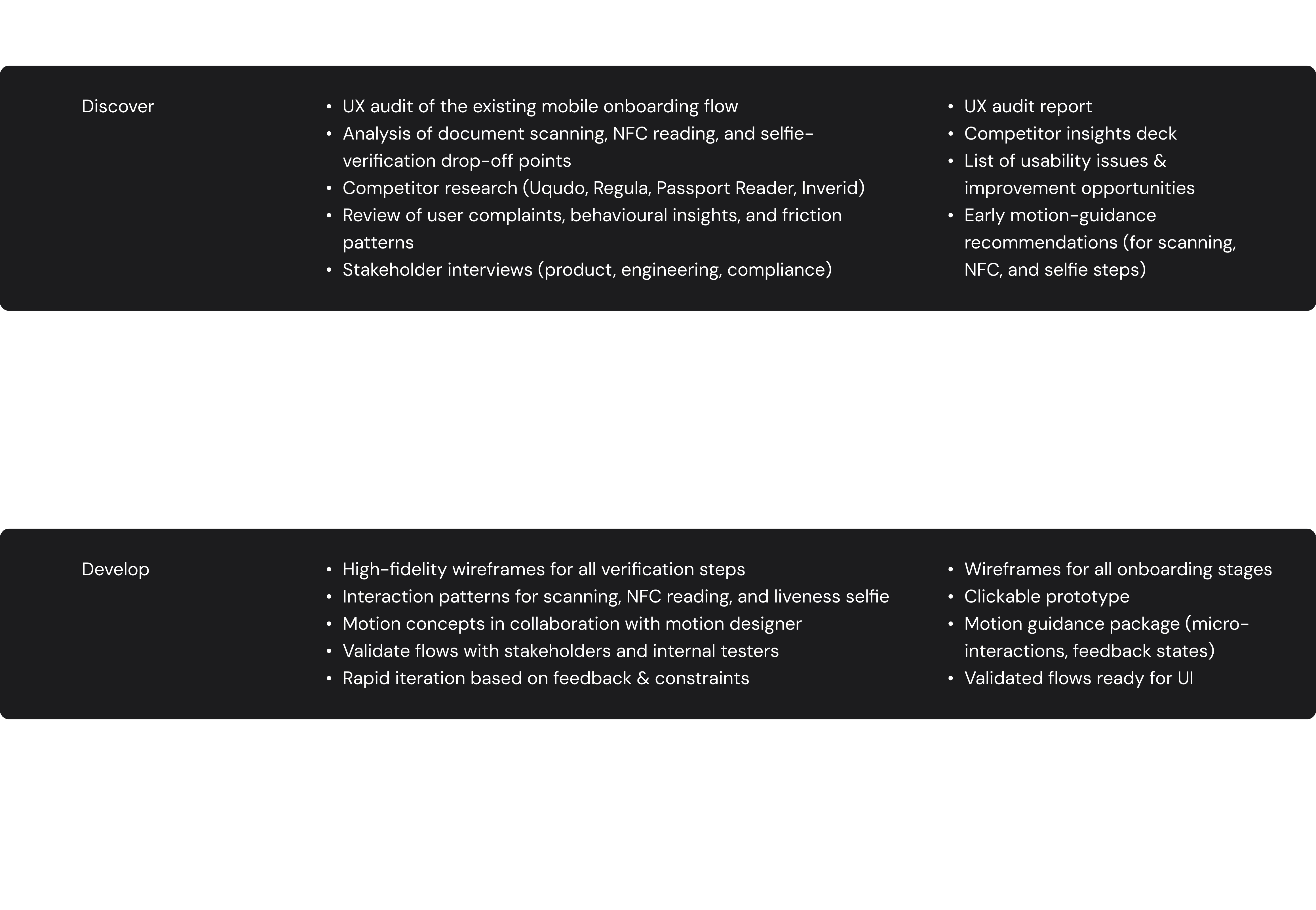
A complete redesign of a digital onboarding system — from user pain-points to motion-guided identity verification.
Business Objectives
The goal was to create a fast, intuitive, and trustworthy digital verification experience that enterprises can embed into their own apps.
Key Objectives
Reduce onboarding drop-offs
Simplify complex verification steps (NFC, video selfie, document scanning)
Prevent user errors through motion-based teaching
Ensure compatibility with third-party enterprise apps (SDK-ready)
Create a scalable design system for future verification features
Improve clarity of instructions & compliance messaging
Increase verification success rate on first attempt
Validation & Outcome
Validation happened continuously across the three-month project — integrated directly into each iteration instead of being treated as a separate phase.
Stakeholders, developers, and potential end-users (Bank/Telco onboarding teams) reviewed flows, animations, and interaction patterns weekly.
Each step — from early journey maps to motion-assisted prototypes — was tested against real onboarding constraints, device limitations (NFC, camera permissions), and behavioural insights from similar ID-verification products.
This ensured the new onboarding experience was:
Clear and guided, with step-by-step motion cues that reduced user hesitation
Consistent, using unified UI patterns across scanning, NFC, and liveness checks
Fast, decreasing cognitive load and number of user errors
Feasible, aligned with engineering constraints and timelines
Flexible, ready for integration into multiple partner apps (banks, telecoms, gov services)
The collaborative process resulted in an onboarding flow that is intuitive, technically reliable, and easily embeddable — dramatically improving the end-user experience while reducing drop-off across verification steps.
Discovery — Research & Context
Overview
he Discovery phase focused on understanding the critical UX issues that were slowing down digital onboarding for Nashid’s identity verification solution. Since the product is embedded inside banking, telecom, and government apps, speed, clarity, and trust were essential.
Through competitor benchmarking, UX audits of the current mobile flow, and collaborative sessions with the product + engineering teams, we uncovered friction across document scanning, NFC reading, selfie capture, and error-recovery steps.
These insights shaped the redesign of an intuitive, guided onboarding experience supported by motion graphics, real-time feedback, and clearer user communication.
Aligning Product Vision & Success Metrics
To ensure clarity between business, product, engineering, and design, we ran working sessions to define what “successful onboarding” looks like for both end users and enterprise clients integrating Nashid.
Focus Outcomes
Clear direction for redesigning the mobile onboarding experience
Shared understanding of why users fail scanning / NFC / selfie steps
Agreement on motion-guided onboarding to reduce user errors
Defined success metrics (completion rate, error reduction, step clarity)
Prioritized roadmap for the new onboarding flow and motion components
This simple framework helped connect business needs, real user pain points, and the resulting design focus areas — ensuring the Nashid verification flow was built around clear goals and real user challenges.

Competitor Landscape
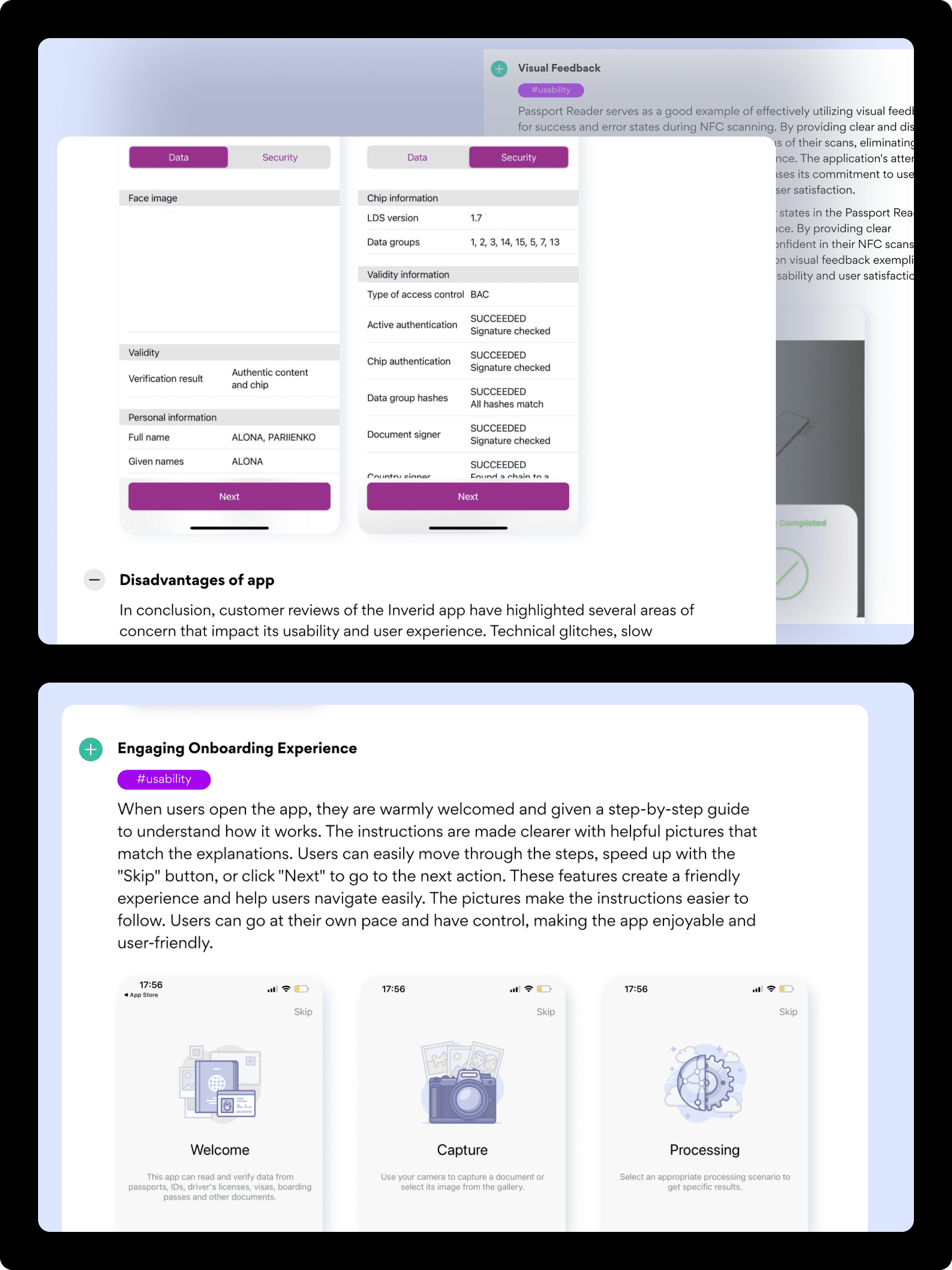
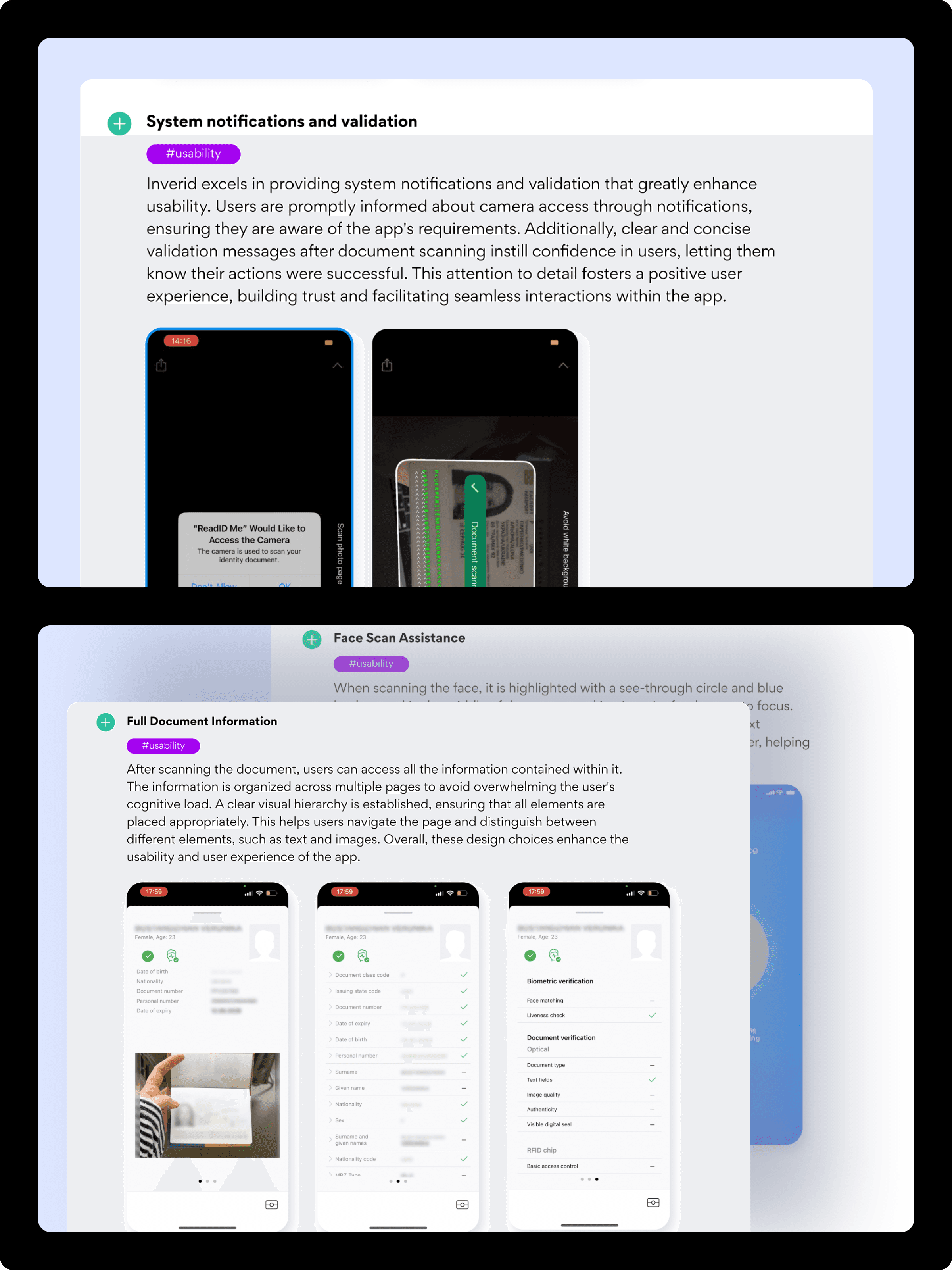
To understand current standards in digital identity verification, we analyzed leading KYC, document-scanning, and NFC-based onboarding tools.
Competitors Reviewed
Uqudo.com
Regula
Passport Reader
Inverid
Key Insights
Motion-guided flows significantly reduce scanning and selfie-capture errors.
Advanced tech — OCR, biometrics, liveness detection, NFC — is now baseline for modern verification.
Clear step-by-step visual instructions lower user confusion and drop-off.
Real-time feedback prevents repeated scans and improves completion rates.
Face-scan flows rely on animated hints, framing guides, and micro-interactions.
NFC steps require precise timing cues to reduce abandonment.
Minimal, trustworthy visual design increases confidence in the verification process.
Some competitors support web onboarding to improve accessibility.
Loaded data is best reviewed when structured into clear tabs/sections.
Design Opportunities
Introduce motion-based guidance for each step.
Provide clear instructional cues during document, face, and NFC scanning.
Implement AI-powered scanning (OCR, edge detection, auto-validation).
Display organized document previews after scanning.
Add real-time progress indicators to reduce user anxiety.
Offer multi-language onboarding for broader adoption.
Support both mobile and web verification flows.
UX Audit of Nashid Verification App
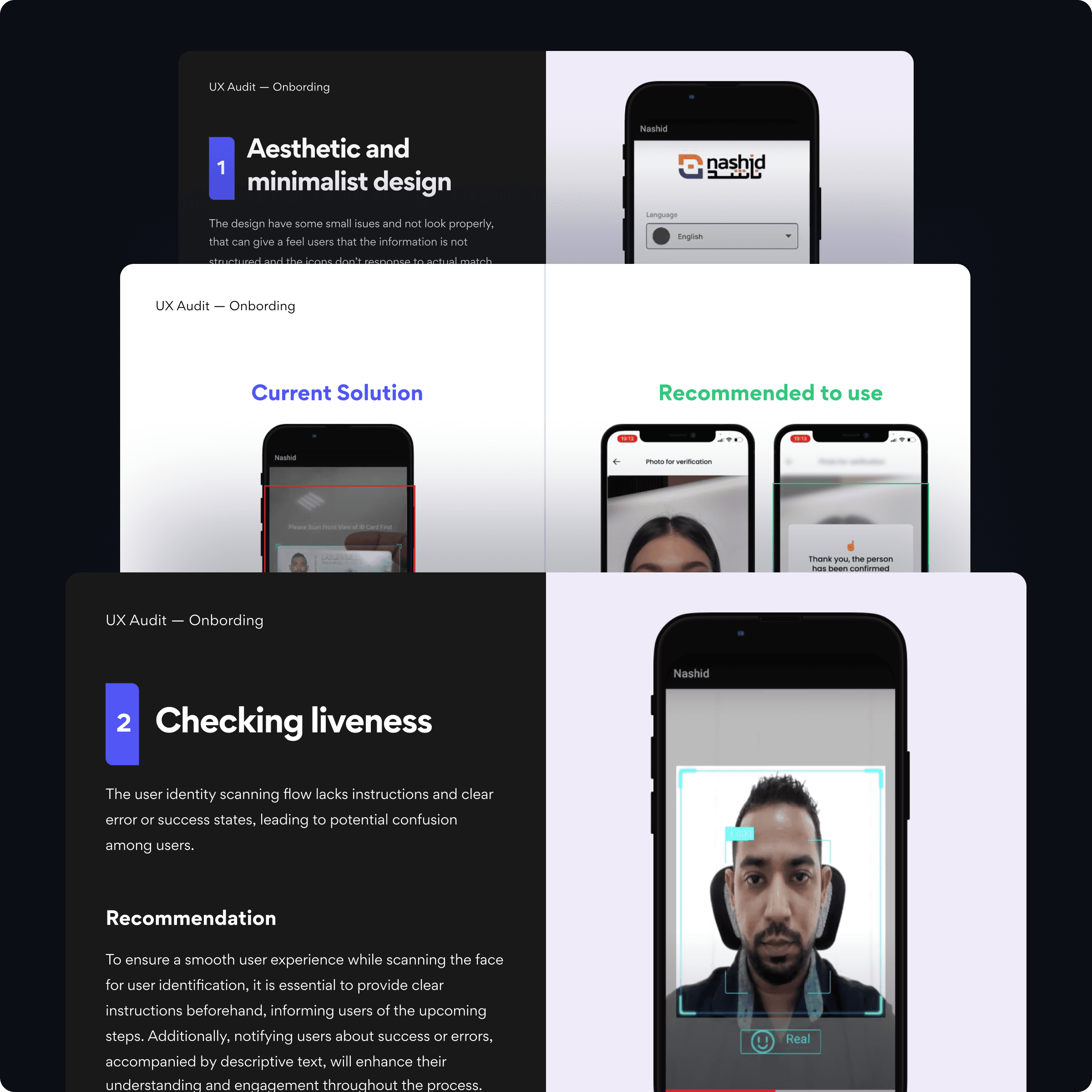
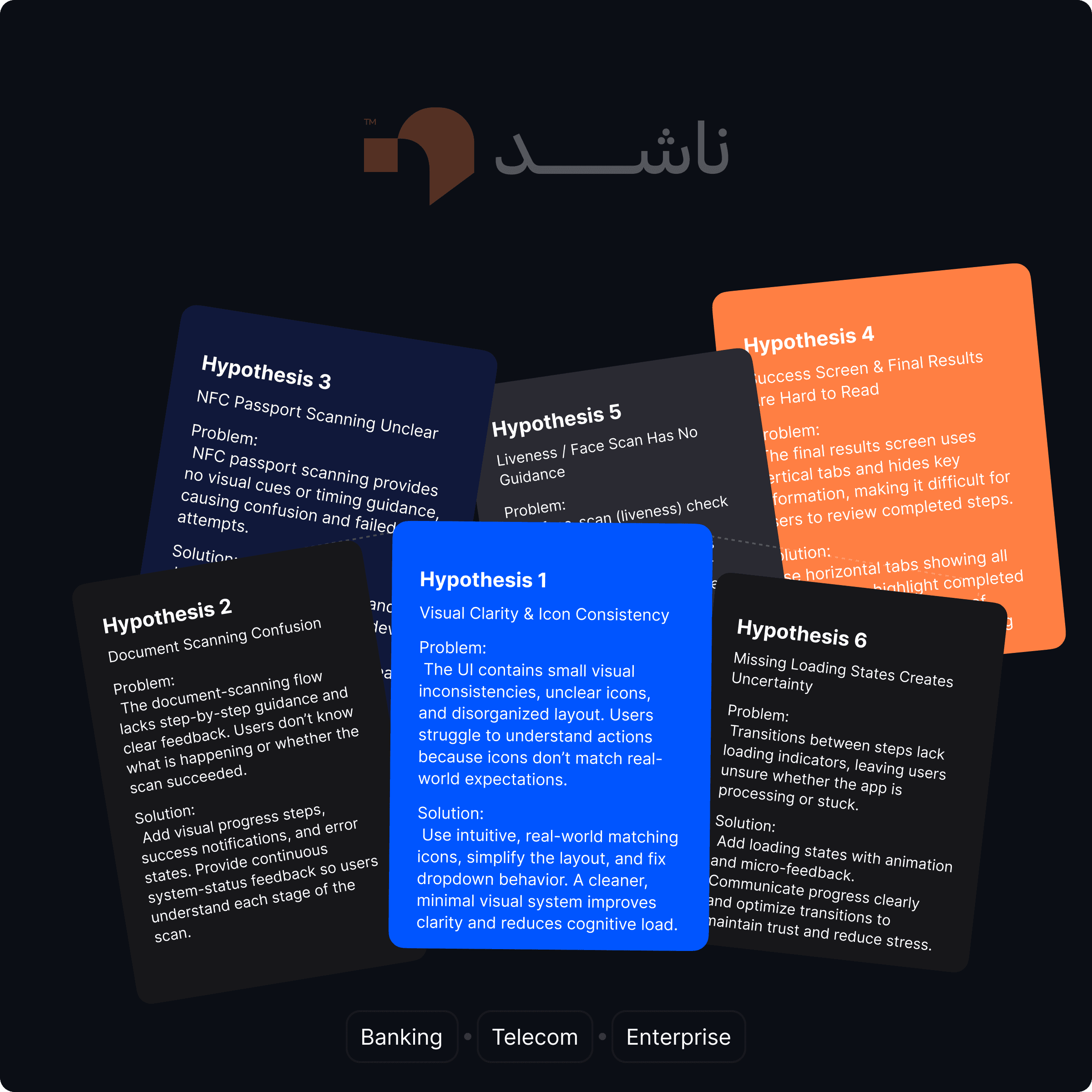
Our UX audit revealed several critical usability gaps across document scanning, NFC passport reading, liveness detection, system status visibility, and final result presentation. These issues affect user confidence, increase error rates, and disrupt the onboarding flow.
Key Findings
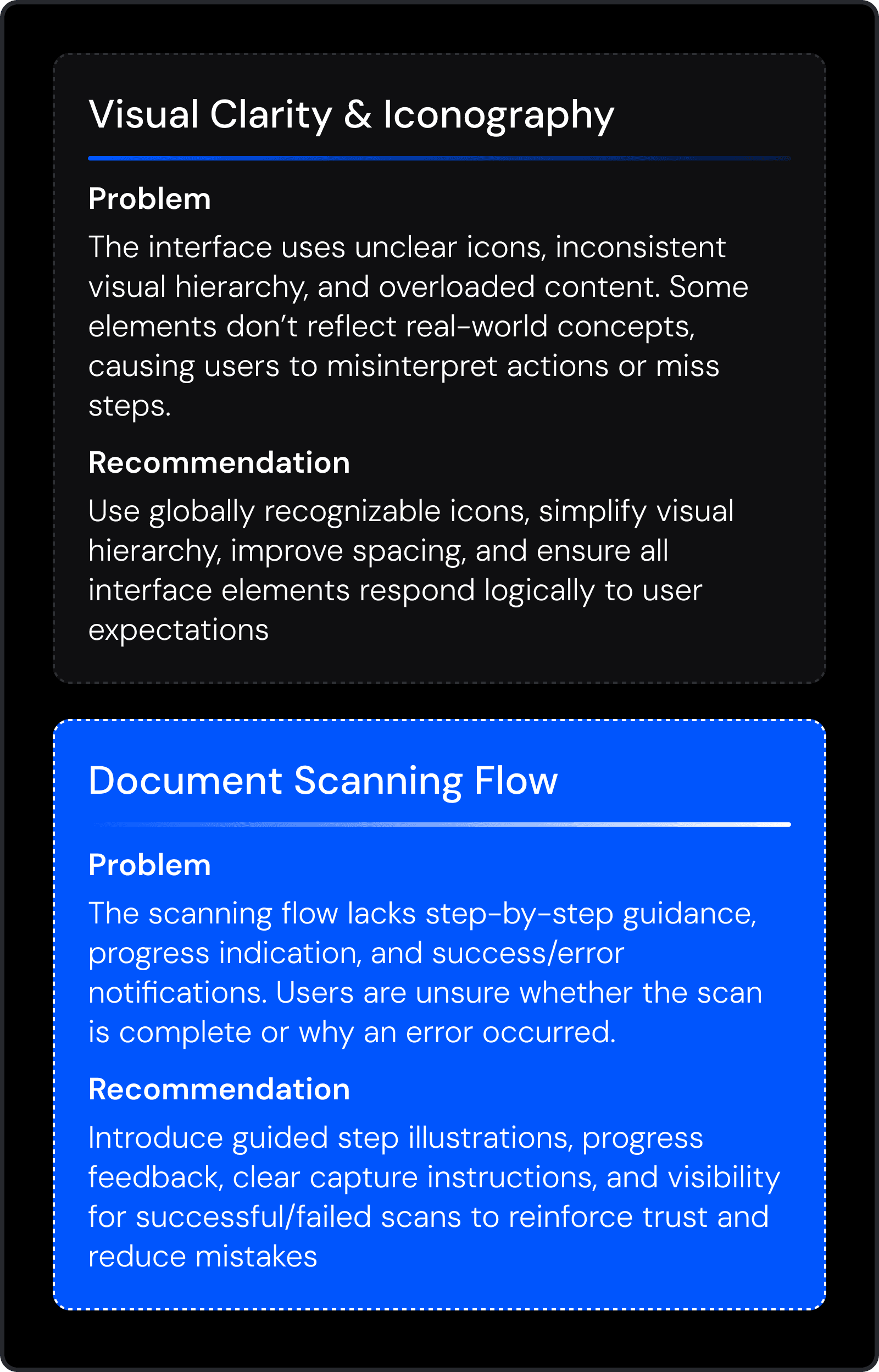
Visual Design & Clarity
Interface feels inconsistent and slightly unpolished
Icons don’t match real-world actions
Some UI components behave unexpectedly (e.g., dropdowns)
Document Scanning
No clear instructions or step-by-step guidance
Missing progress indicators and system status
Users receive little to no feedback after each step
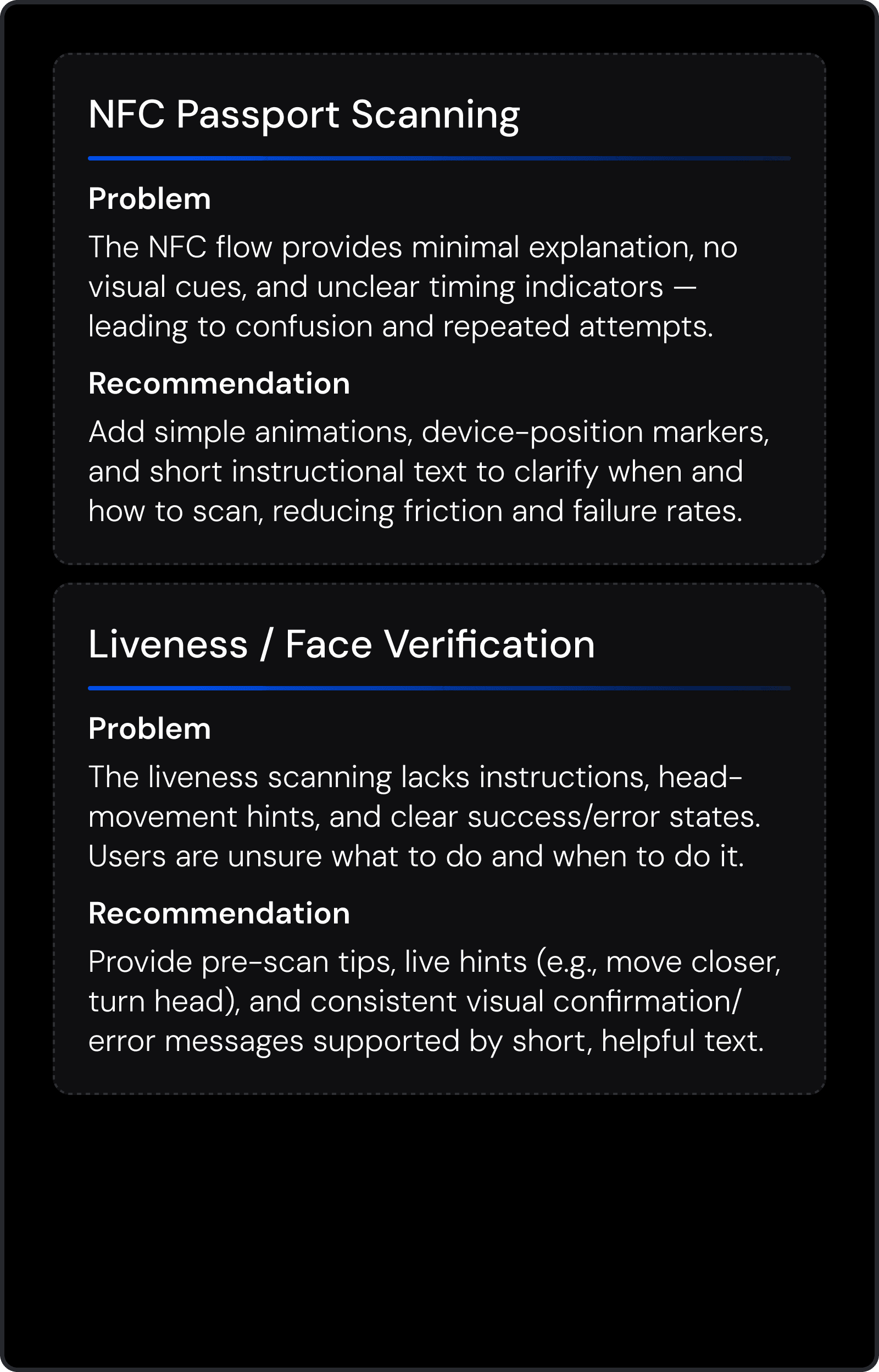
NFC Passport Reading
Lacks explanations, positioning guidance, and timing cues
No visual markers to support correct chip scanning
Liveness Detection
No pre-instructions or real-time hints
Missing error/success states — users unsure if the scan worked
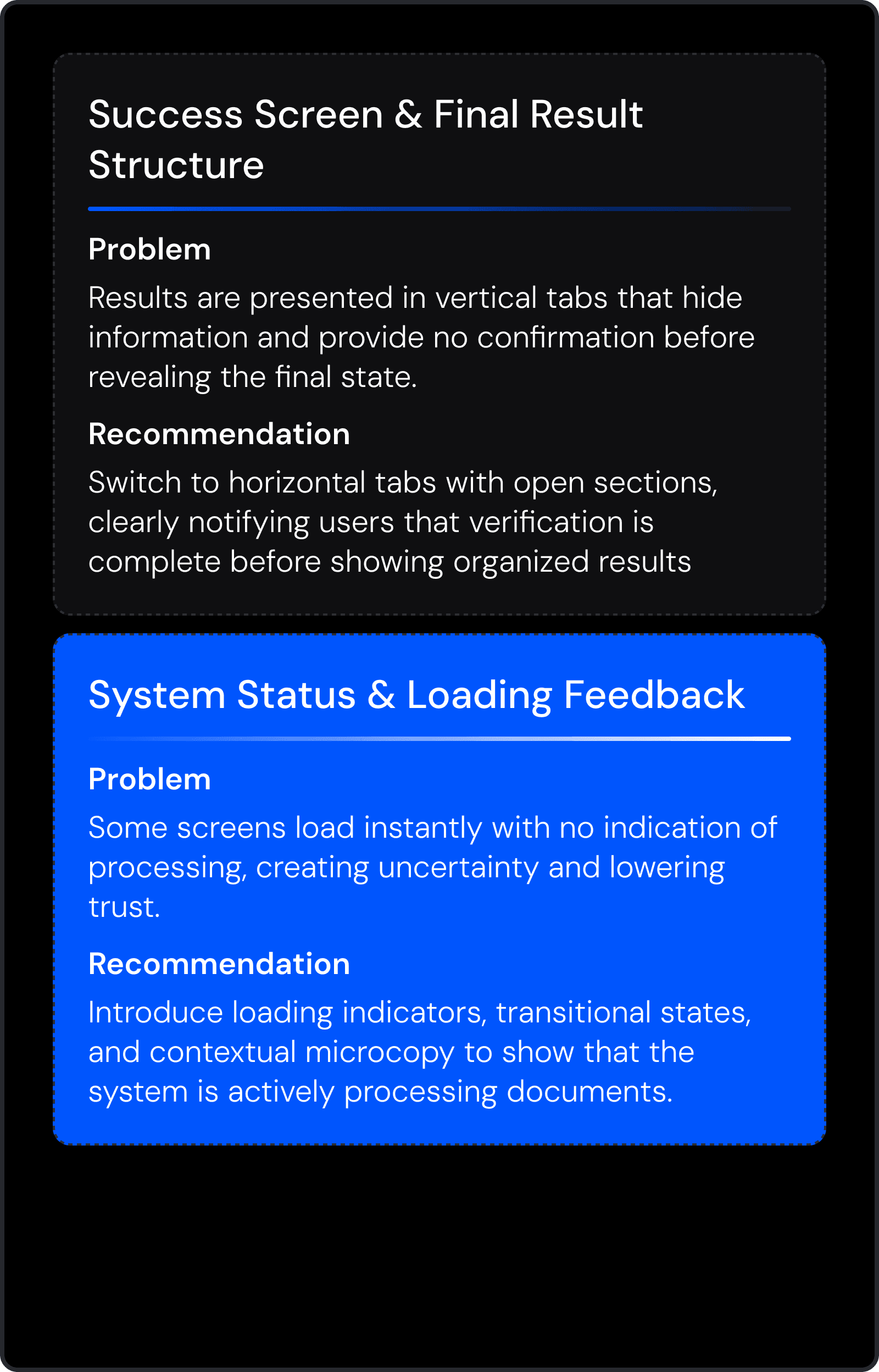
Success & Results Screen
Final information hidden inside vertical tabs
No clear confirmation before showing the results
System Feedback
No loading or processing states between major steps
Users unsure whether the app is working or stalled
Design Opportunity
Insight
Unclear NFC passport scanning steps →
Step-by-step visual guidance + clear system status at every stage
Missing instructions & states during liveness check →
Markers and micro-animations that explain how to scan correctly
Final results are hidden in vertical tabs →
Guided liveness flow with real-time success/error feedback
Synthesized audit insights translated into actionable design opportunities that increase clarity, reduce errors, and build user confidence across the verification journey.
Define — Problem Framing & Information Architecture
During the Define phase, I translated research findings into clear UX problem statements, prioritized the most critical usability issues, and structured the foundation for a smoother, guided identity-verification experience.
This stage focused on clarifying the end-to-end onboarding flow, improving scanning logic, defining feedback states, and building a predictable step-by-step system users can trust.
These frames directed the IA and flow creation for Nashid’s mobile verification experience.
Problem Framing
Information Architecture Priorities
To support a seamless identity-verification flow, the IA restructuring focused on:
Clear linear steps from Start → Document Scan → NFC → Liveness → Results
Grouping related tasks (ID types, scan attempts, retry options)
Predictable feedback states (success, fail, processing)
Modular screens that support future AI-powered verification
Defined clear error-handling paths to reduce drop-offs and user confusion
This ensured users always know where they are, what to do, and what happens next.
App Flow — Identity Verification Journey
I created a unified app-flow combining all verification steps (document scanning, NFC, liveness, review, and result delivery).
The flow resolved unclear transitions, added missing status checkpoints, and mapped error-handling paths.
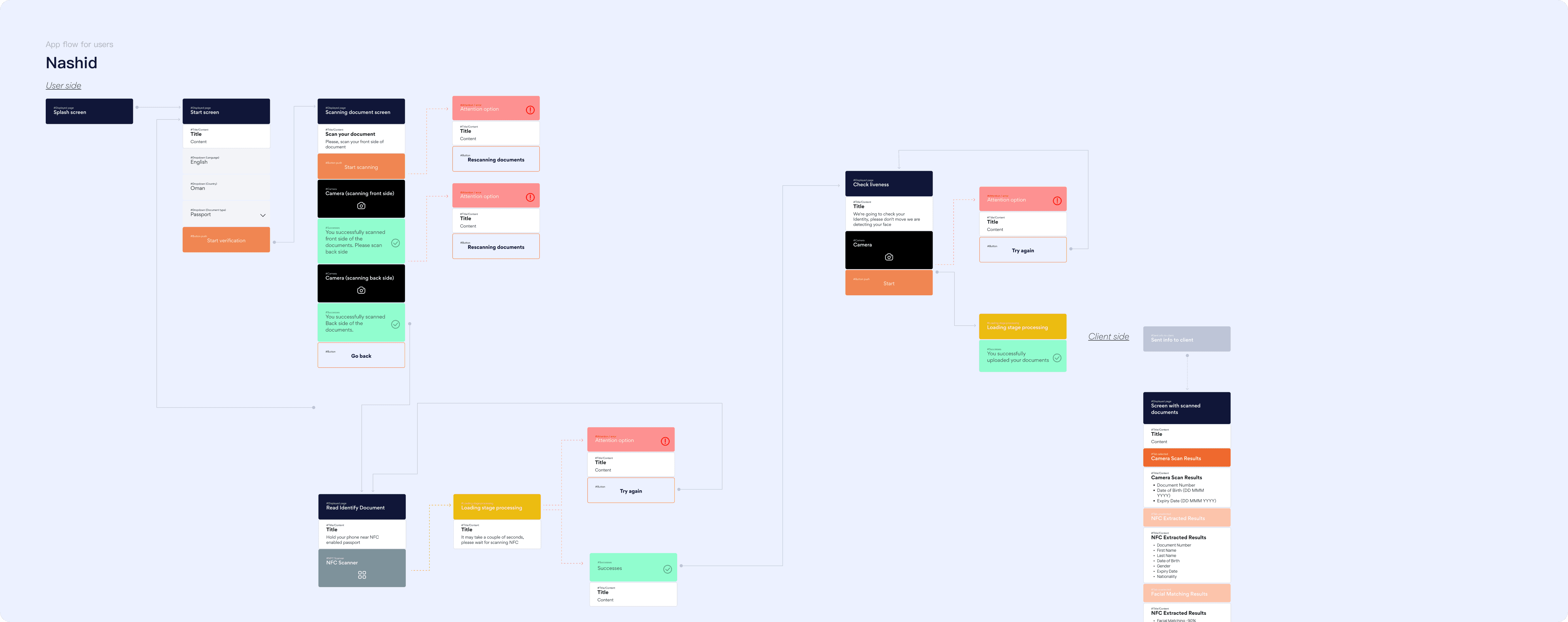
The structured flow ensured a predictable onboarding experience, reduced scanning failures, and aligned design with engineering requirements for smooth implementation.
Develop — From Structure to Interaction
Transforming validated IA into functional, testable product experiences.
During the Develop phase, I translated the restructured verification flow into high-fidelity wireframes, motion-guided interactions, and testable prototypes. This stage focused on shaping every step of the identity-verification experience — ensuring clarity, reducing scanning failures, and validating feasibility with engineers and stakeholders.
The goal was to remove ambiguity before UI design, strengthen predictability across all steps (Scan → NFC → Liveness → Review → Result), and ensure that every interaction aligned with real user behavior.
The refined interaction patterns reduced scanning errors during internal testing and helped stakeholders understand critical timing and positioning constraints.
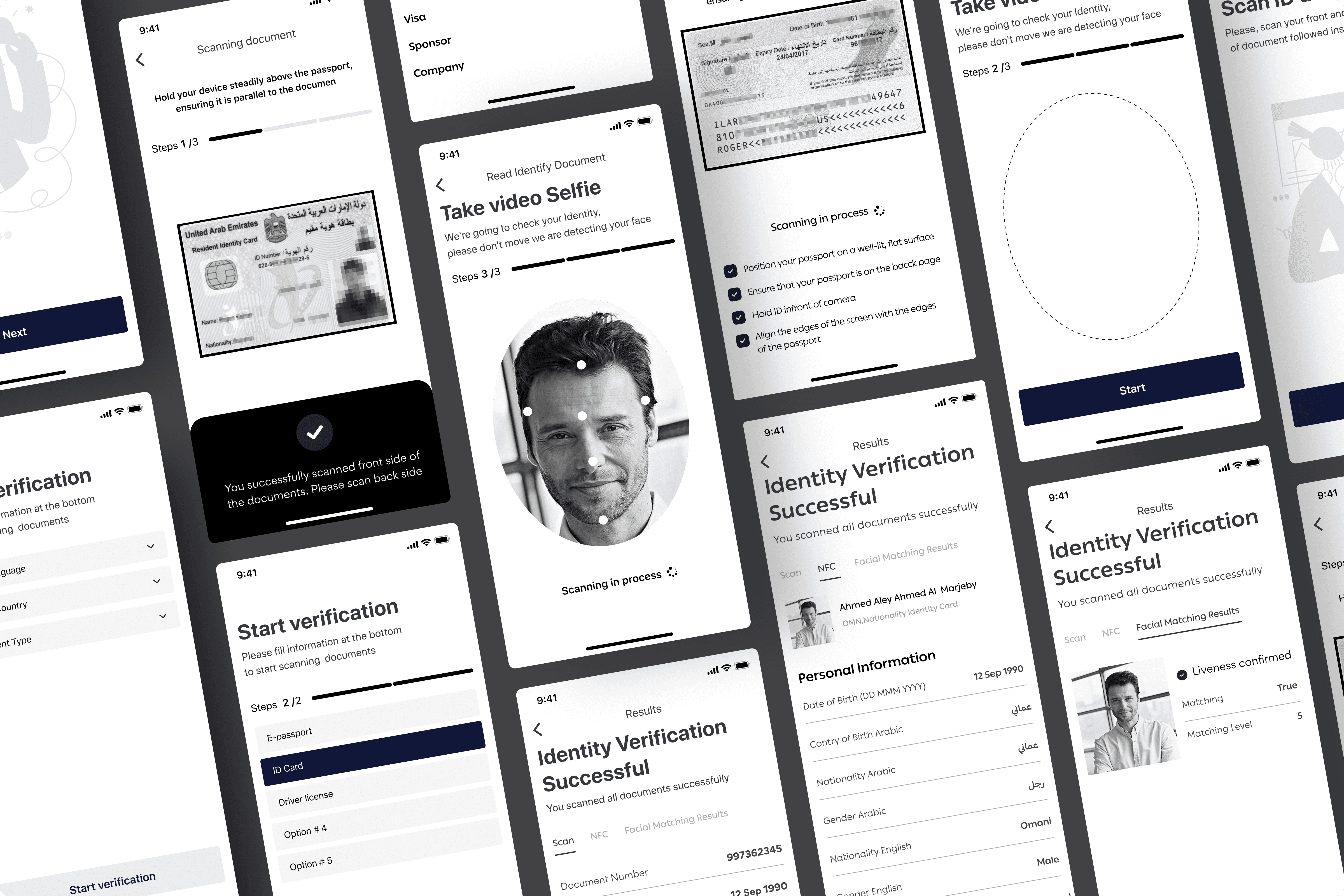
High-Fidelity Wireframes
I created detailed high-fidelity wireframes for every core verification stage —
Document Scan, NFC Passport, Liveness Check, Review, Final Result, and Error/Retry Paths.
These wireframes defined:
layout and hierarchy
wording and microcopy states
scanning instructions and success/failure patterns
step-by-step transitions
loading, progress, and retry logic
This allowed engineering to understand the full verification logic before UI production and ensured smoother implementation
Design decisions were validated against real-device constraints such as camera permissions, NFC chip compatibility, and scanning timing window.
The wireframes acted as the blueprint for both UX improvements and motion-assisted interactions.
Interaction Design, Motion Guidance & Iterative Validation
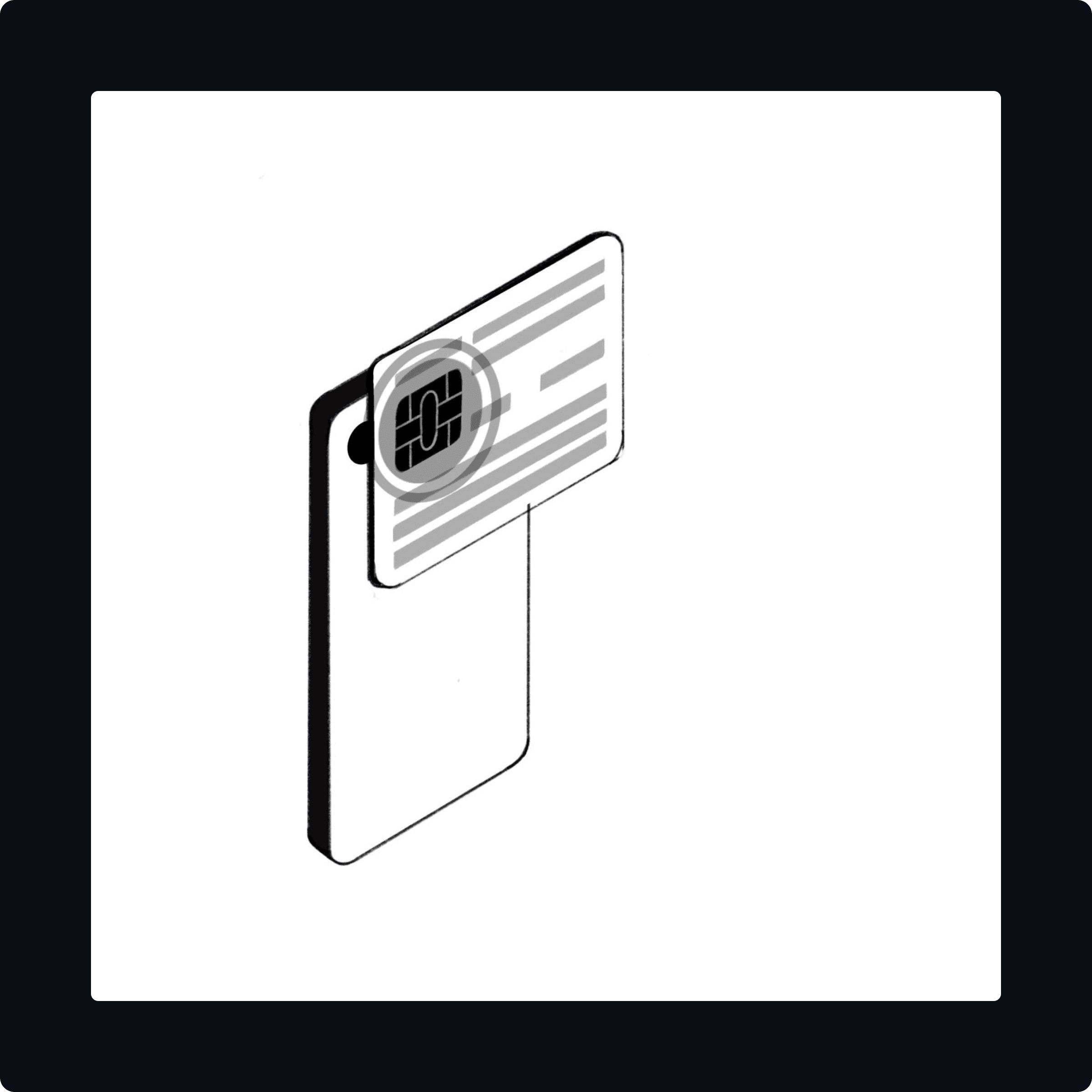
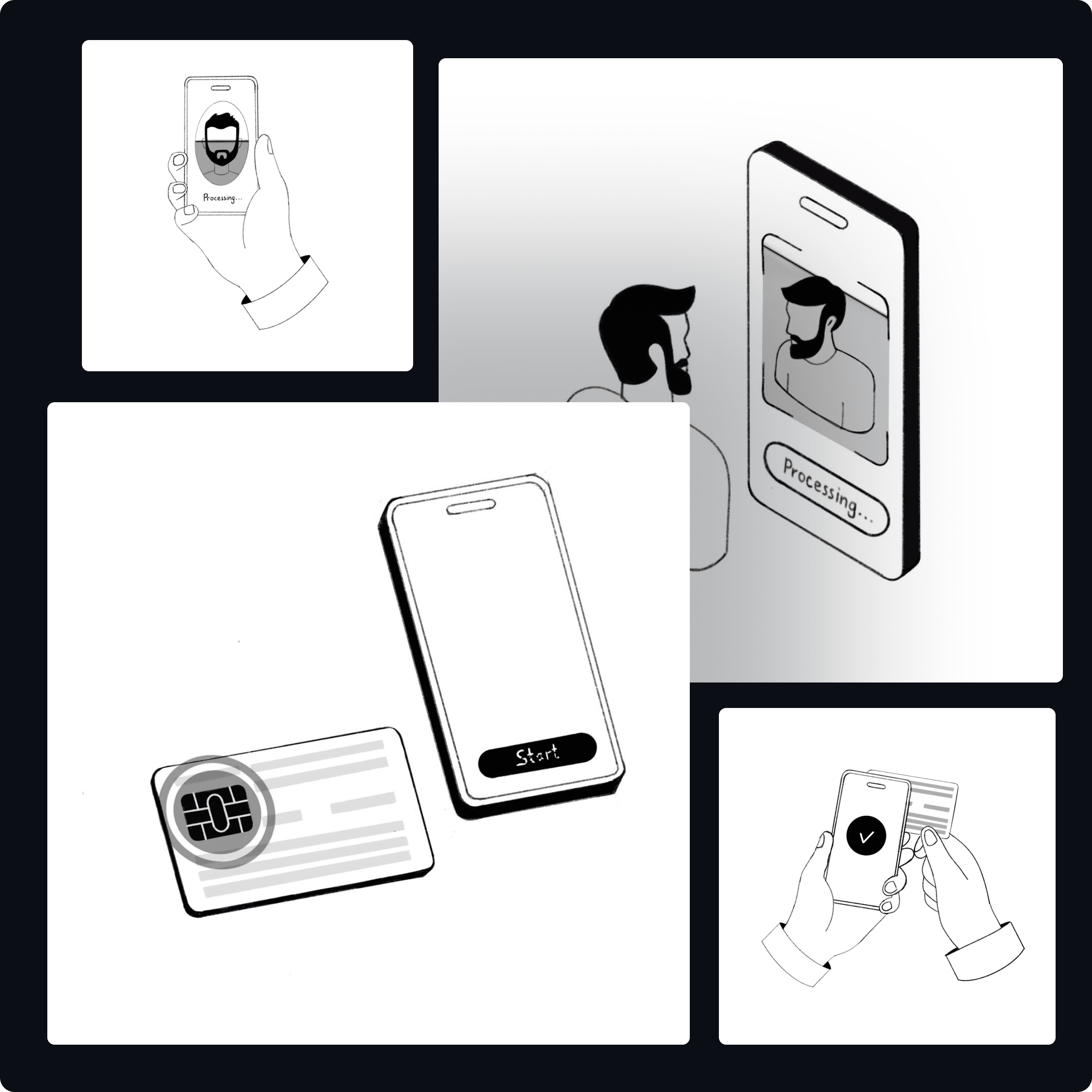
I translated the IA into predictable interaction patterns and collaborated with a motion designer to create:
step-by-step animated guidance
visual cues for scanning
NFC position hints
liveness instructions & head-movement cues
loading and transitional states
These clickable prototypes helped stakeholders experience the flow early and validate feasibility.
To ensure usability, I tested key flows with stakeholders and internal testers. Their feedback helped refine:
clarity of scanning steps
timing of animations & feedback
retry logic
instruction wording
success/error readability
Rapid iterations with developers ensured the design matched real-device constraints and avoided technical blockers.
With the flows validated and interaction logic solidified, the project was ready to move into final UI design and scalable visual system development
This cycle of wireframing → prototyping → motion guidance → validation created a reliable, user-ready foundation for the final UI stage.
Deliver — Visual Design, Systemization & Implementation Support
In the Deliver phase, I transformed the validated verification flow into a polished, scalable visual language and production-ready UI.
This stage focused on defining the aesthetic direction, establishing systemized UI foundations, and supporting engineering during implementation.
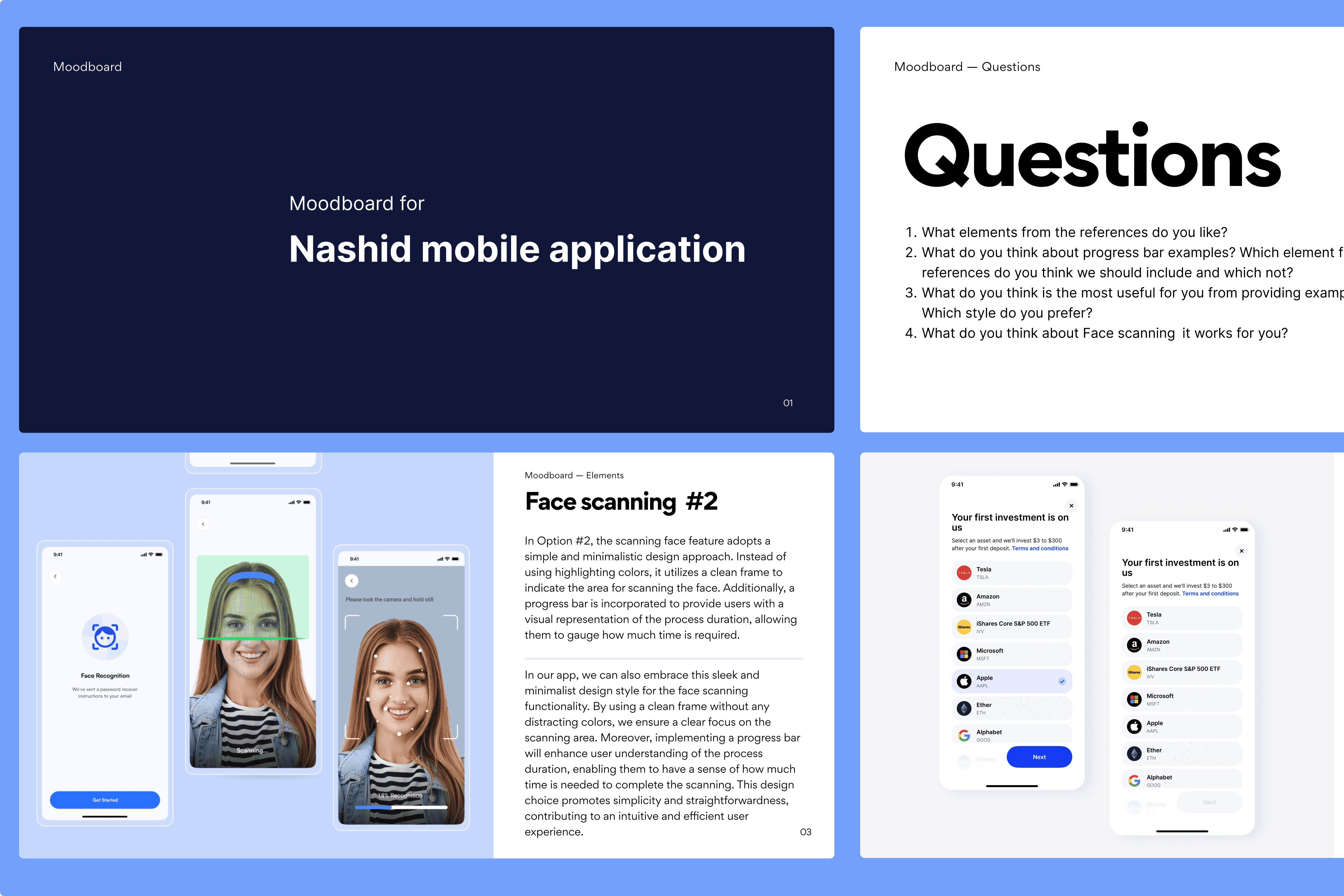
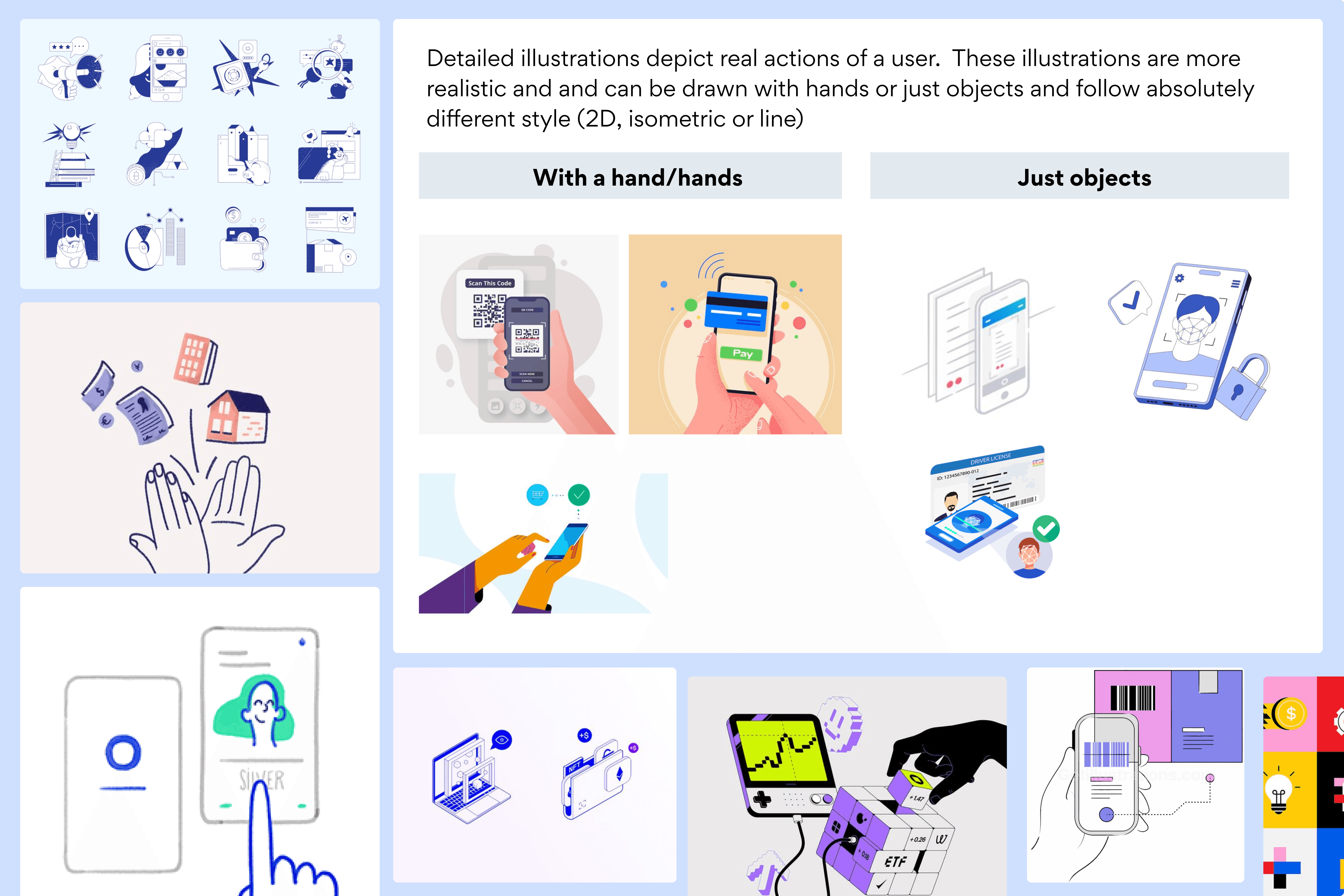
Moodboard & Visual Exploration
o align the team on a unified visual direction, I created two moodboards:
1. Motion Moodboard
Explored:
Step-by-step animated guidance
Smooth micro-interactions for scanning
Timing patterns for progress, status, and feedback
Friendly, instructive motion that reduces stress during verification
This guided motion designers on interaction timing and clarity required for document, NFC, and face-scan flows.
2. UI Moodboard
Explored:
Clean fintech-inspired visual systems
Light minimal palettes for trust-building
Readable typographic scales
Clear, low-friction scanning states
Soft highlights and neutral surfaces
This helped establish the foundation for both visual concepts explored next.
UI Concept Exploration
I developed two UI concepts to define the product’s visual direction.
Each concept explored a different balance between clarity, guidance, hierarchy, and visual energy
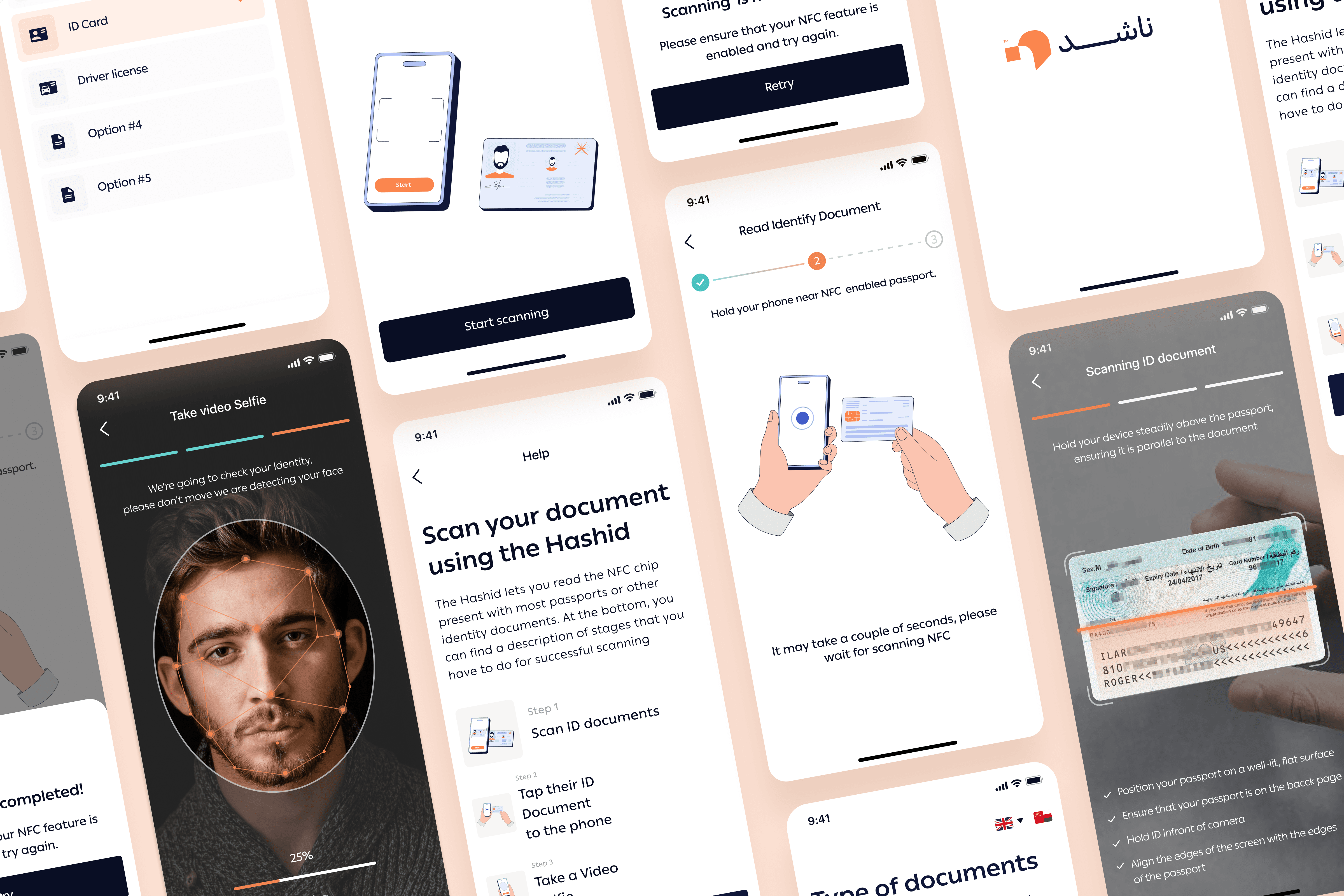
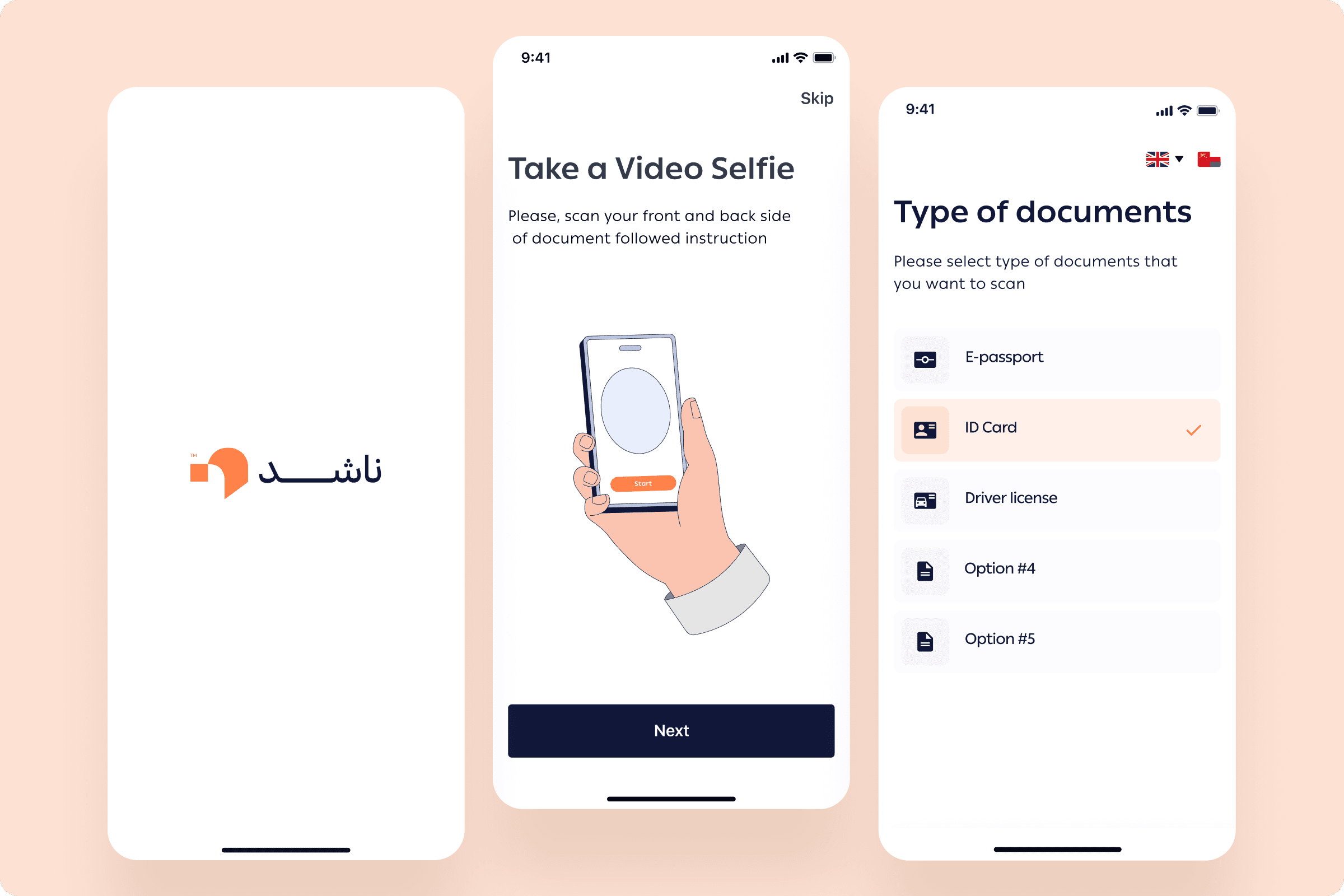
Concept A — Minimal Clean Interface (Selected)
*A light, friendly visual direction designed for clarity, trust, and comfort during verification.
Overview
This concept emphasizes simplicity, open layouts, and intuitive readability.
It reduces cognitive load—especially important for a process that can induce stress.
Key Characteristics
Minimal, airy layout for low friction
Warm, approachable palette with soft accents
Clear progress feedback
Simple step-by-step scanning guidance
Calm motion cues aligned with instructional clarity
Neutral backgrounds for high readability of passport/ID images
Why this direction works
Perfect for identity verification where:
users are under pressure
scanning accuracy matters
instructions must be digestible at a glance
a welcoming, trustworthy tone improves task completion

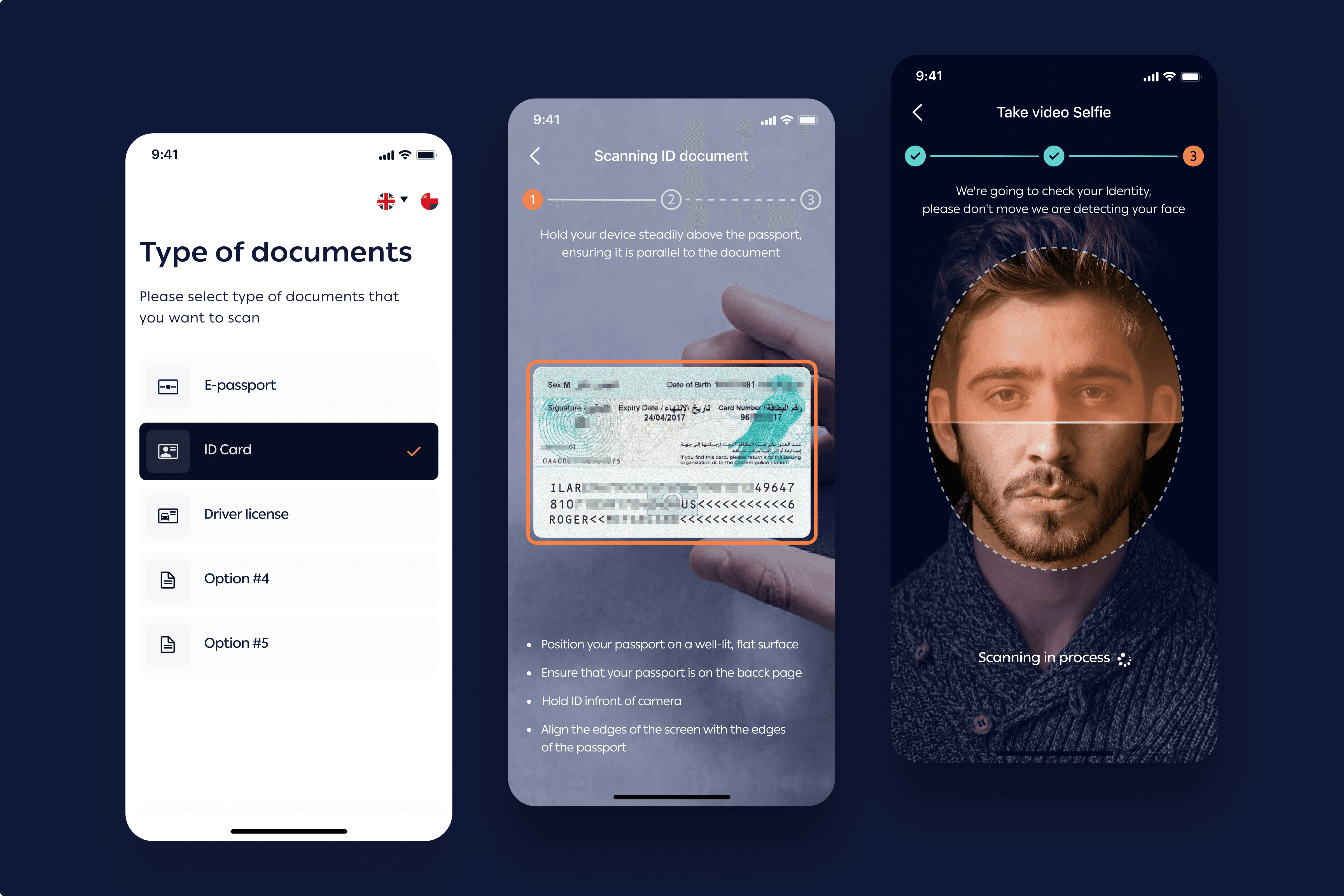
Concept B— High-Contrast Structured Interface
A more technical, high-contrast approach designed for advanced scanning tasks.
Characteristics
Strong dark/light contrast
More rigid visual structure
Clearer segmentation of steps
Sharper hierarchy and higher density
When it works
Best for analytical or expert users — but felt too technical for Nashid’s broader audience.
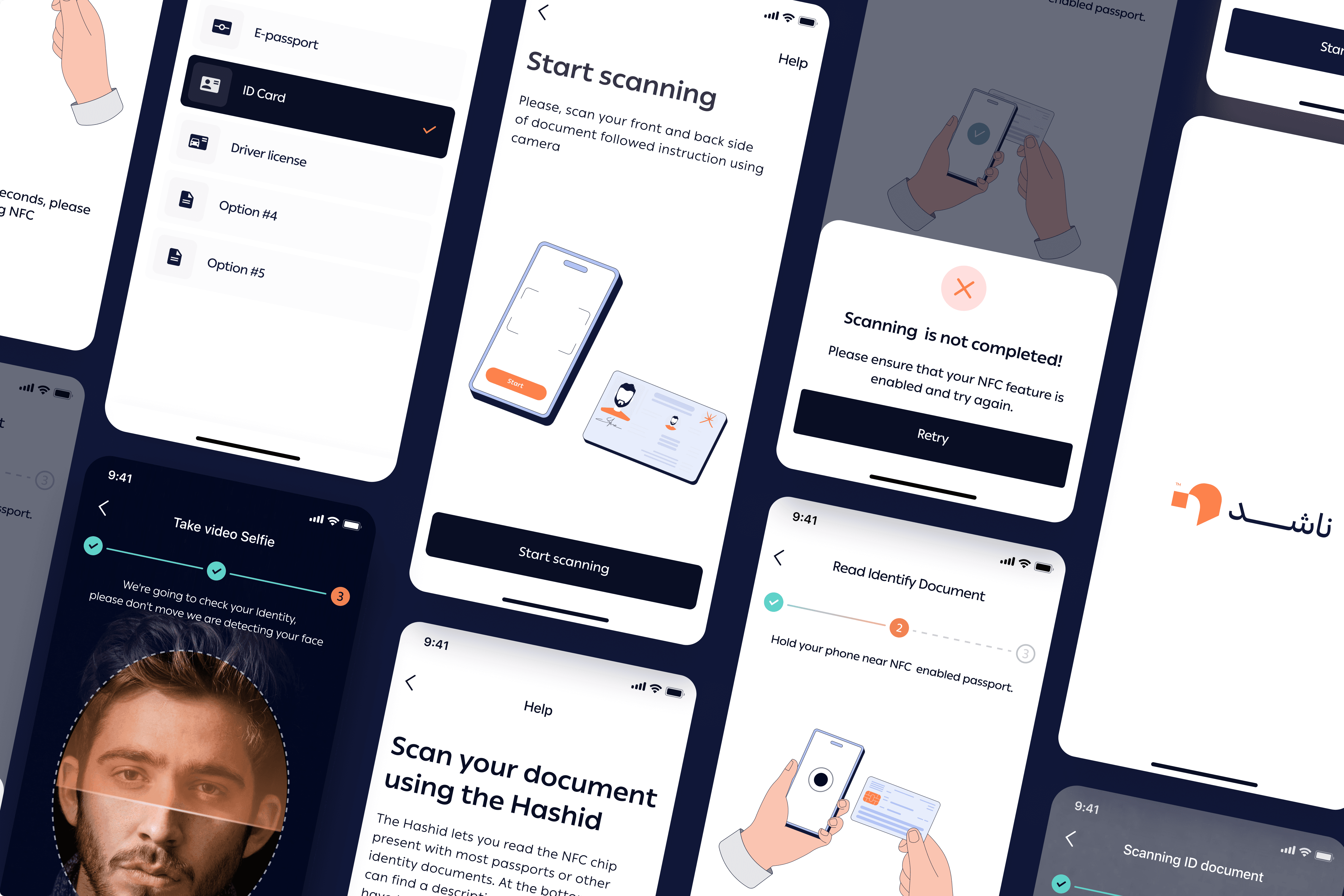
The team selected Concept #1
because it provided the best balance of:
friendliness
trust
readability
low cognitive stress
— which is essential for identity verification flows.
Final Summary
What I Delivered
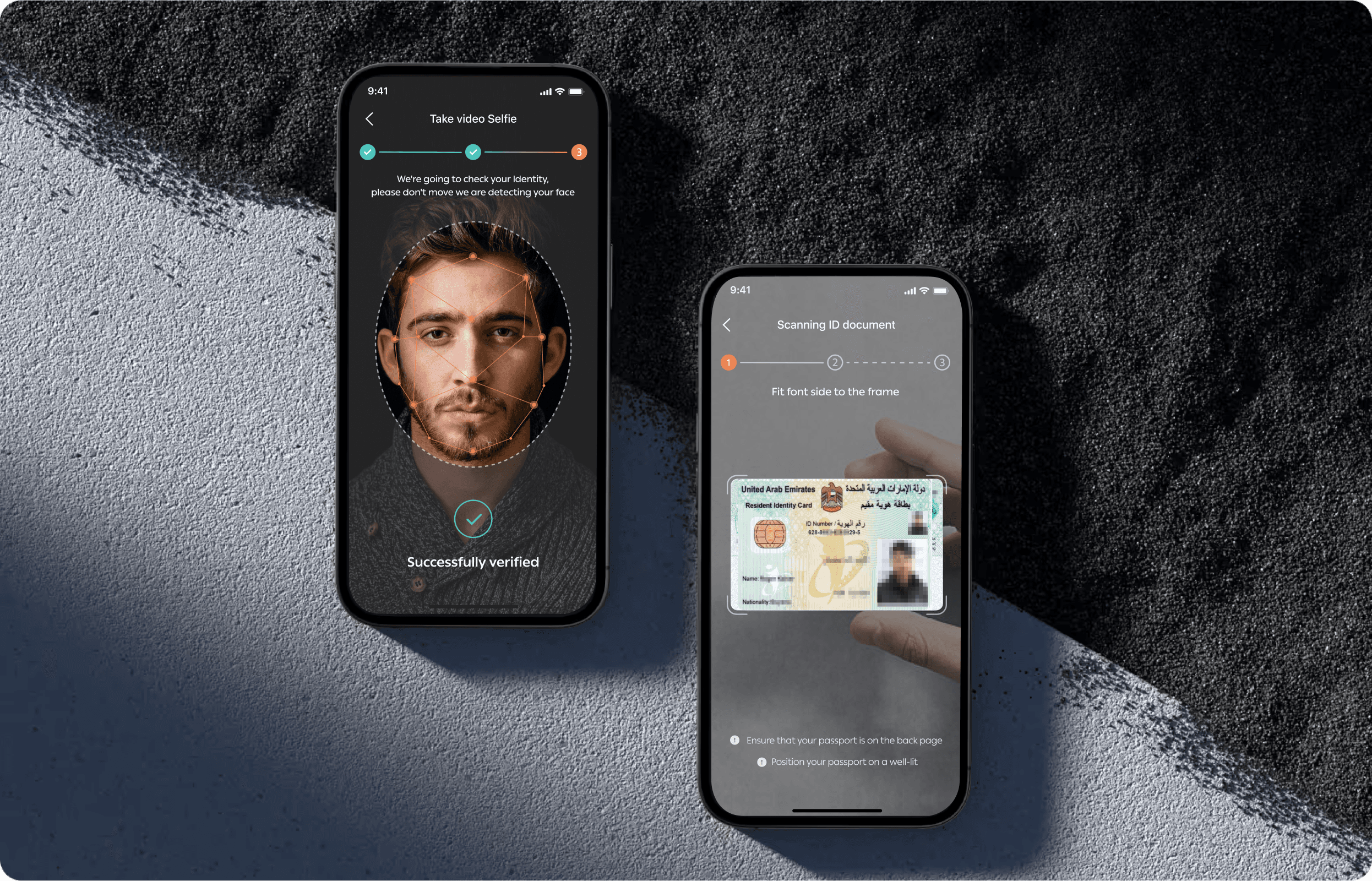
I redesigned Nashid’s end-to-end mobile identity-verification experience — transforming a confusing, error-prone flow into a clear, guided, and reliable verification system.
Key Deliverables:
Full UX audit of the existing verification flow
Competitor benchmarking and best-practice synthesis
Refined problem framing & step-by-step IA for all verification stages
High-fidelity wireframes for Scan → NFC → Liveness → Review → Result
Two UI concepts + final selected direction
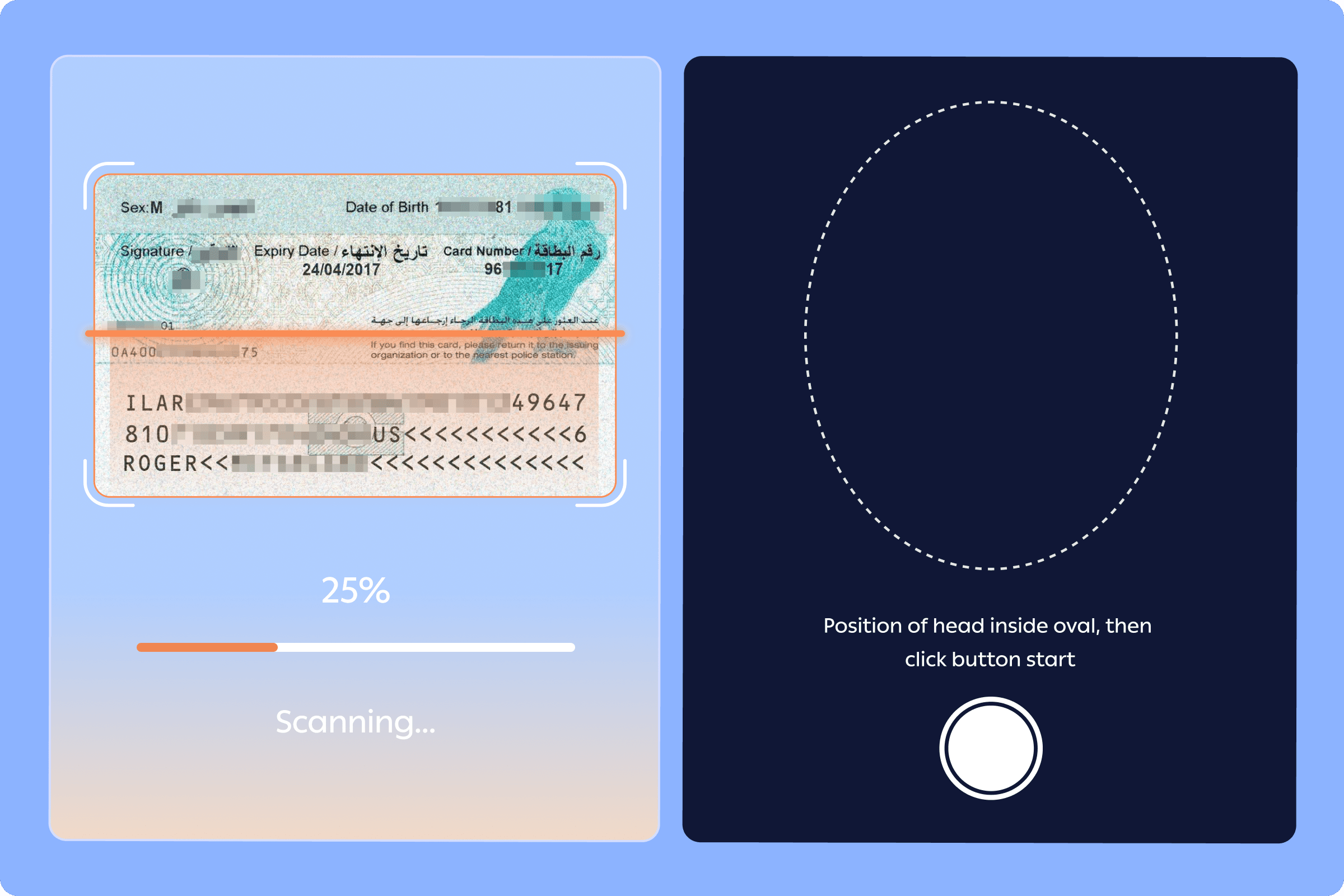
Complete UI design for all states (success, failure, retry, loading)
Motion-assisted scanning guidance
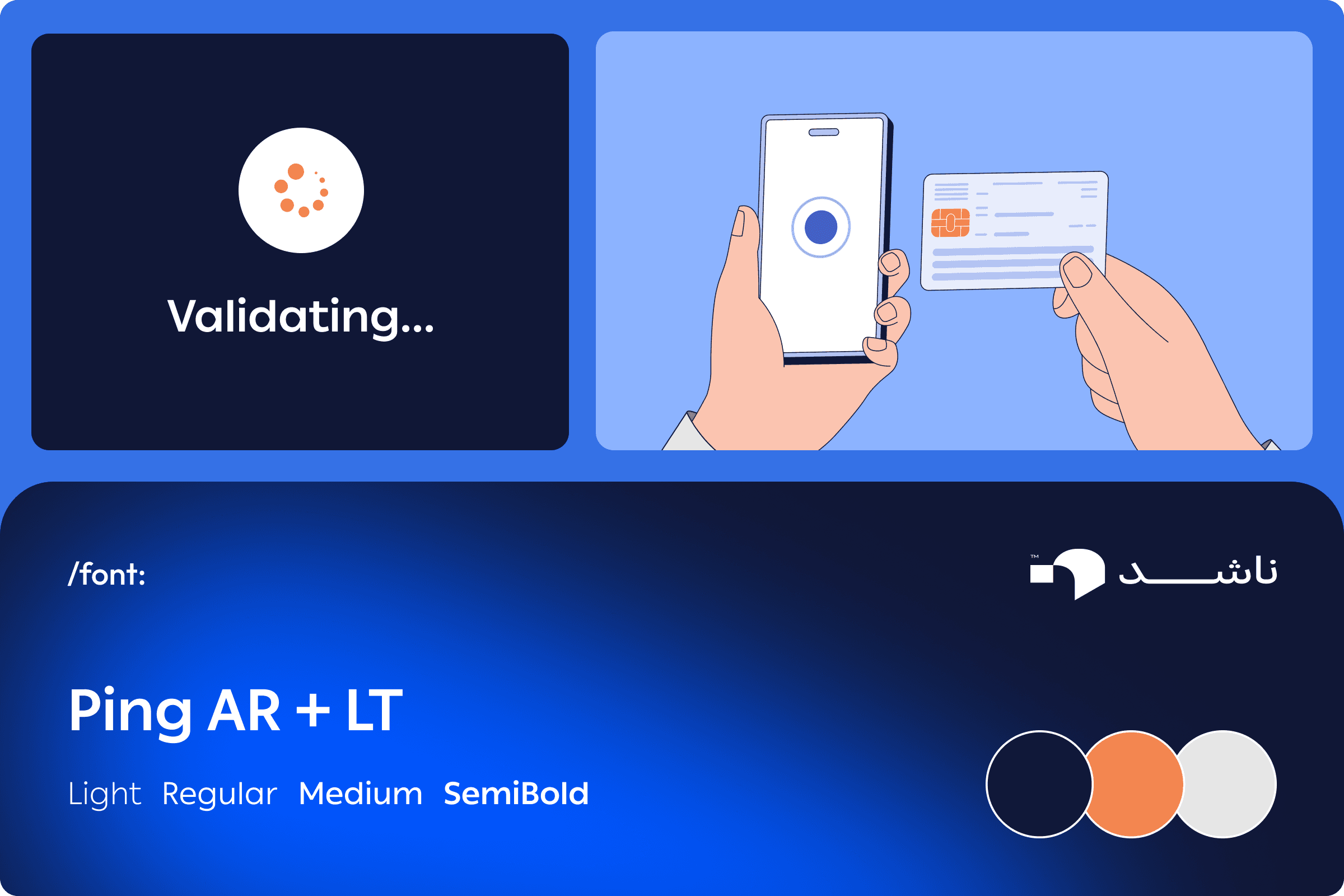
Scalable component system + developer handoff support
Impact
Reduced scanning failures and user confusion
Improved clarity through guided steps, cues, and feedback
Higher verification success rates
More predictable, trustworthy experience
Strong alignment between design, engineering, and stakeholders
Outcome
A streamlined, intuitive, and trustworthy verification flow that guides users confidently through every step, reduces friction, and provides a scalable foundation for future improvements.
Results
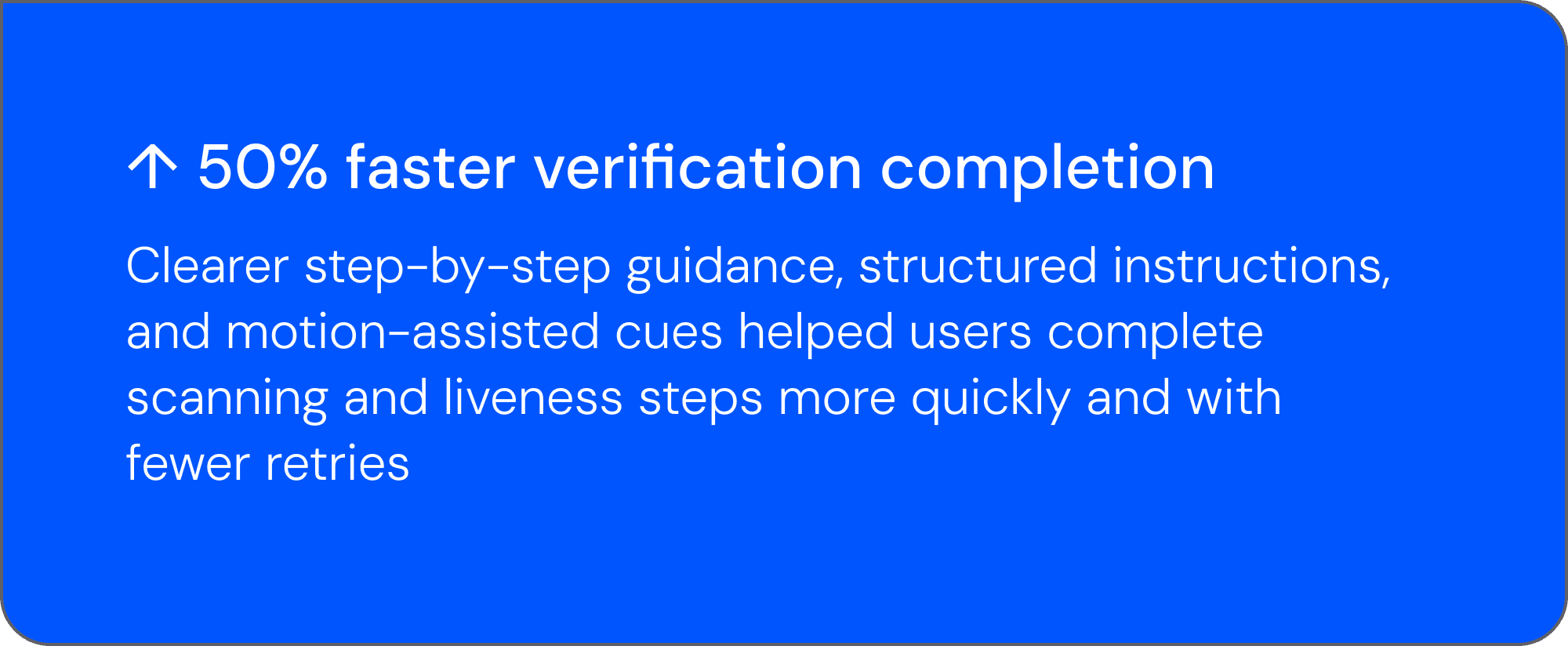
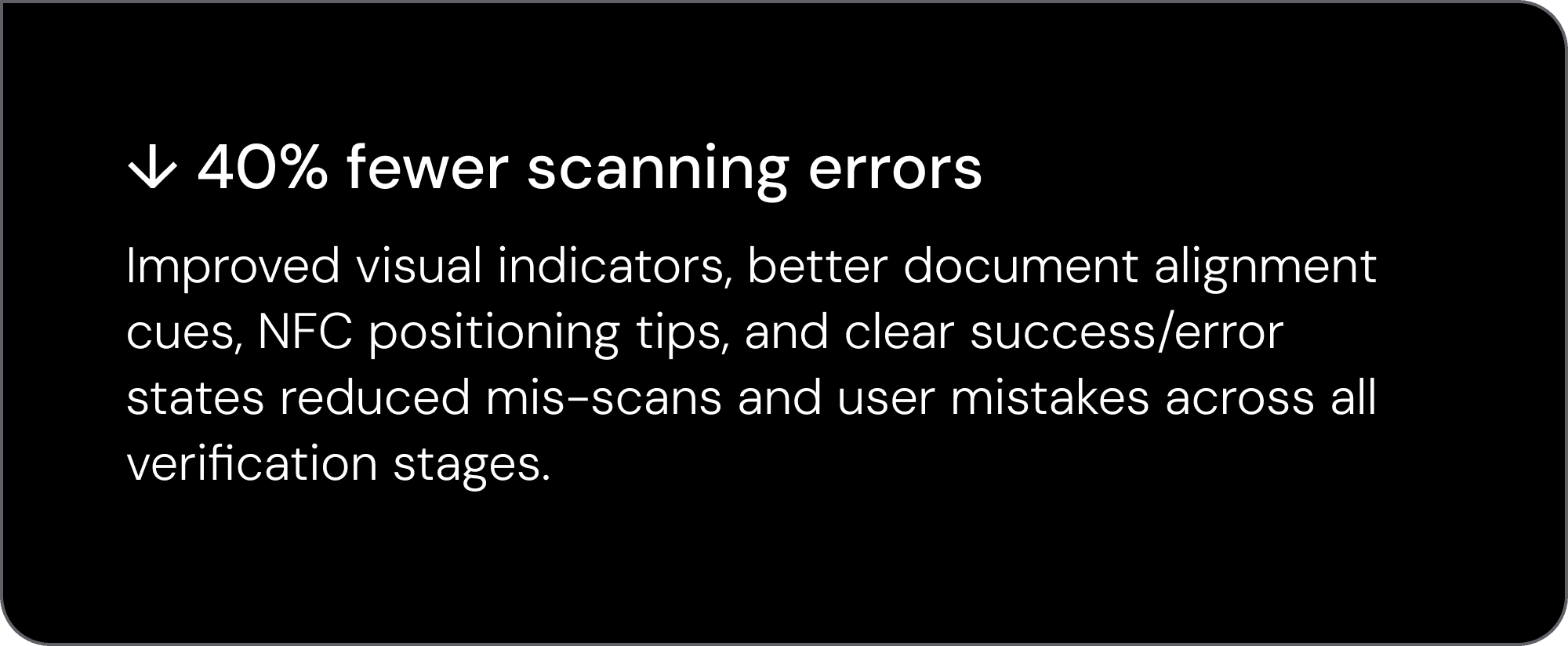
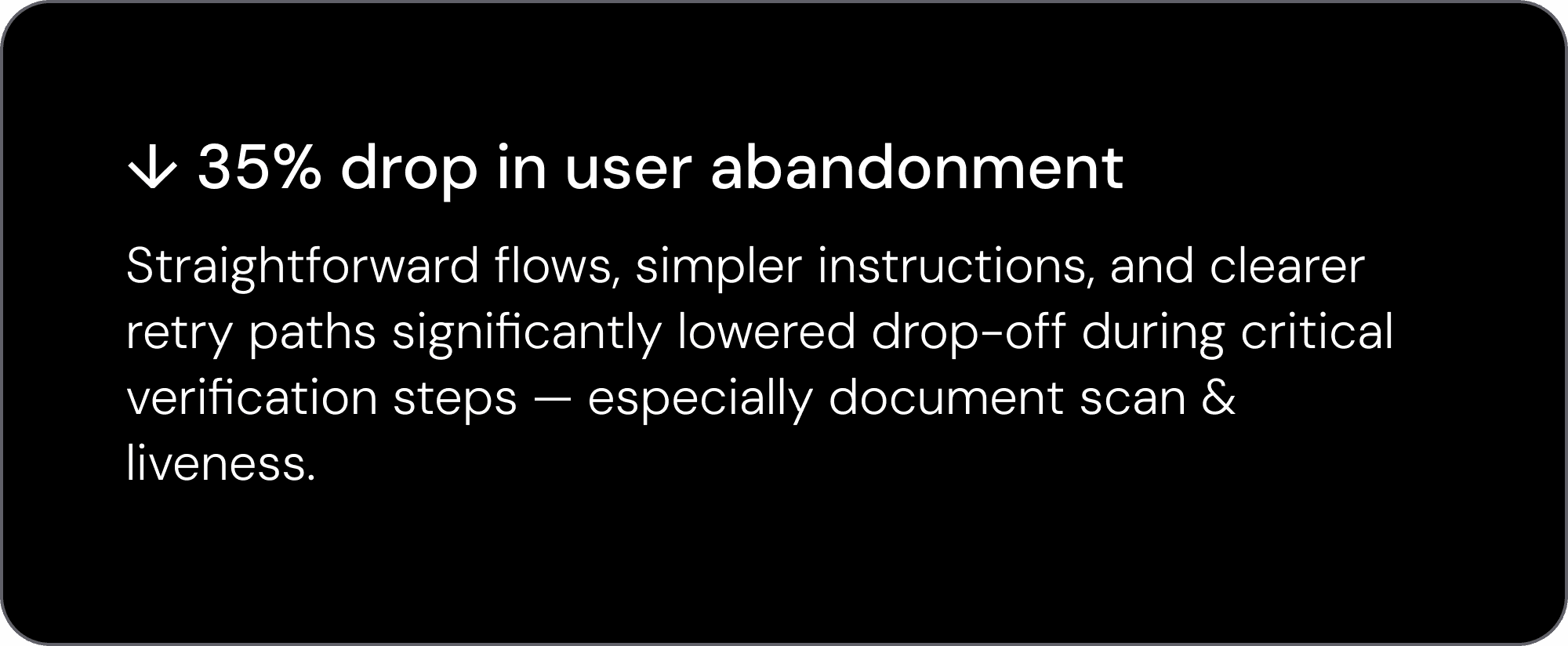
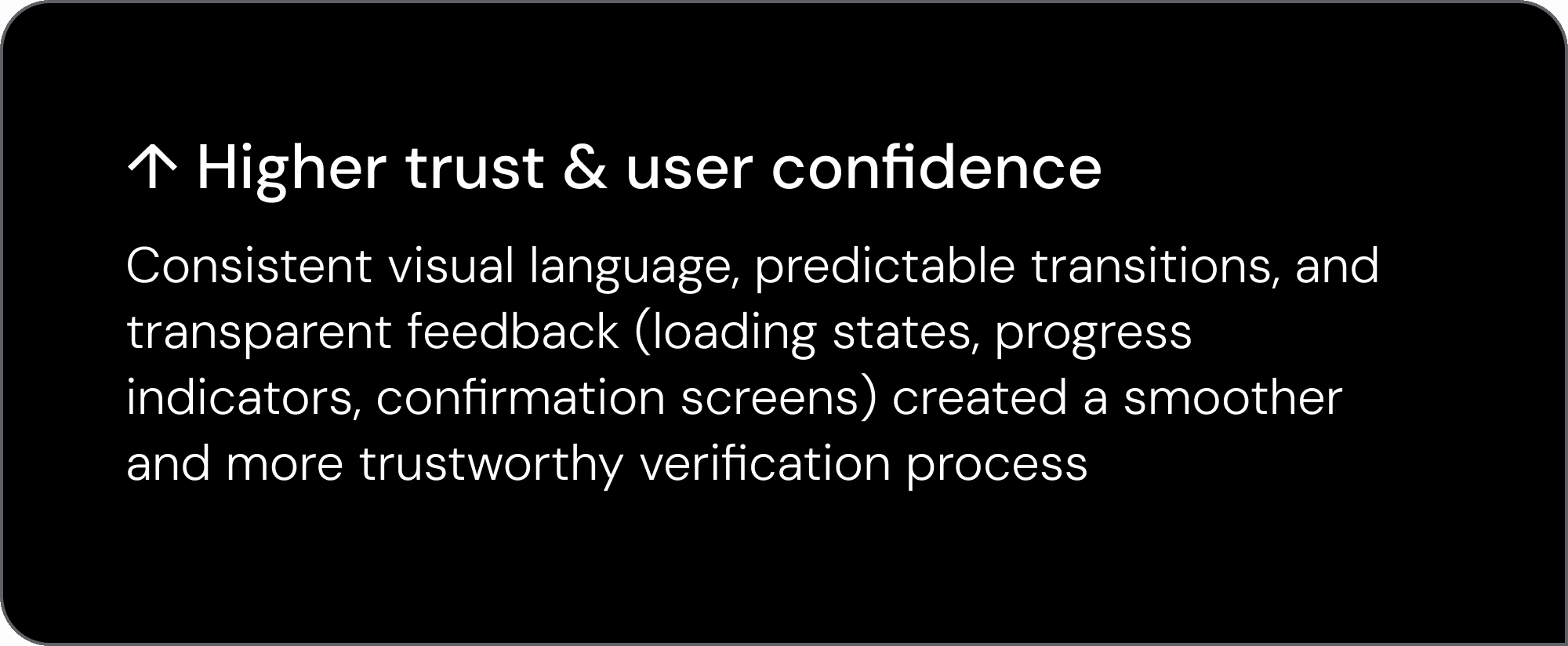
This project delivered a clearer, more predictable, and significantly more reliable identity-verification experience for Nashid — reducing scanning failures, improving completion rates, and strengthening user trust.