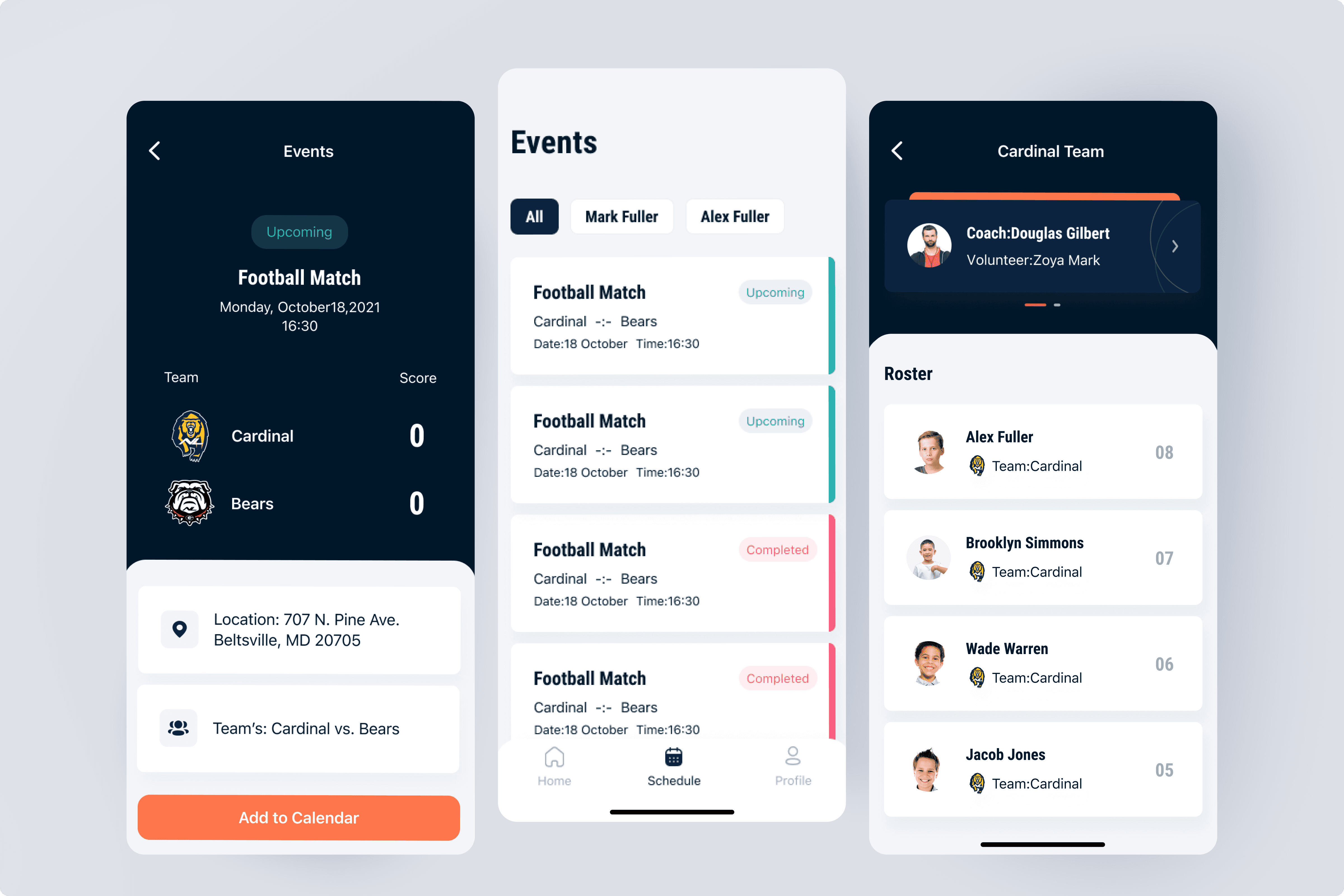
Next Level Sports Foundation — iOS App MVP
Next Level Sports Foundation (California, USA) came to us with a clear challenge: parents and players needed a better way to stay connected.
TeamSnap and a basic website weren’t enough — updates were missed, communication felt fragmented, and families lacked a single, trusted source of truth.
We built their first iOS MVP from the ground up. Through research, Lean UX, and complete flow architecture, we designed a simple, intuitive mobile hub where families can access schedules, updates, and team information instantly.
The result is a modern foundation for future features and stronger community engagement.
Sports Tech
Mobile App
X/UI Design
Services
UX/UI Design, Product Design
Category
Sports · Nonprofit · Education
Client
Next Level Sports Foundation, California, USA
Scope
Full design of the iOS MVP: foundational research, strategic framing (Lean Canvas + HMWs), stakeholder alignment, complete flow architecture, high-fidelity wireframes, and two UI concept explorations.
Frame work
Double Diamond · Lean UX · Design Thinking
Duration
2–3 months (MVP)
Focus
Improving parent communication, simplifying player schedule management, and delivering a scalable mobile experience.
Design Approach & Objectives
Overview
The project followed a structured, research-driven process to align organizational goals, parent needs, and operational realities of running youth sports programs. Guided by Double Diamond, Lean UX, and Design Thinking, the 2–3 month MVP process emphasized rapid discovery, clear framing, iterative validation, and fast delivery.
Because families previously relied on a website + TeamSnap with inconsistent communication, the goal was to define and build an intuitive mobile hub where parents could easily access schedules, team updates, and essential program information.
The result was a validated product foundation ready for future expansion into registration, player profiles, and in-app communication.
Process Phases
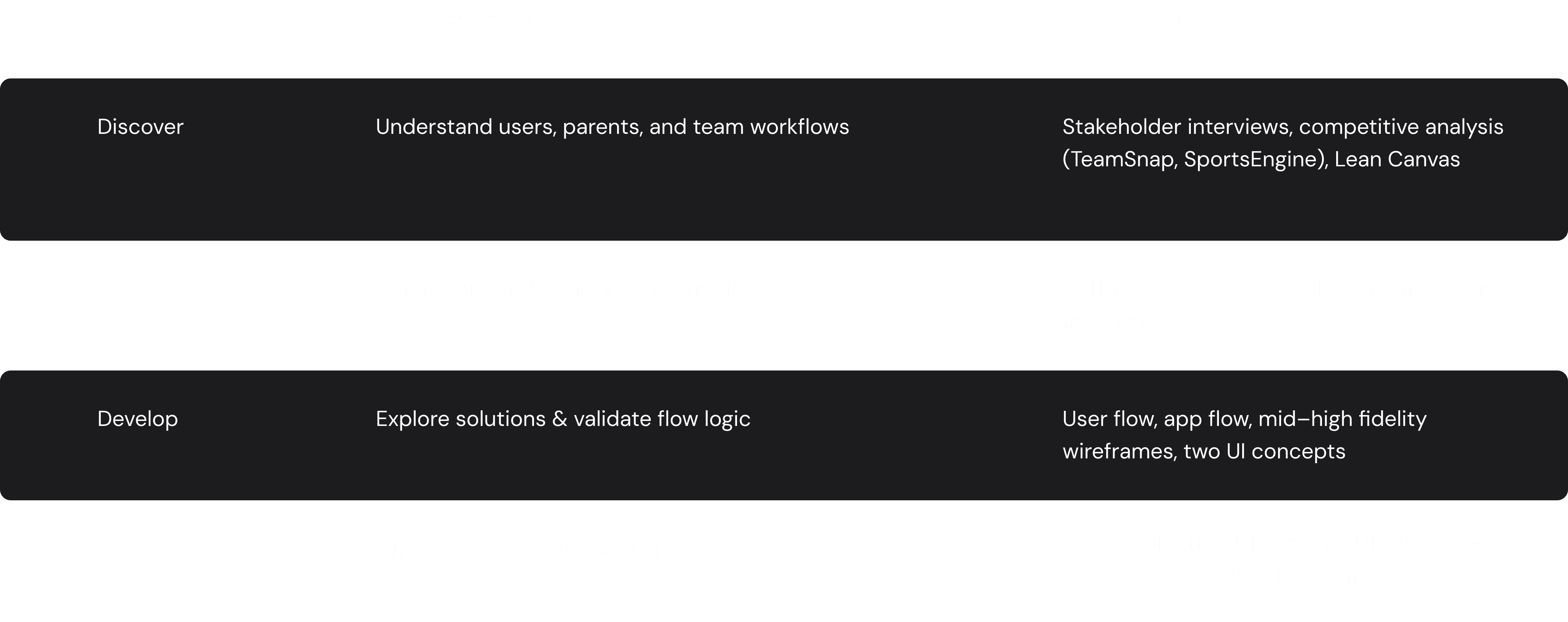
The design journey followed four iterative phases — ensuring alignment between research, concept exploration, and MVP delivery.
The design process unfolded through four structured phases — balancing discovery, validation, iteration, and delivery.


Business Objectives
Next Level Sports Foundation needed their first mobile app to reduce communication gaps and improve the parent experience around schedules, updates, and team logistics.
The solution needed to centralize essential information, reduce dependency on scattered tools, and support coaches and staff in delivering timely updates.
These objectives guided every design decision throughout the MVP process.
Key Objectives
Improve communication between coaches, organization, and parents
Provide a single, reliable hub for team schedules and updates
Reduce parent confusion caused by multiple inconsistent platforms
Build an intuitive mobile foundation for future feature growth
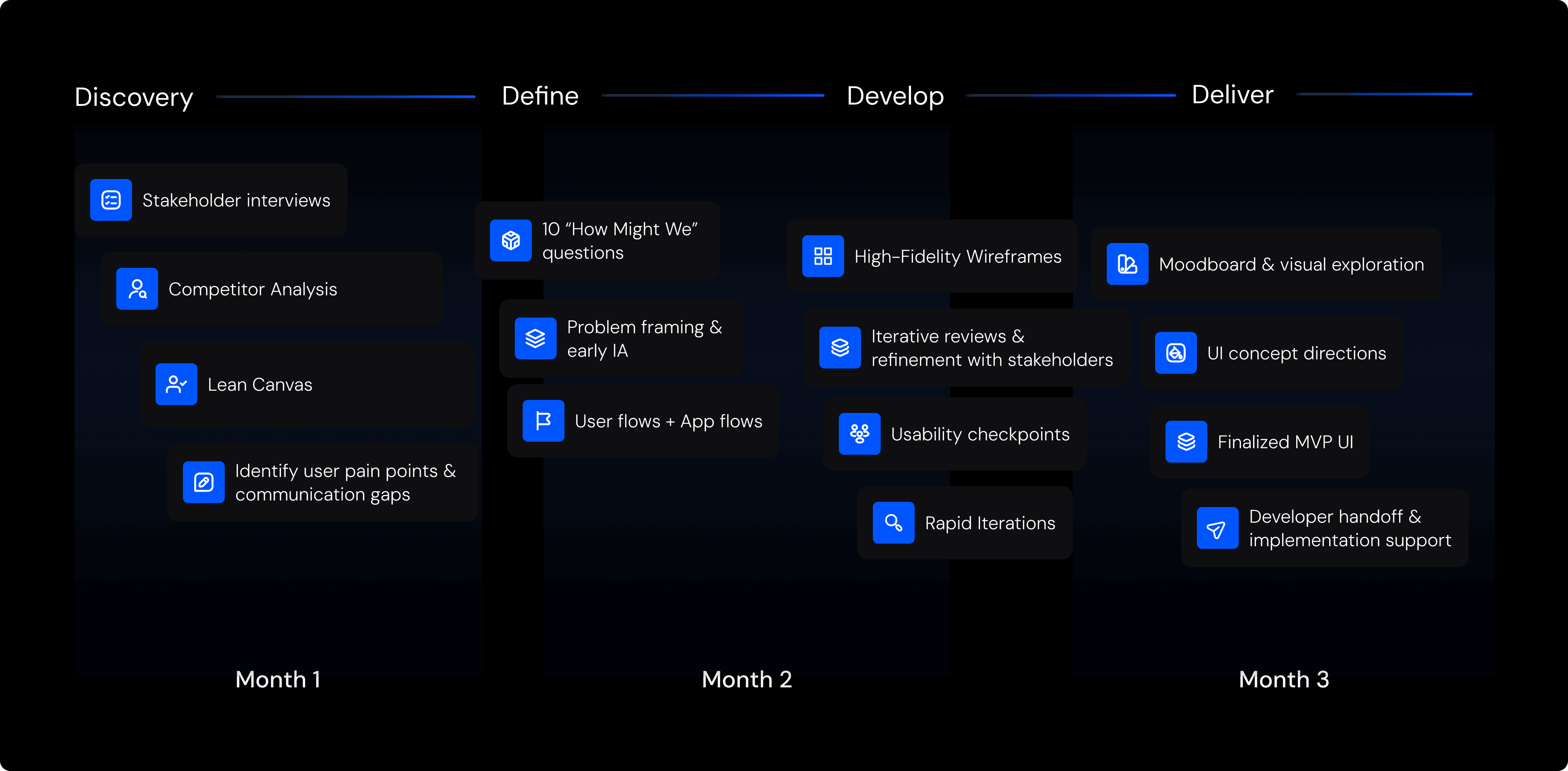
The 3-month design process moved from foundational research to full MVP delivery — ensuring every decision was validated, user-centered, and technically feasible before handoff.
Validation & Outcome
Validation occurred continuously throughout the project, not as a separate phase. Stakeholders and test users reviewed flows, wireframes, and UI concepts early and often — helping refine navigation clarity, scheduling logic, and communication touchpoints.
This iterative approach ensured that the final iOS MVP was:
intuitive for parents and players
aligned with real scheduling and team-management needs
consistent with technical constraints from the development team
The result is a user-ready MVP that supports smooth communication, reduces confusion, and establishes a scalable foundation for future app features.
Discovery — Research & Context
Overview
The Discovery phase established a clear understanding of how families, players, and coaches were currently interacting with Next Level Sports Foundation. Relying on a basic website and TeamSnap created inconsistent communication, missed updates, unclear schedules, and friction for parents trying to stay informed.
Through stakeholder interviews, competitor benchmarking, a Lean Canvas analysis, and “How Might We” framing, we identified the core communication gaps and user frustrations limiting engagement.
These insights shaped the foundation for an intuitive iOS MVP designed to centralize schedules, updates, and essential team information into one reliable mobile experience.
Aligning Product Vision & Success Metrics
To align expectations early, we facilitated discussions with program directors and operational staff to clarify the goals of the new mobile app, business constraints, and essential parent-facing needs.
These sessions helped define the core value of the MVP, establish what “successful communication” looks like for families, and ensure product, design, and operational teams were aligned on priorities.
Focus Outcomes
Clear definition of the MVP scope and primary user needs
Shared understanding of parent and player communication challenges
Agreement on how the app should improve daily scheduling and updates
Early alignment on success criteria (reliability, clarity, ease of use)
Prioritized feature direction for the first mobile release

Competitor Landscape
To understand the current standards in youth sports management and parent–coach communication, we analyzed key industry tools.
Competitors Reviewed:
TeamSnap
SportsEngine
GameChanger
Team App
This analysis evaluated feature depth, communication quality, mobile usability, and parent–child account flexibility.
Key Insights
Competitors offer useful tools (team chat, schedules, media sharing, live scores), but overall experience is inconsistent and outdated.
Parents struggle with unreliable notifications, missing schedule changes, and difficulty sharing photos/videos.
Chat features lack essentials: search, pinned messages, reactions, read receipts, and message editing.
No app fully supports dual-parent access, child-linked profiles, or role-based permissions.
Parents want clear schedules, real-time updates, and easy ways to stay informed when they can’t attend games.
Coaches need simpler tools for sharing updates, managing events, and communicating with entire teams.
Design Opportunities
Create a unified mobile hub for schedules, messaging, media sharing, and updates.
Build family-centered account logic (two parents, child accounts, different roles).
Improve calendar management with event comments, reminders, and quick add-to-calendar.
Strengthen chat features (search, pins, reactions, read receipts, message editing).
Ensure reliable push notifications with customizable settings.
Offer match summaries, scoring updates, and basic stats for remote parents.
Provide a lightweight onboarding experience with tips for new + advanced users.
Enable easy sharing of photos/videos for families with younger athletes.
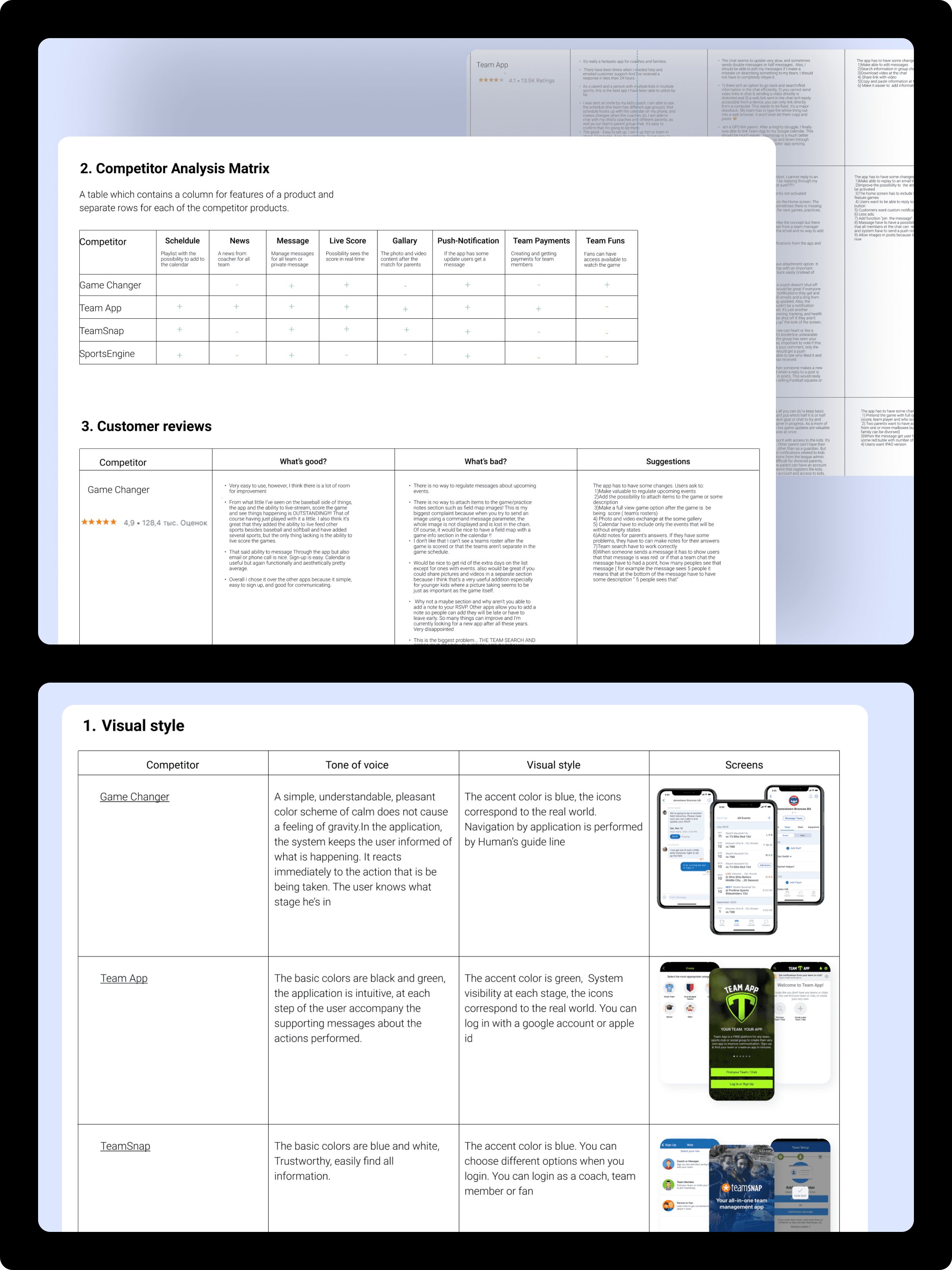
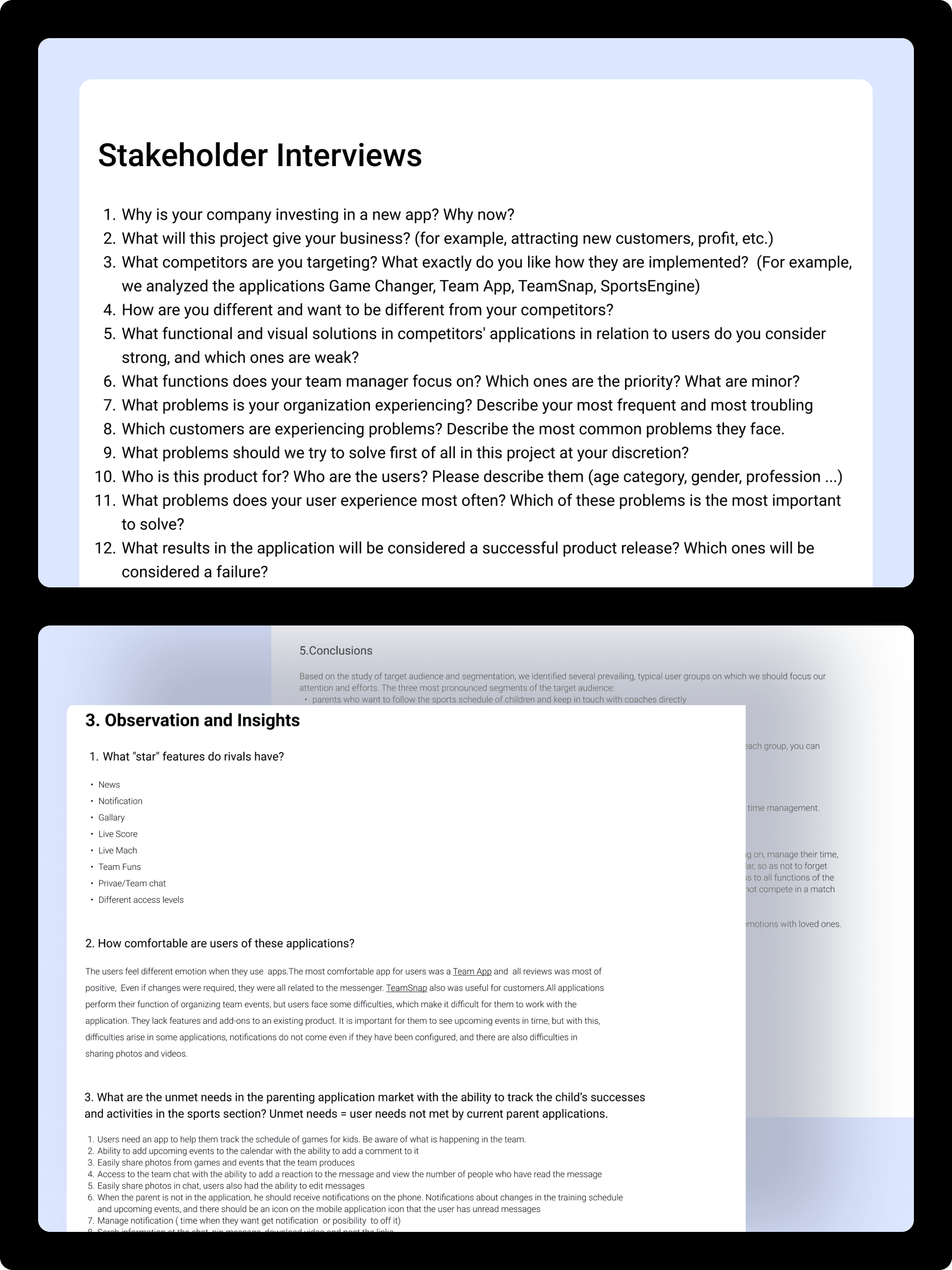
A quick evaluation of the youth sports app market revealed outdated communication flows and no app supporting modern parent–coach needs
Lean Canvas — Defining the MVP Strategy
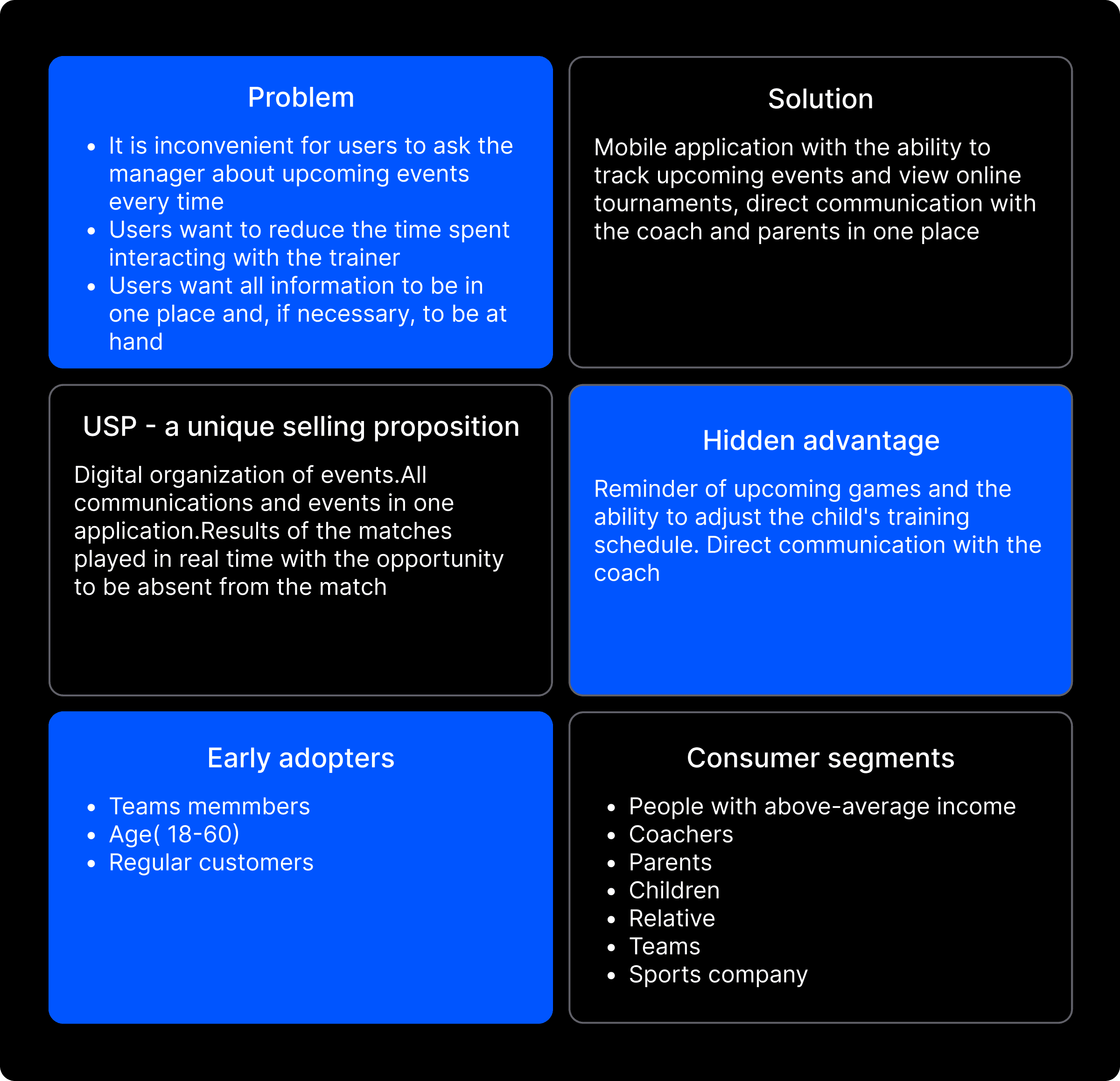
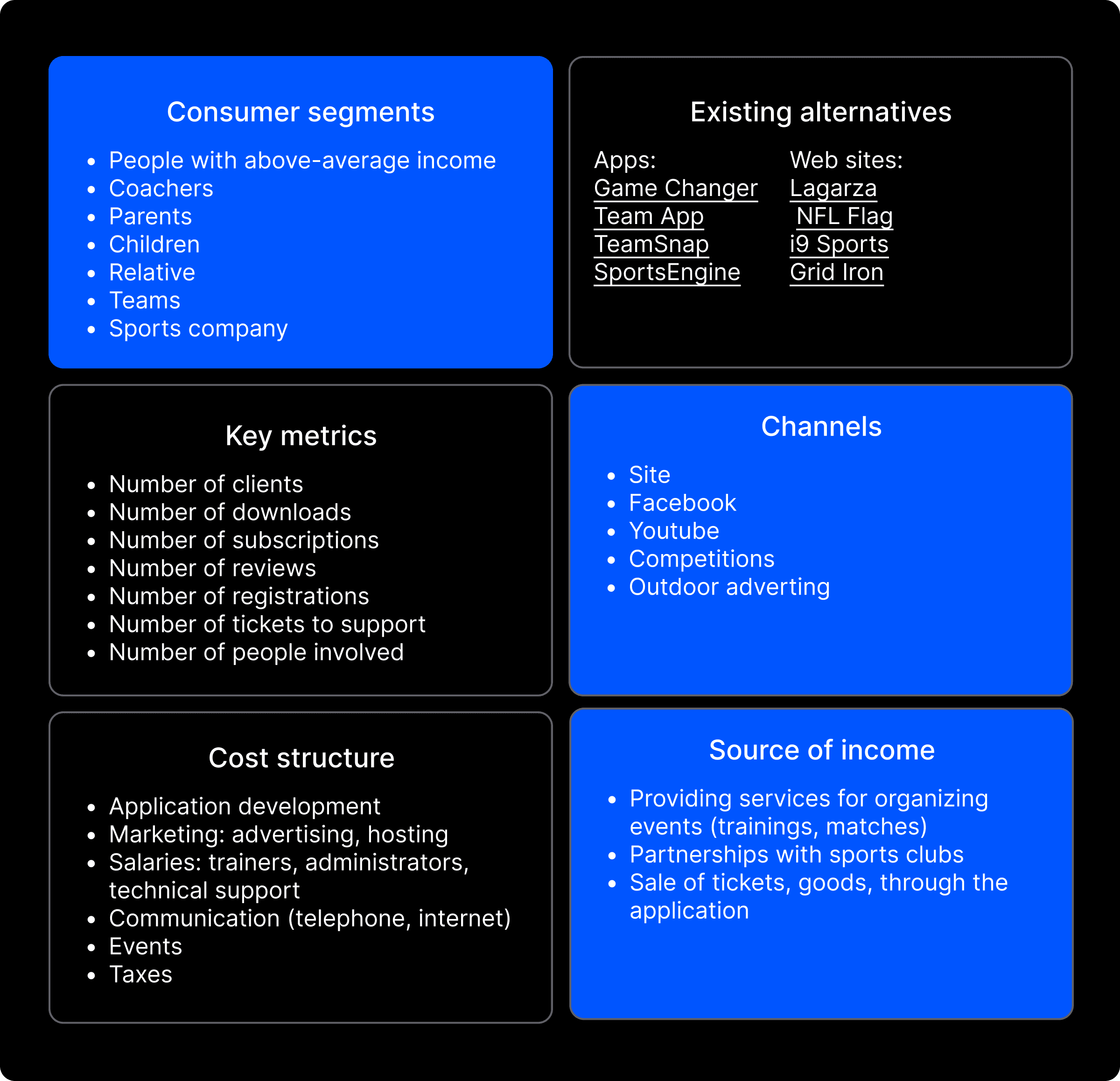
To align the team on the core value of the MVP and ensure we solved the right problems, I created a Lean Canvas summarizing the business model, user segments, market gaps, and early product assumptions.
This step helped establish clarity on what matters most for the first release — the key problems, the value proposition, essential features, and early success indicators.
Conclusion — Key Insights That Shaped the MVP
The Lean Canvas highlighted several critical insights that directly guided the product direction:
Parents struggle with fragmented communication and need one reliable place for schedules, updates, and team info.
Direct coordination with coaches is inefficient, leading to frustration and time loss for both sides.
Existing tools offer partial solutions but lack family–friendly features, real-time updates, and intuitive team communication.
A strong opportunity exists to centralize scheduling, live updates, and team messaging in a single mobile experience.
Supporting multi-parent access, media sharing, and notifications became essential differentiators for the MVP.
These combined insights formed the foundation of the MVP direction, prioritizing clarity, reliability, and communication between parents, coaches, and players..
Synthesizing Research Into Actionable Opportunities
A cross-analysis of competitor research, Lean Canvas, and stakeholder interviews helped consolidate core pain points into clear design opportunities for the MVP.
Design Opportunity
Insight
Notifications are unreliable or inconsistent across
existing apps →
Robust push notifications + customizable reminders for practices,
games, and changes
Sharing photos/videos and communicating in group chats is
difficult and limited →
Modern team chat with media sharing, reactions, pinned messages,
and read receipts
No easy way for families to manage shared access to
a child’s sports activities →
Multi-guardian access with shared child profiles and flexible
account permissions
Key discovery insights translated into actionable design opportunities for a more reliable, parent-friendly team management experience.
Define — Problem Framing & Experience Direction
The Define phase transformed early research into a clear problem structure and strategic direction for the Next Level Sports mobile MVP. Building on insights from stakeholder interviews, competitor analysis, Lean Canvas findings, and user frustrations, this stage focused on identifying the core experience gaps and aligning the entire product team around solvable, high-impact problems.
Through “How Might We” ideation, early information architecture, and user/app flow planning, we established the foundation for a seamless, family-centered sports management experience.
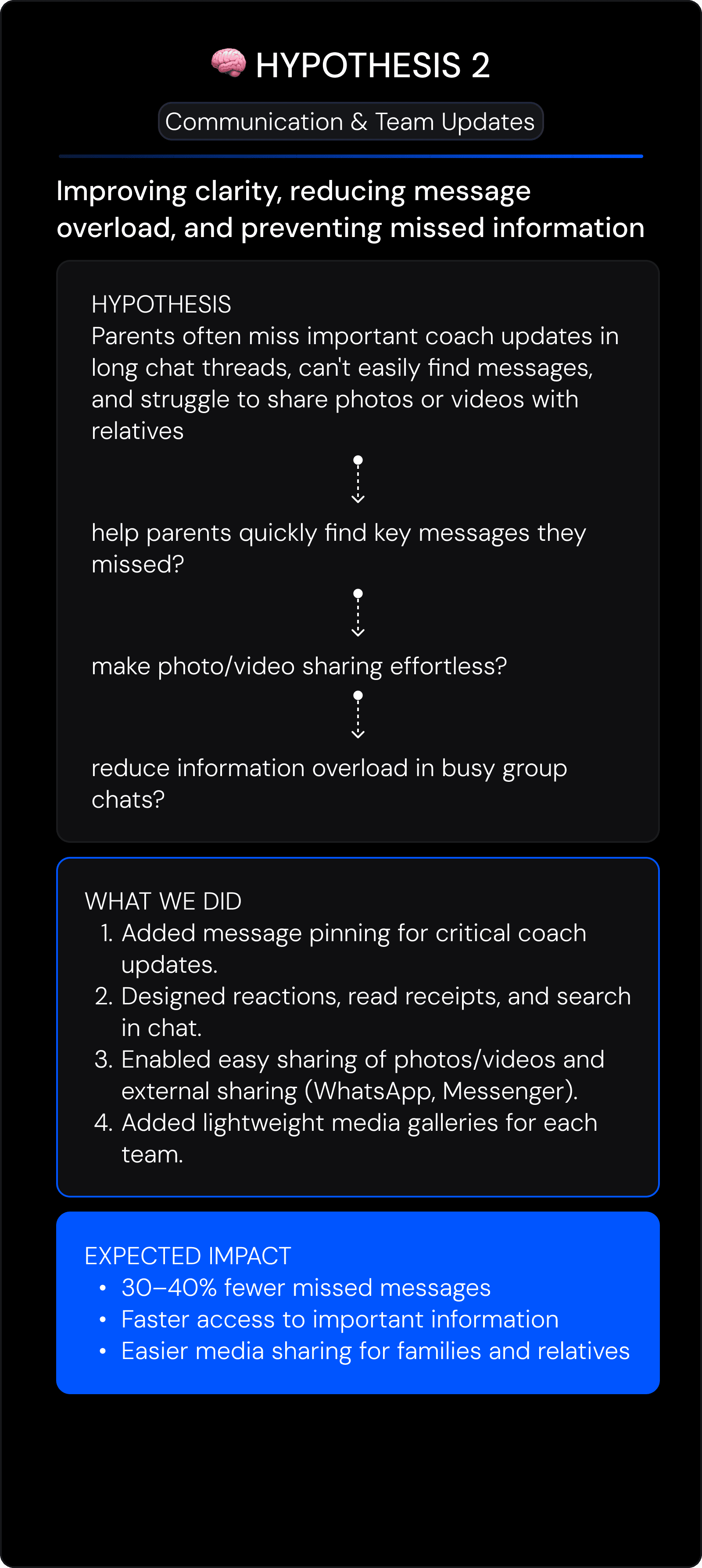
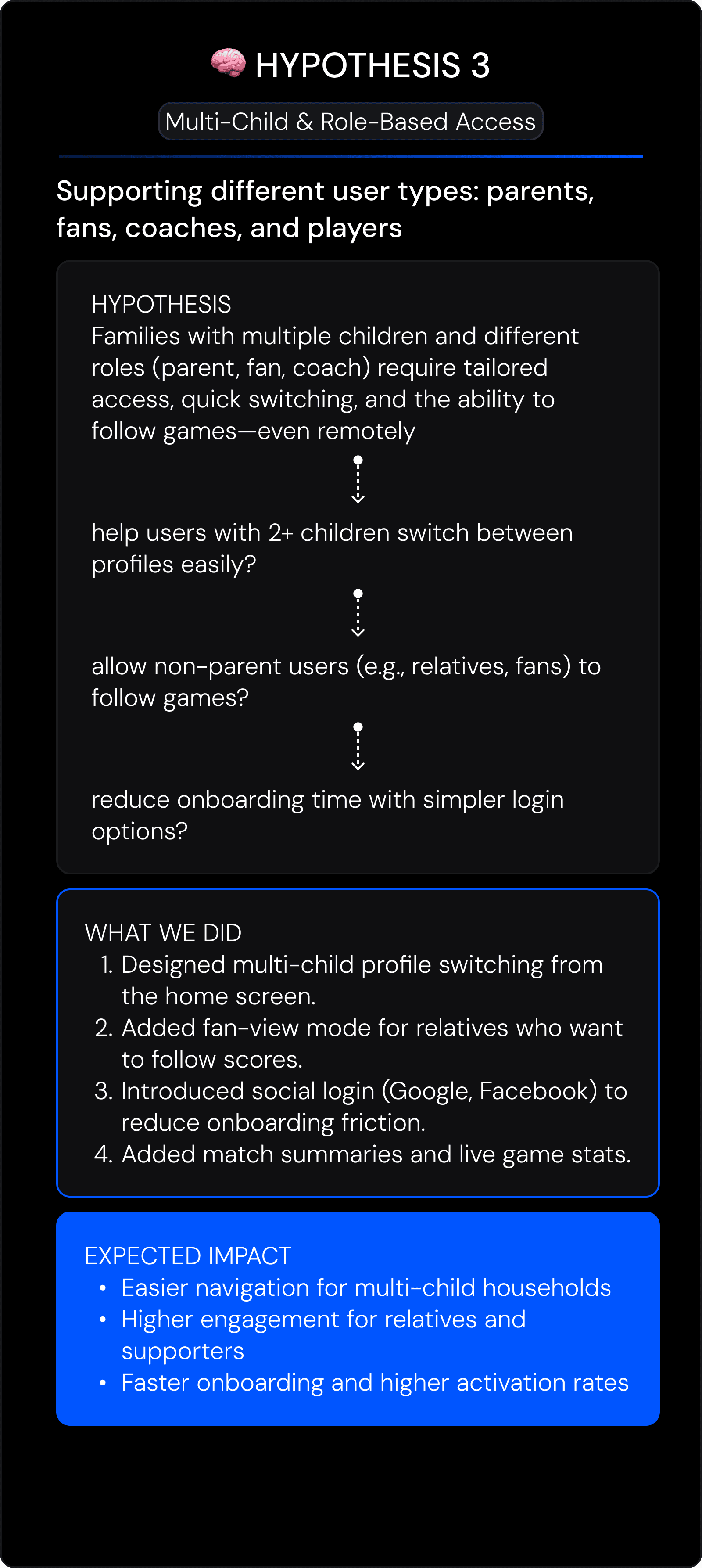
How Might We — Reframing Problems Into Opportunities
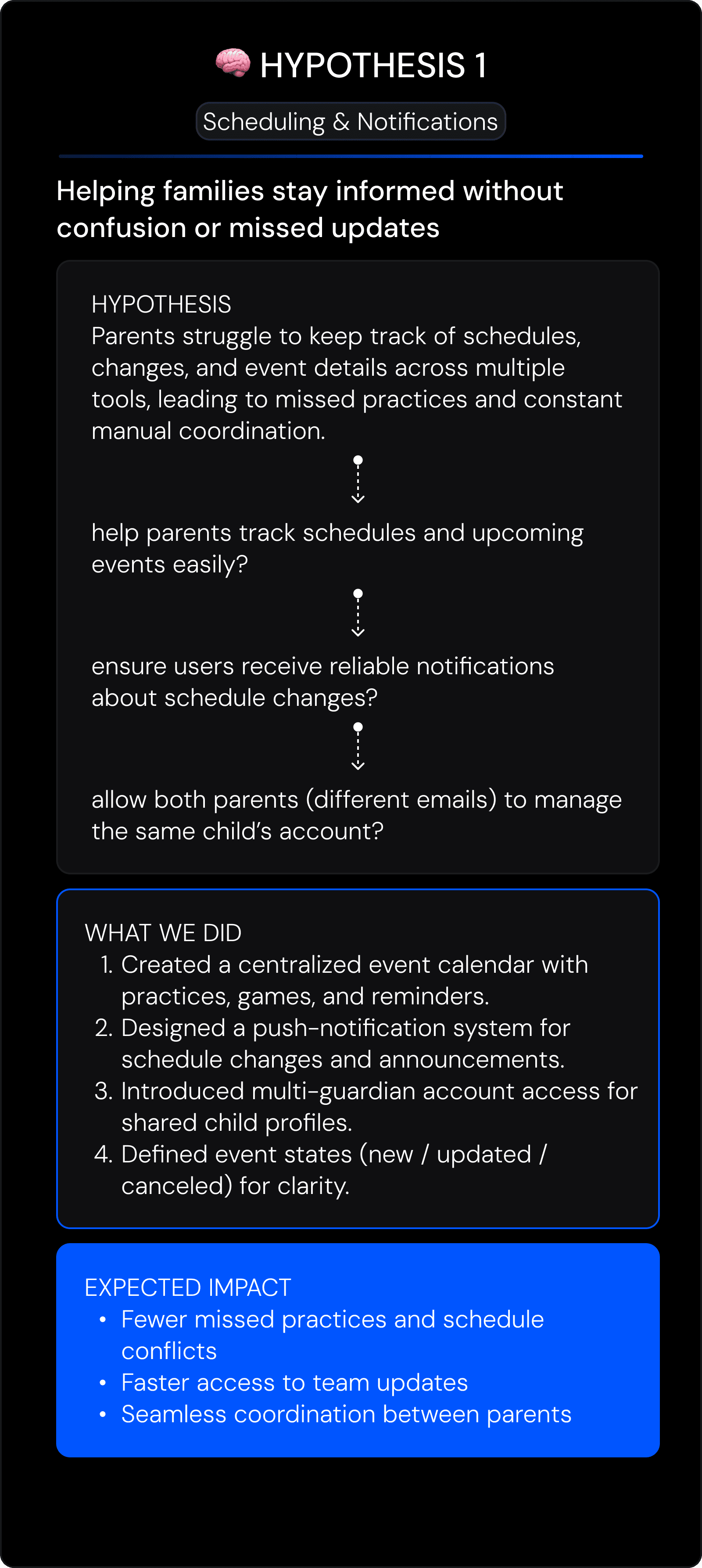
In this step, I translated core research findings into actionable design challenges using the “How Might We” method. This helped transform user frustrations into clear opportunity areas that guided early information architecture, user flows, and feature prioritization for the MVP.
Highlighting the most impactful HMW questions aligned the team around solving real communication, scheduling, and coordination gaps for families, coaches, and players.
User & App Flows — Structuring the MVP Experience
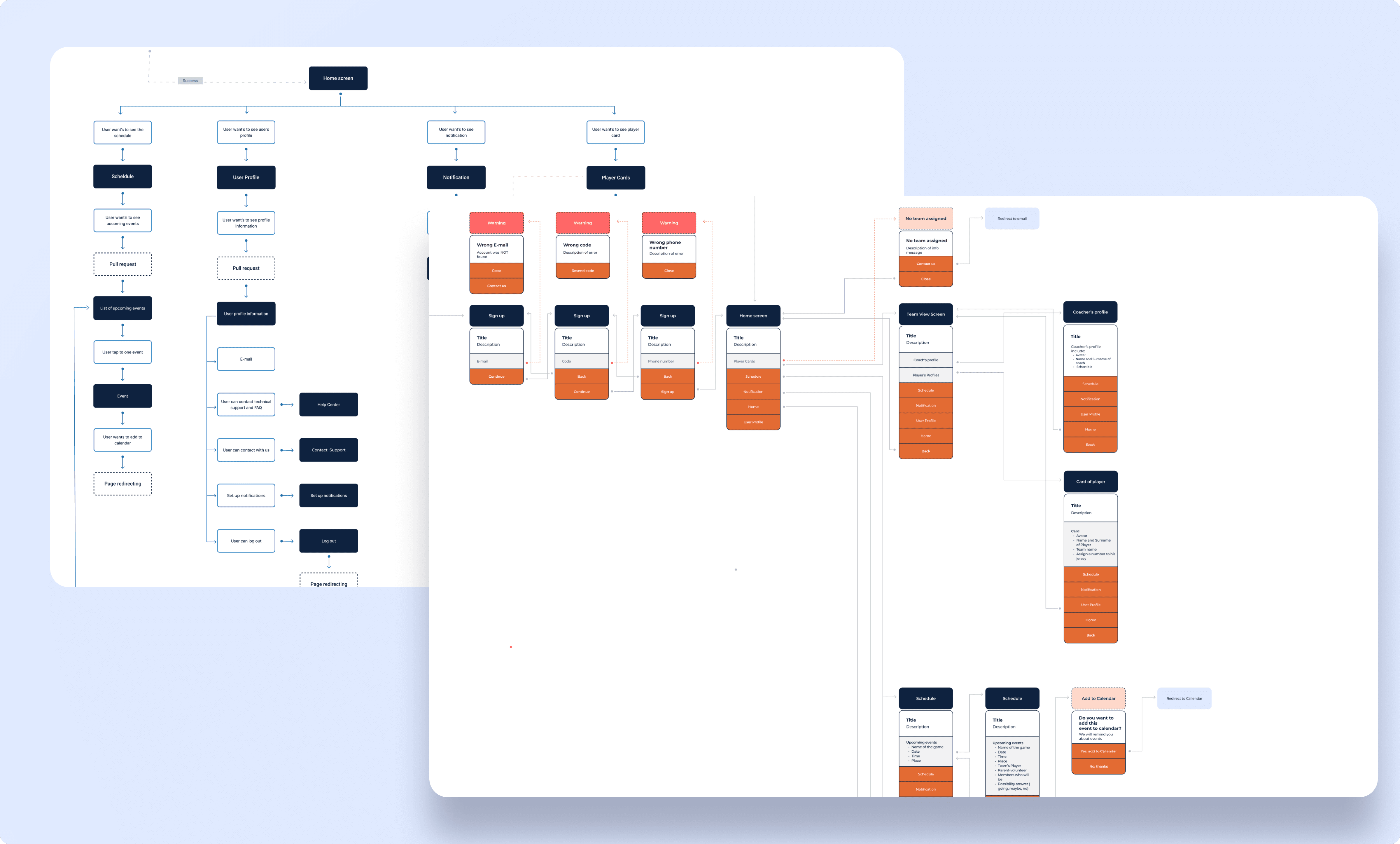
I translated early hypotheses into a functional product structure by mapping core user journeys and defining the full app architecture for the MVP. These flows clarified how parents, coaches, and fans navigate the app, removed unnecessary steps, and ensured the experience stayed simple, predictable, and scalable.
What I Created
User flows for key tasks: schedules, updates, child-profile switching, chat, and live match viewing.
A complete app flow defining navigation, tab structure, information hierarchy, and role-based access.
Outcome
A clear and scalable architecture that aligned the team on navigation logic, reduced design ambiguity, and accelerated the MVP development process.
Develop — Wireframing, Iteration & Design Refinement
The Develop phase transformed early insights into tangible product screens. I created high-fidelity wireframes, refined interactions through iterative reviews, and validated usability with stakeholders to ensure every layout supported the core MVP tasks for parents, coaches, and fans.
High-Fidelity Wireframes — Bringing Structure to Life
I translated user flows into detailed, high-fidelity wireframes covering scheduling, updates, child-profile switching, team chat, and game summaries.
These wireframes clarified component behavior, screen hierarchy, and role-based access logic — forming the blueprint for the visual design phase.
Iterative Reviews & Usability Checkpoints
Throughout this phase, I ran quick alignment loops with stakeholders to validate navigation logic, confirm content structure, and refine states (empty, loading, success, error).
Early usability checkpoints helped identify friction points before UI design began, reducing rework and ensuring the experience stayed intuitive.
Outcome
streamlined key journeys for faster task completion
aligned all teams on navigation logic and content hierarchy
reduced developer ambiguity with a fully defined interaction blueprint
established a stable foundation for UI exploration and final design
Below is a sample of the high-fidelity wireframes that shaped the foundation of the MVP.
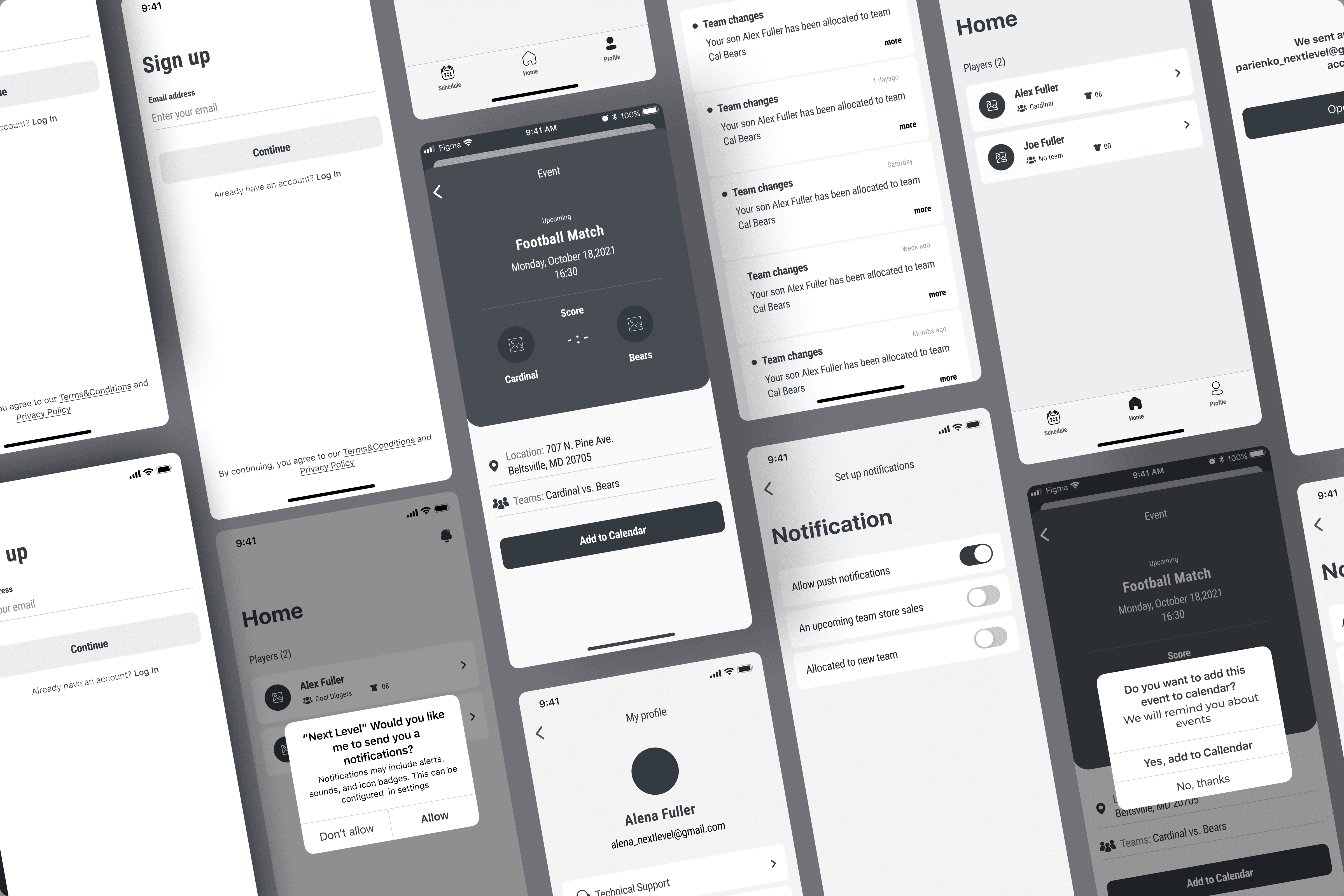
The wireframes covered onboarding, team management, notifications, schedules, game details, and role-based navigation patterns.
Deliver — Visual Direction, UI Concepts & Final Design
The Deliver phase transformed validated wireframes into a fully realized visual identity for the iOS MVP. This stage focused on defining the app’s look & feel through moodboards, exploring two UI concept directions, and finalizing a scalable UI foundation that supports schedule management, team communication, and role-based access.
By the end of this phase, we established a cohesive design language aligned with the Foundation’s values — friendly, clear, reliable, and sports-driven.
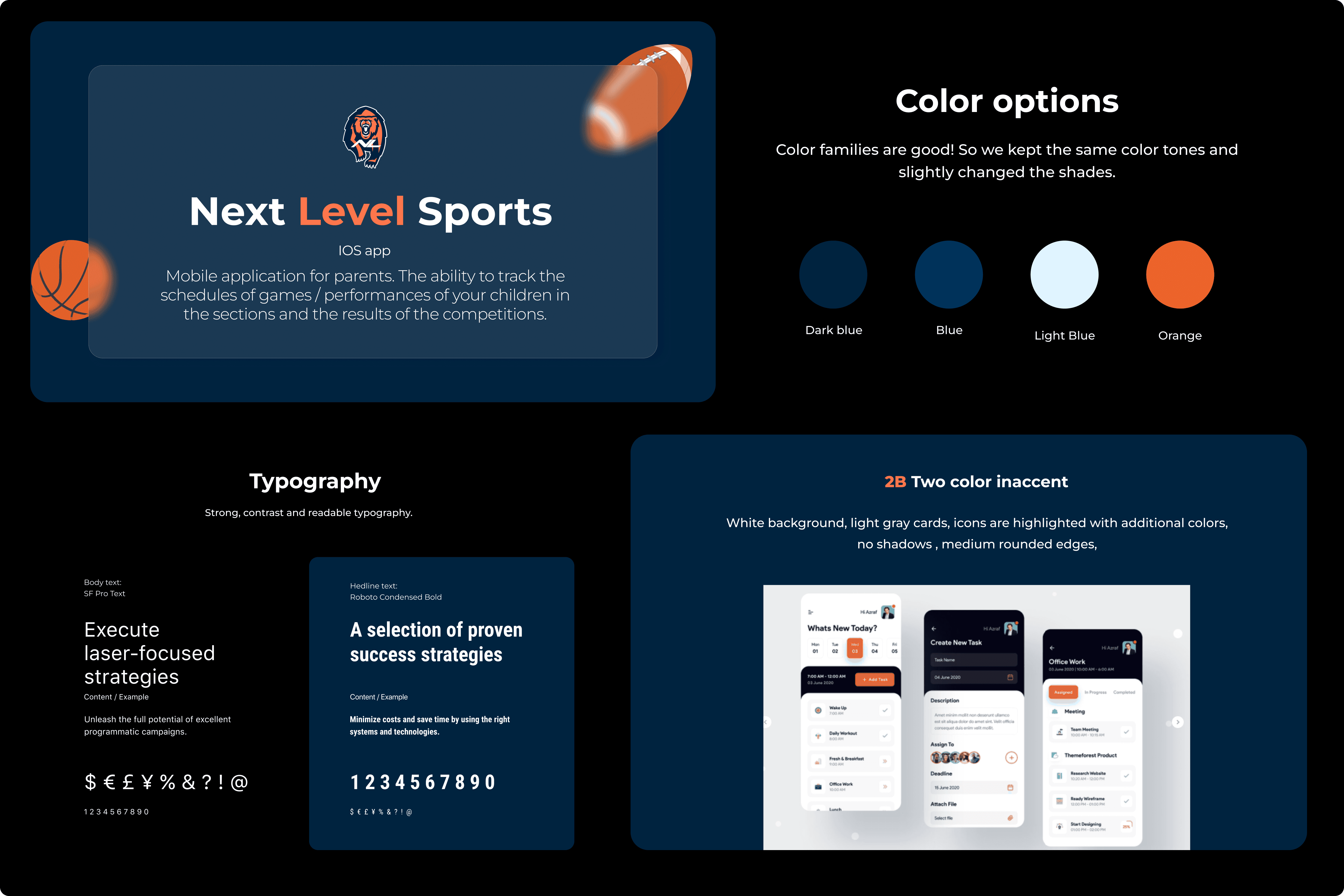
Moodboard & Visual Exploration
To set the visual direction, I created a moodboard exploring:
clean, approachable sports-tech aesthetics
clear hierarchy and readability for parents
subtle energy through accent colors and motion
trustworthy, lightweight UI patterns
This helped align the team on tone, color, typography, and general feel before moving into UI concepts.
UI Concept Directions
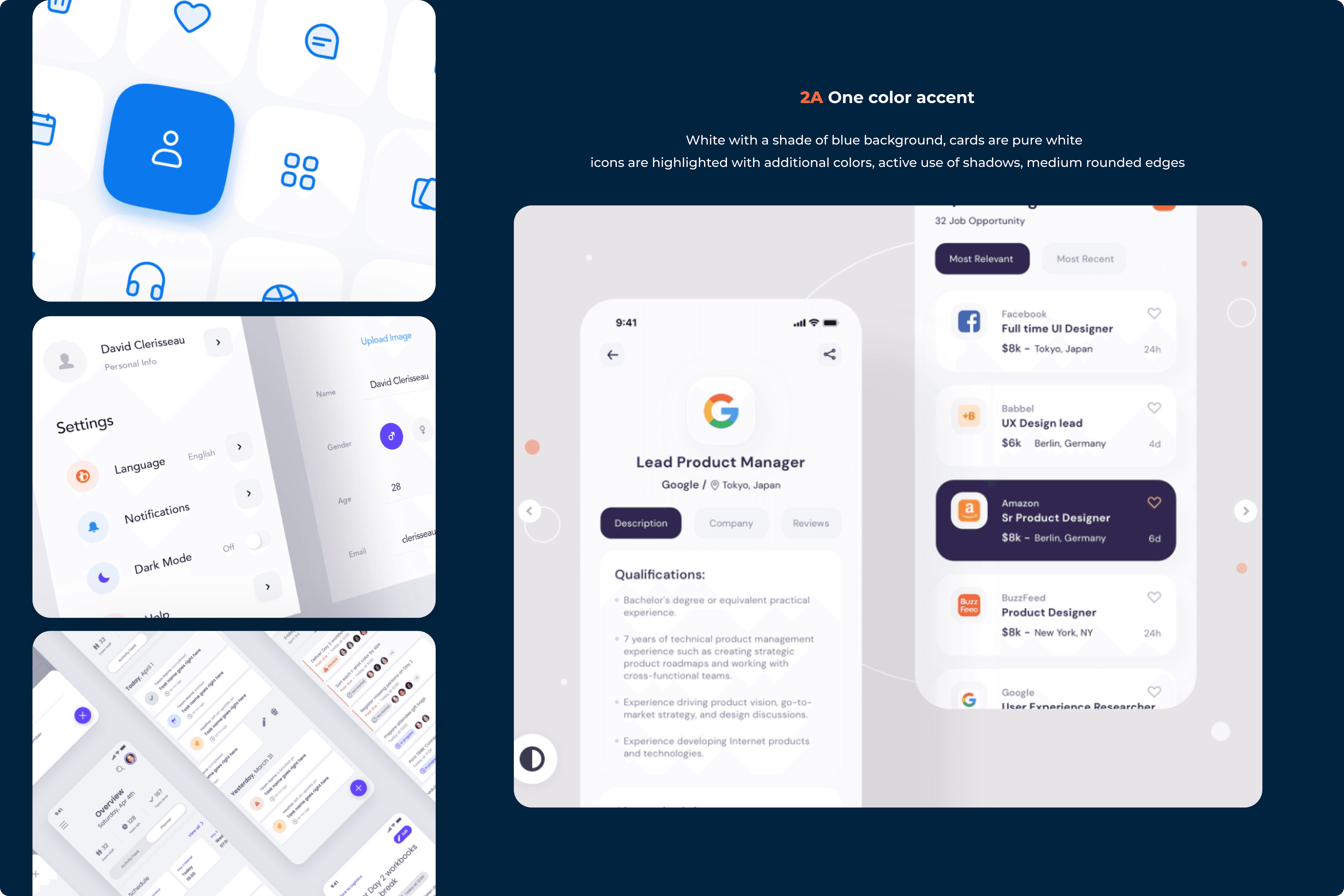
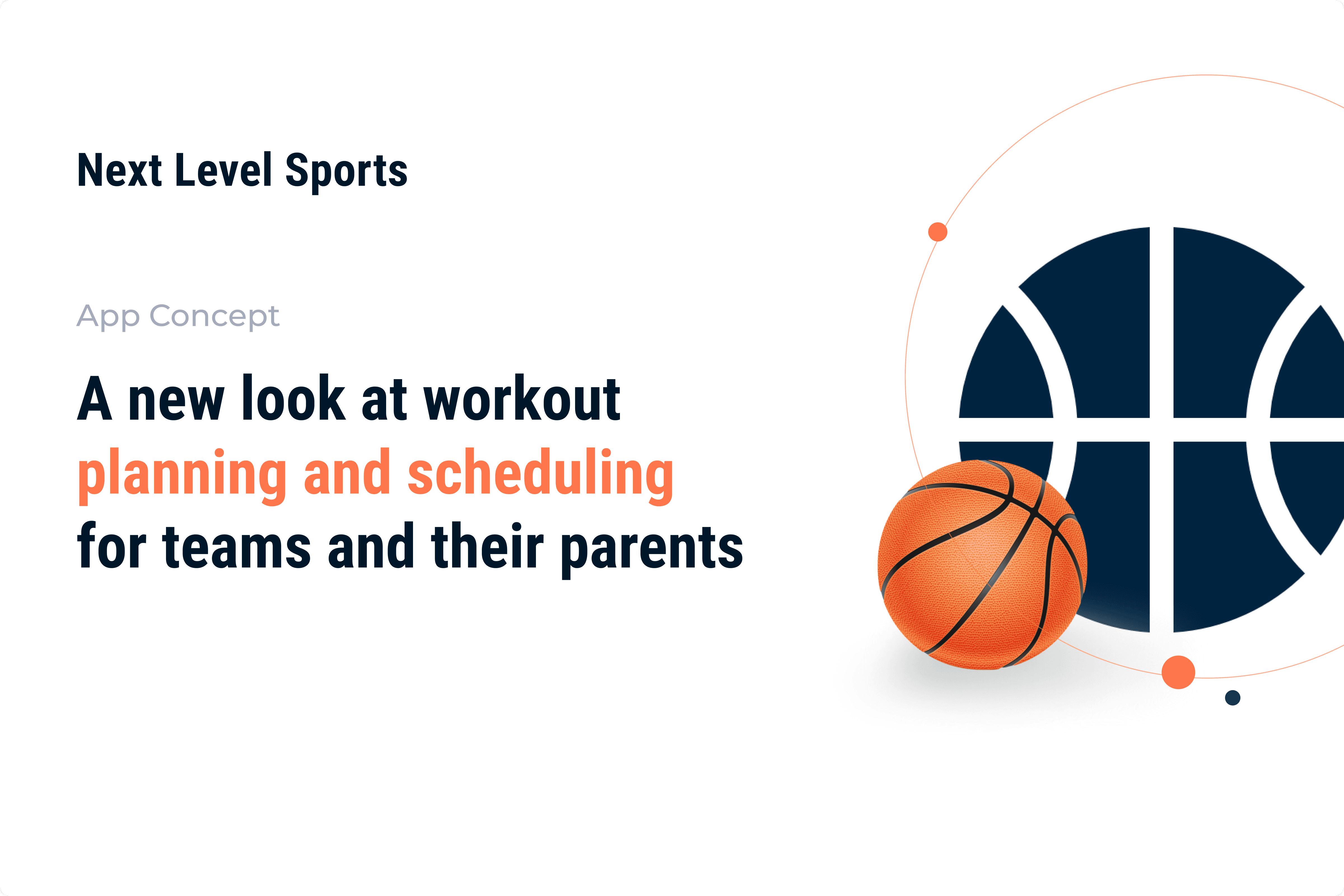
I explored two visual directions for the MVP:
Option A — Light & Minimal
A clean, modern sports interface with:
soft neutrals and light surfaces
simple card layouts
gentle accents for match status
calm, family-friendly tone
This direction prioritized simplicity and low visual noise.
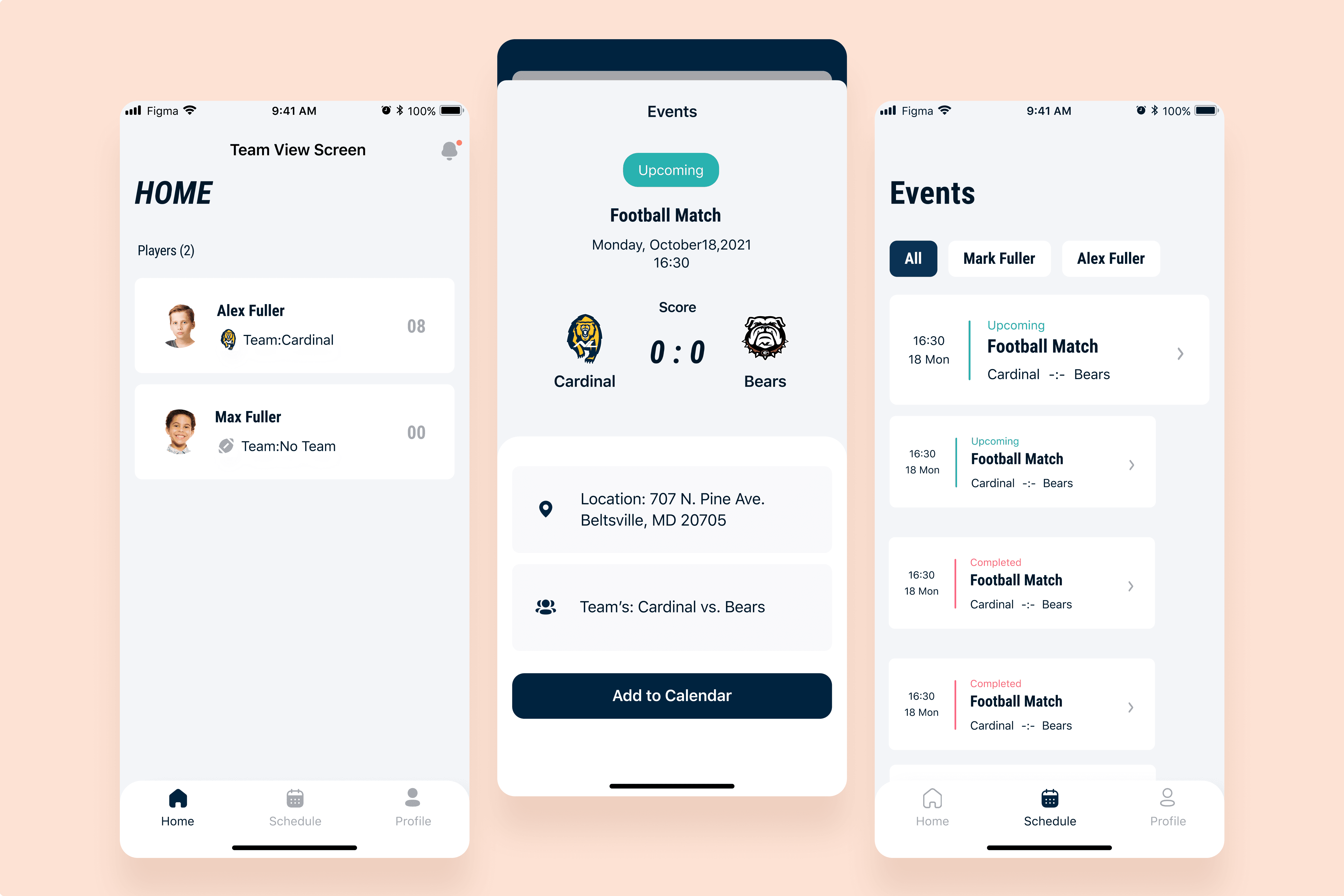
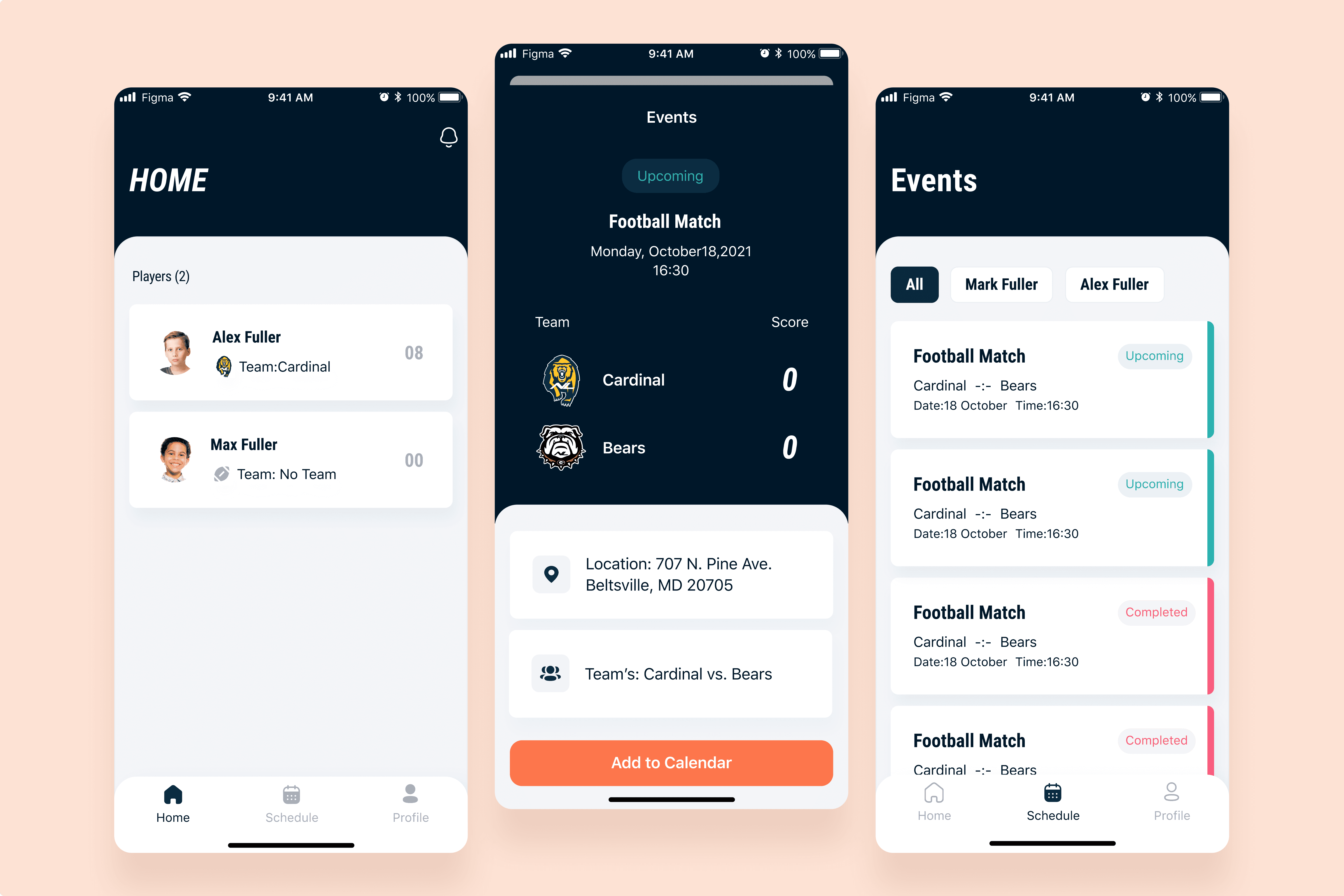
Option B — Bold & Sport-Driven (Selected)
A more expressive direction with:
strong contrast and navy accents
defined card elevation & visual weight
clearer match/event hierarchy
elevated roster and coach profile layouts
sport-inspired energy
This option offered clearer structure, higher readability, and more personality — becoming the basis for the final MVP UI.
Finalized MVP UI
After selecting Option B, I finalized the complete UI system:
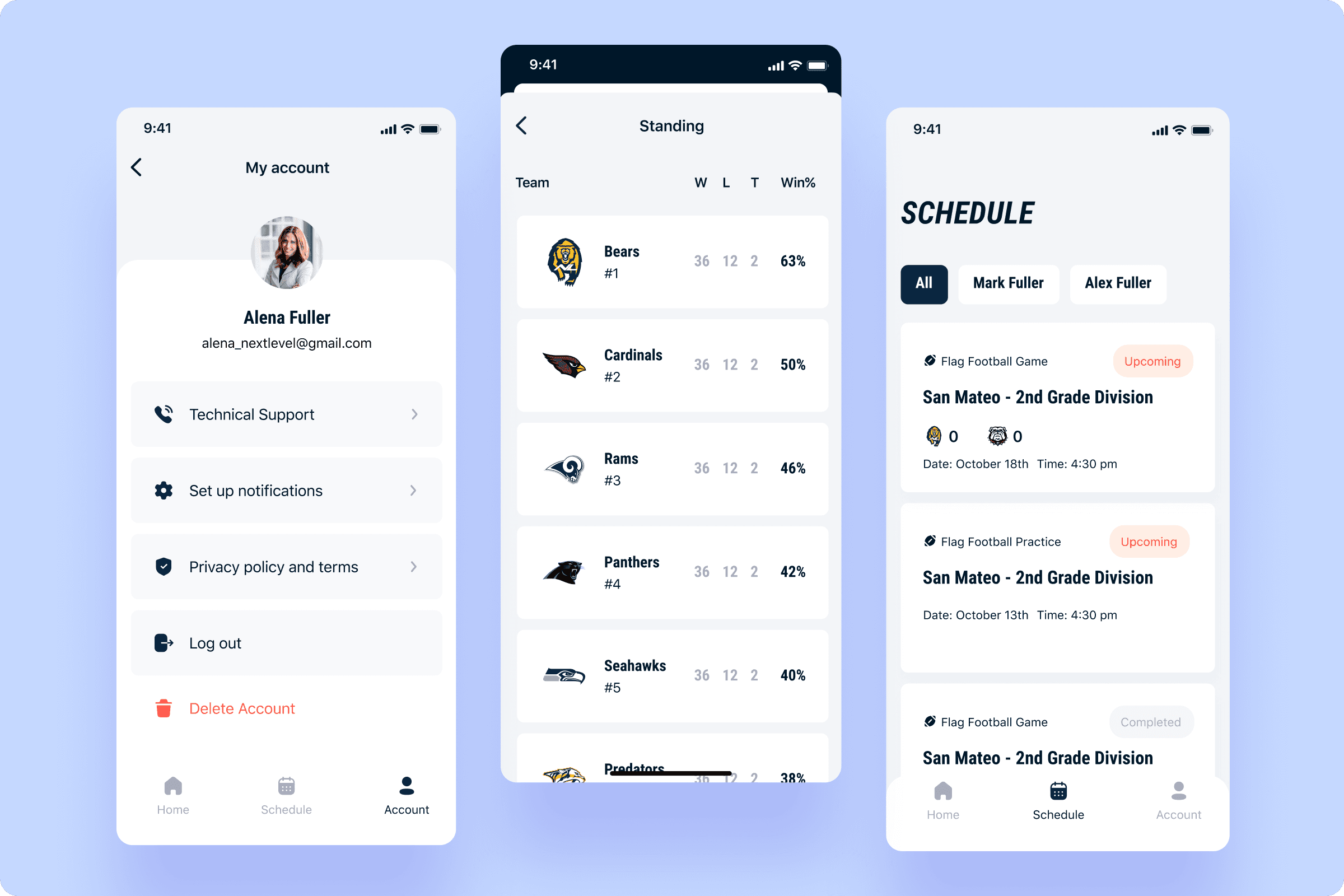
event schedule screens
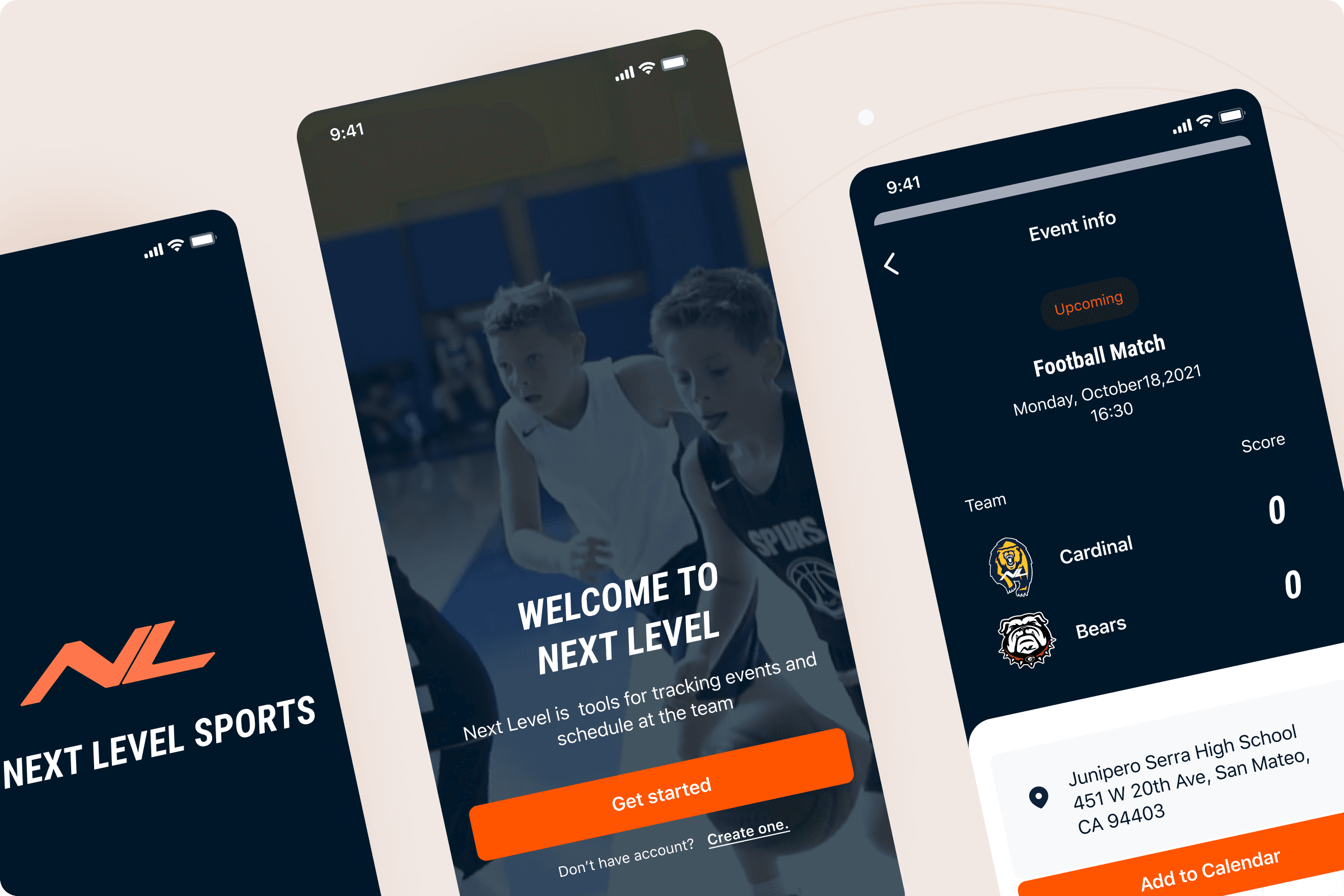
match summaries and details
multi-child profiles
team roster & coach profiles
notifications
home dashboard
mobile navigation
role-based entry points (parents, fans)
The final interface balanced usability with a friendly, energetic sports identity.
Final Summary
What I Delivered
Designed the complete iOS MVP for Next Level Sports Foundation — turning scattered communication across websites and TeamSnap into one clear, reliable mobile hub for families, coaches, and players.
Key Deliverables
Discovery research: interviews, competitor analysis, Lean Canvas, HMWs
Defined problem framing, user flows, and full app architecture
High-fidelity wireframes for all MVP journeys
Two UI concept directions + finalized visual system
Full MVP UI design and developer-ready handoff
Impact
Clear, dependable scheduling for families
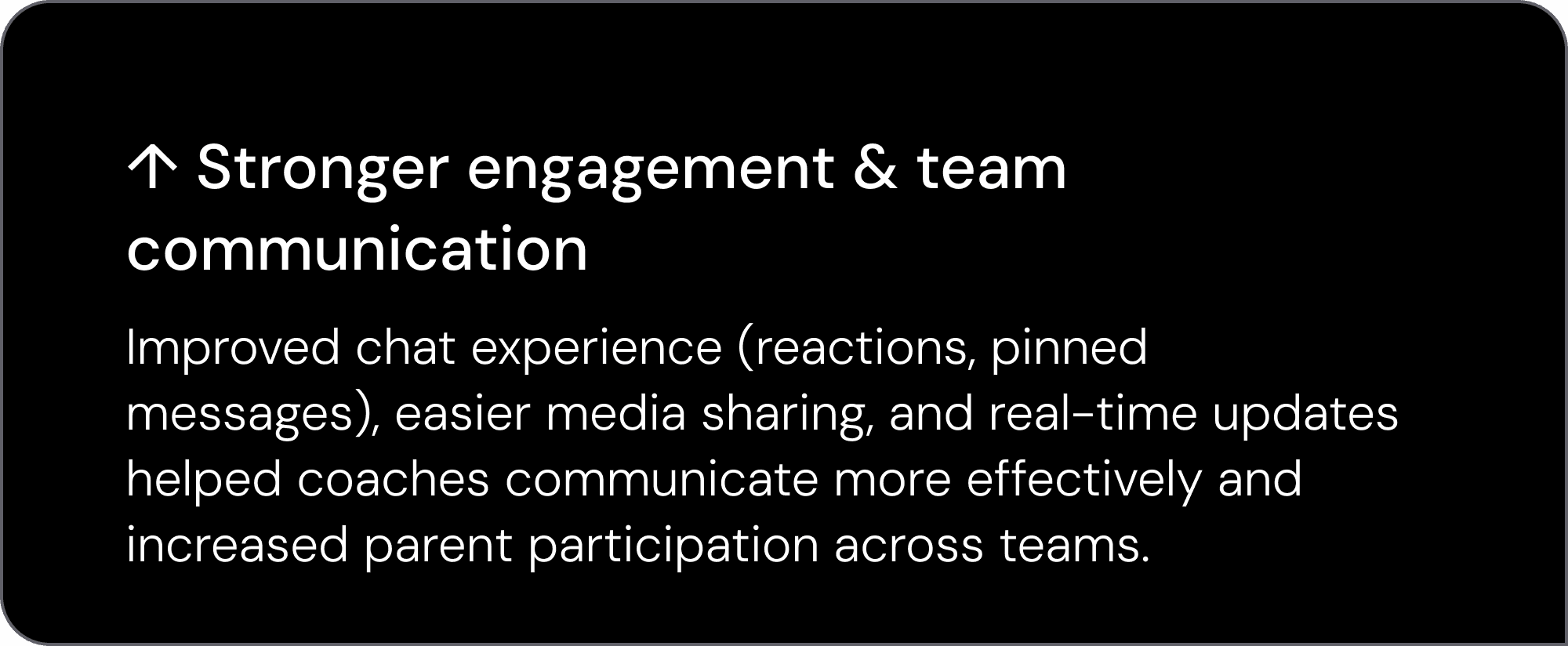
Stronger coach–parent communication
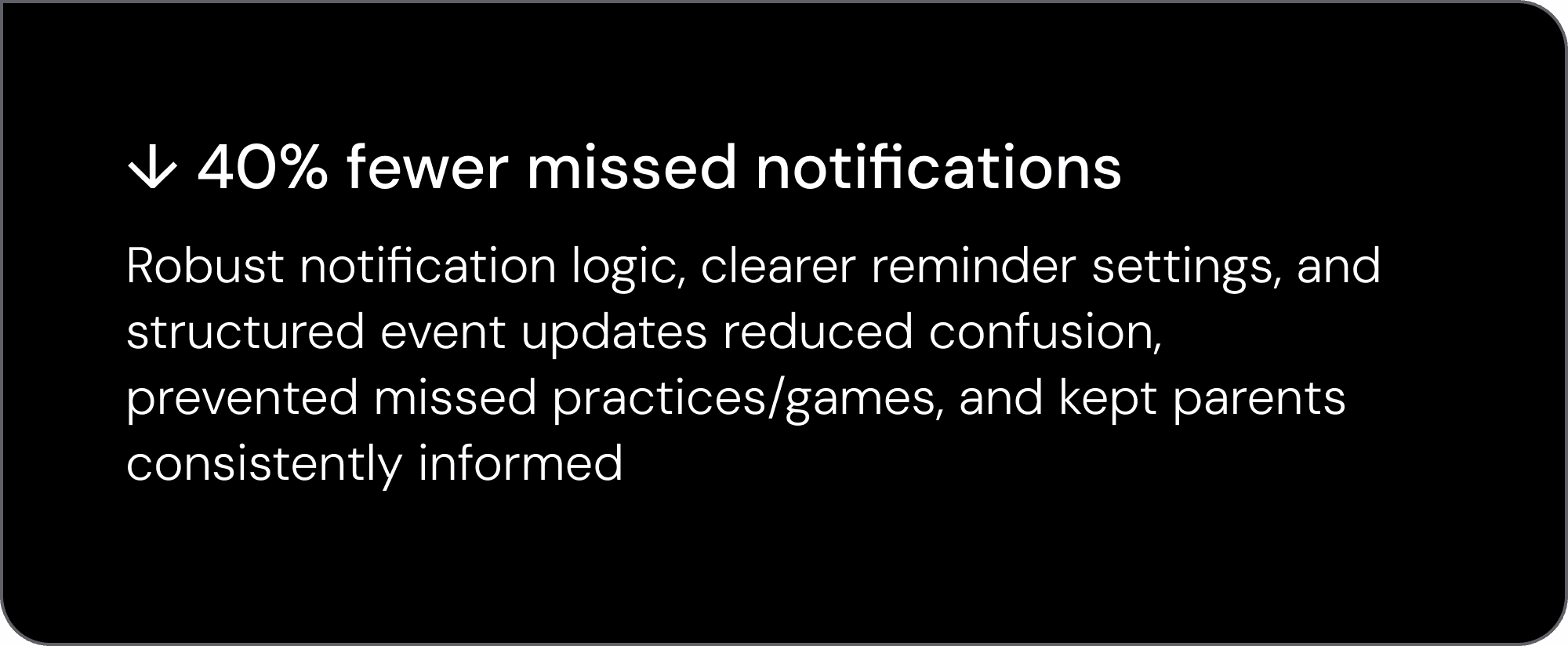
Fewer missed updates and less message overload
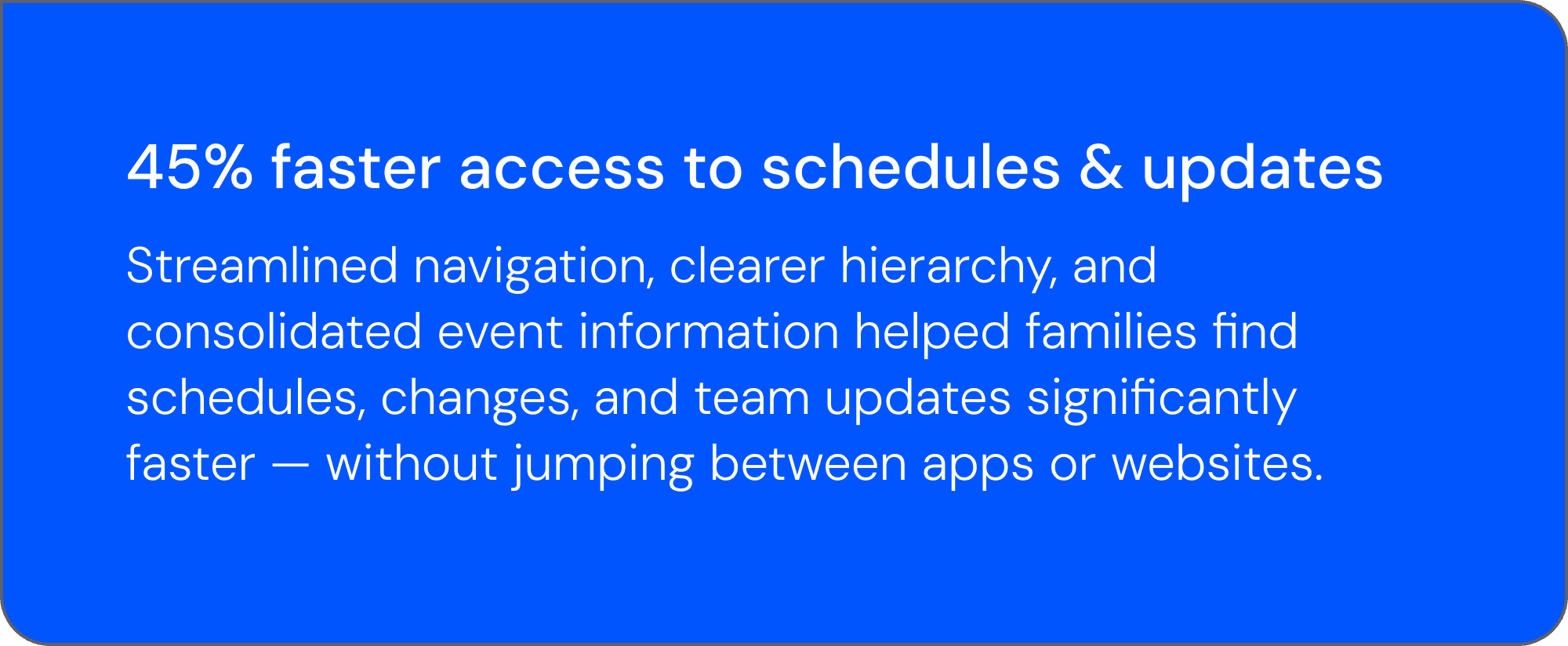
Faster access to team data, events, and results
Scalable structure for future features
Outcome
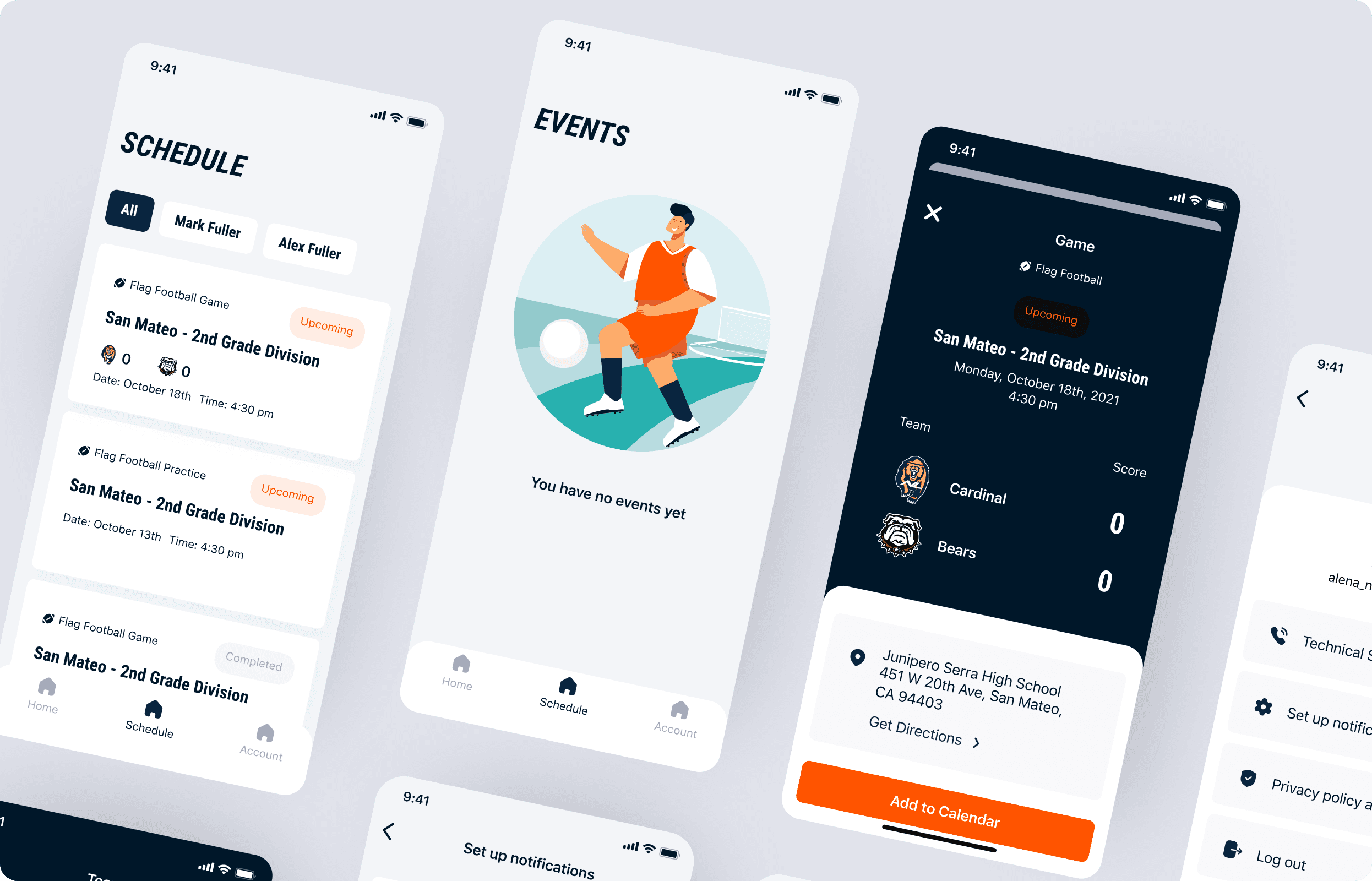
A simple, intuitive sports-management app that unifies schedules, updates, and team information — giving families a reliable way to stay connected and laying the groundwork for Next Level’s long-term mobile platform.
Results
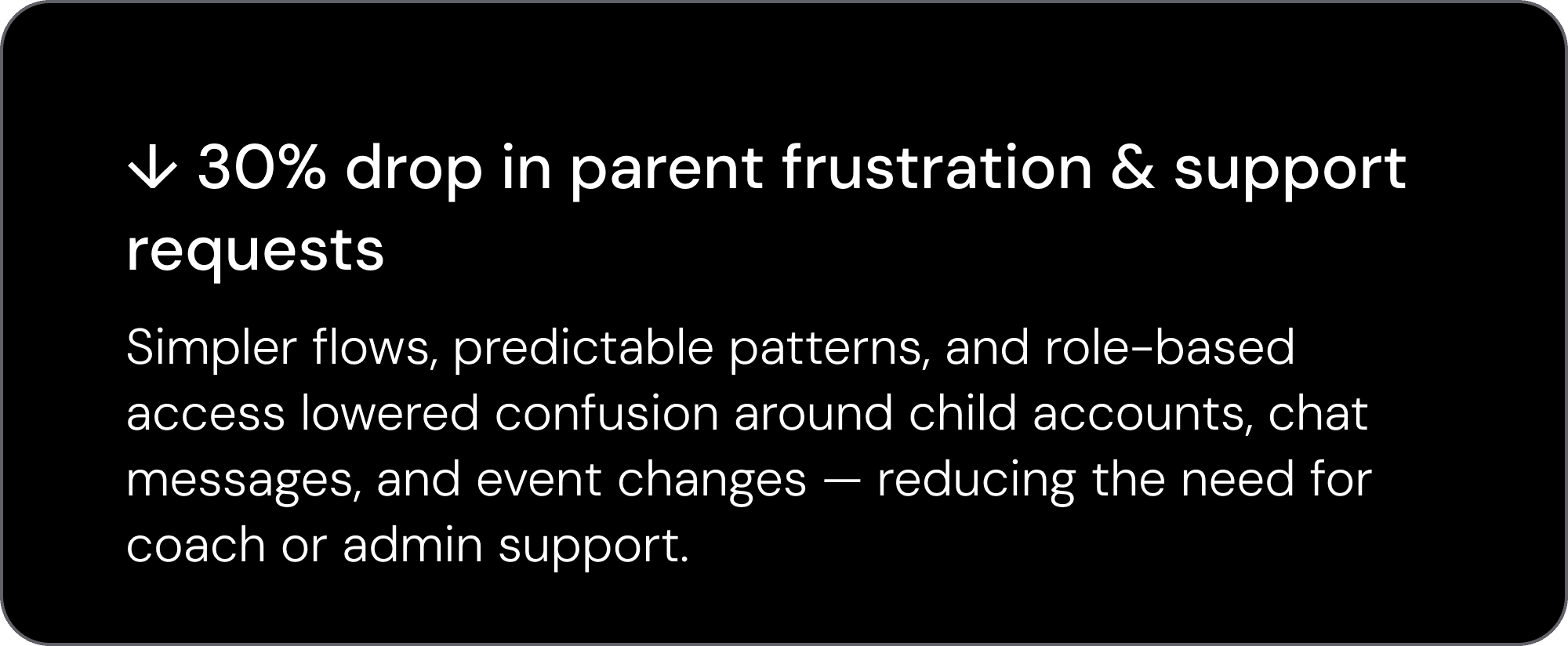
This project delivered a simpler, clearer, and far more reliable communication experience for Next Level Sports Foundation, reducing missed updates, improving team coordination, and strengthening parent–coach engagement across the entire program.